
Vegetables
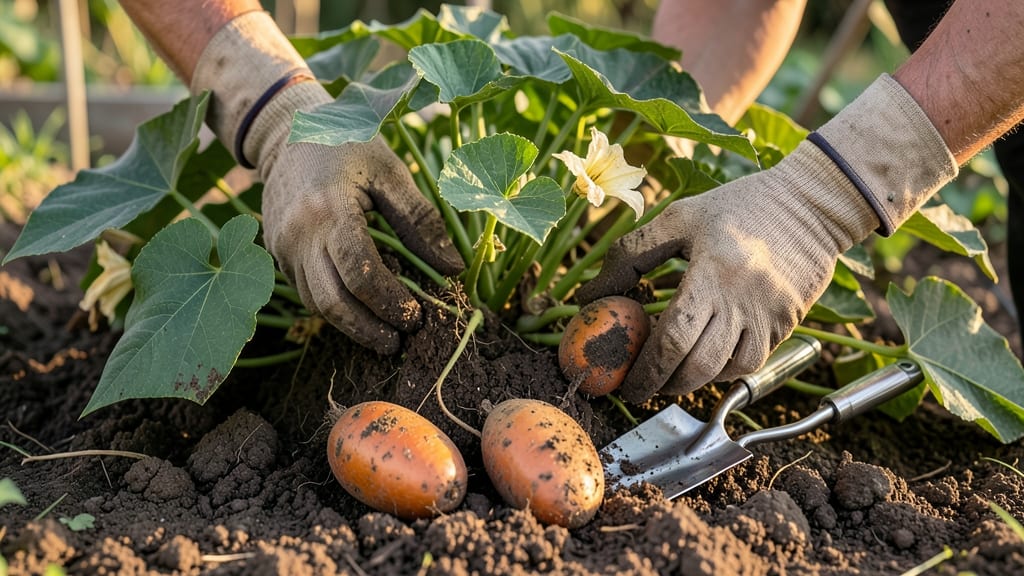
Harvest sweet potatoes when the vines turn yellow and die back, typically 90 to 135 days after planting 🍠 — timing this right means the difference between tender, flavorful tubers and tough, inedible roots.
Picture this: you’ve nurtured your sweet potatoes all season, and now you’re staring at a pile of small, underdeveloped tubers—or worse, ones that are too woody to eat. That’s what happens when you miss the window.
The good news? There are clear signs to watch for, like skin that slips easily and roots the size of a golf ball.
In USDA Zone 6, that window usually falls between early September and mid-November, but cooler climates may need to adjust. Below, I’ll walk you through the exact cues to look for, how to handle different varieties, and what to do once you’ve pulled them from the ground.
You’ll learn how to check for readiness, avoid common mistakes, and even store your harvest like a pro—so you can enjoy sweet potatoes all winter long.
How to tell when sweet potatoes are ready to harvest
Harvesting sweet potatoes at the right time ensures maximum flavor and tender texture. The key is watching for visual and tactile cues that signal peak ripeness. Unlike regular potatoes, sweet potatoes don't improve after harvest—they need to be pulled at just the right moment.
Miss it, and you risk woody tubers or small, underdeveloped roots.
Start by examining the vine foliage. When the leaves begin yellowing and drying out, it’s your first clue. This natural dying-back process usually happens 3-4 months after planting, depending on your climate zone.
In warmer regions like USDA Zone 9-10, this might occur as early as late September, while cooler zones like Zone 6-7 may see harvests in October or November.
Skin slippage is another foolproof test. Gently try to peel back the skin near the stem end. If it slips off easily (like a ripe avocado), your sweet potatoes are ready. This happens because the tuber's starch content increases, causing the skin to loosen. If the skin resists or tears, they’re not quite ready yet.
Next, check the size and firmness of the tubers. At harvest time, sweet potatoes should be 3-6 inches long and feel heavy for their size. Press a fingernail into the skin—if it doesn't puncture easily, they’re ready.
Small tubers (under 2 inches) or those with soft spots need more time in the ground.
Don’t rely solely on days after planting, as sweet potatoes mature at different rates based on variety and growing conditions. For example, Beauregard (a popular variety) typically matures in 90-105 days, while Jewel may take 120-135 days.
Always prioritize plant signals over calendar dates for the best results.
| Indicator | What to Look For | Action |
|---|---|---|
| Leaf Color | Yellowing and drying | Check other signs |
| Skin Slippage | Peels back easily near stem | Harvest within 1-2 days |
| Tuber Size | 3-6 inches long | Ready for harvest |
| Fingernail Test | Skin resists puncture | Perfect harvest time |
| Soil Temperature | Below 80°F (27°C) | Avoid harvesting in heatwaves |
If you’re growing sweet potatoes in containers or raised beds, harvest slightly earlier than in-ground plants. Container-grown tubers can overheat in hot soil, leading to bitter flavors.
Look for the same cues, but be extra vigilant about soil temperature—harvest when it drops below 80°F (27°C) to preserve sweetness.
One common mistake is waiting until the vines are completely dead. While this might seem like the right time, sweet potatoes left too long in the ground can sprout or develop woody textures.
Aim to harvest when 50-70% of the vines have yellowed. This gives you a 1-2 week window to dig before quality declines.
After harvesting, cure your sweet potatoes properly to develop their sweet flavor and storage life. Place them in a warm (80-85°F/27-29°C), humid (80-85%) space for 5-10 days. This could be a garage, basement, or even a cardboard box with a heat lamp.
Avoid refrigerating them until after curing, as cold temperatures turn starches to sugar, ruining texture.
Pro tip: Use a hula hoop or wire basket to gently dig around the base of the plant. Sweet potatoes grow in all directions, so avoid stabbing with a fork—this can pierce the tubers and cause rot. Handle them carefully to prevent bruising, which shortens shelf life.
Once cured, store sweet potatoes in a cool (55-60°F/13-16°C), dark place with high humidity. They’ll keep for 4-6 months if stored properly. If you notice sprouting or soft spots, use those tubers first—they’re past their prime for long-term storage.
Sweet potato harvest timing guide by variety and season
Harvesting sweet potatoes at the right time ensures maximum flavor and tender texture, but timing varies by variety and climate. In warm regions like USDA Zone 9, you might harvest as early as September, while cooler zones like Zone 6 should wait until first frost nears.
Understanding these differences helps you avoid woody tubers or underdeveloped roots.
Popular varieties like Beauregard and Jewel mature faster than Purple types, which often need extra weeks in the ground. Soil temperature also plays a role—roots grow best when soil stays above 65°F (18°C).
In cooler climates, extend the growing season by planting slips after last frost and using black plastic mulch to warm the soil.
| Variety | Days to Maturity | Best Harvest Window | Climate Notes |
|---|---|---|---|
| Beauregard | 90-105 days | Late September to early November | Fastest-maturing; ideal for short seasons |
| Jewel | 100-110 days | Mid-October to mid-November | Tolerates cooler soils; great for Zone 6 |
| Purple | 110-135 days | Late October to December (if frost-free) | Needs longest season; sensitive to cold |
For warm-season harvests, watch for vines yellowing and skin slippage—when the tuber slips easily from the soil with gentle pressure. In cooler climates, prioritize soil temperature over calendar dates; roots won’t sweeten if soil drops below 55°F (13°C).
If frost threatens, harvest immediately, even if tubers aren’t fully sized.
Regional adjustments matter: In Southern states, harvest Beauregard by October 15 to avoid over-maturity, while Northern gardeners can extend Jewel’s harvest into November with row covers. Always cure harvested tubers at 80-85°F (27-29°C) and 80% humidity for 10 days to develop flavor and storage life.
Pro tip: Mark planting dates and track days to maturity to avoid guesswork. Use a moisture meter to confirm soil warmth—roots grow best when soil stays consistently above 70°F (21°C).
Adjust your harvest plan if summer heat causes vines to wilt early, as this can signal premature tuber formation.
Remember, harvest timing balances size, sweetness, and texture. A 3-6 inch tuber with firm skin is perfect—dig deeper if your variety needs extra time. Store cured tubers in a cool, dark place for up to 6 months to enjoy homegrown sweetness year-round. 🍠