
Vegetables
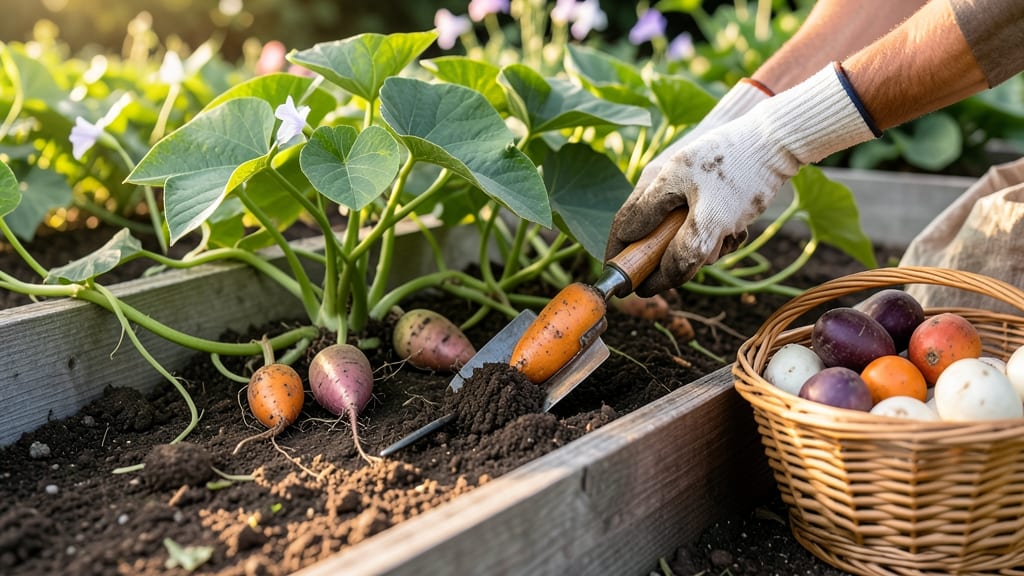
Harvesting sweet potatoes at the right time ensures you’ll pull out plump, flavorful tubers instead of tough, underdeveloped ones 🍠.
Sweet potatoes are one of the most rewarding crops to grow—but knowing the exact moment to harvest can mean the difference between perfect, sweet tubers and tough, woody ones. Miss the window, and you might dig up your harvest too early (or too late).
Look for key signs like yellowing leaves, dried vines, and firm skin that’s hard to pierce with a fingernail. These visual cues tell you the tubers are ready to pull from the soil, usually between 90 and 150 days after planting.
In this guide, I’ll walk you through the best ways to spot a ready harvest, adjust timing based on your climate, and avoid common mistakes that lead to wasted tubers.

When to harvest sweet potatoes: key signs your tubers are ready
Timing your sweet potato harvest is all about reading your plants—specifically their leaves, vines, and tuber firmness. Unlike many vegetables, sweet potatoes don’t have a single "best day" to pick; instead, you’ll notice visual and tactile cues that signal readiness.
Ignoring these signs often leads to small, fibrous tubers or tough, woody roots that store poorly.
Most varieties take 90 to 150 days from planting to reach harvest maturity, but environmental factors like temperature, sunlight, and soil moisture can shift this window. For example, cooler climates may need an extra 2-3 weeks compared to warm, Southern regions.
Pay attention to leaf color changes and vine dieback—these are your plant’s way of saying, "It’s time!"
| Harvest Cue | What to Look For | Action to Take |
|---|---|---|
| Leaf Color | Foliage turns yellow or brown and wilts naturally | Check tuber readiness in 1-2 weeks |
| Vine Dieback | Vines dry up and collapse (natural senescence) | Harvest within 3-5 days to avoid frost damage |
| Tuber Firmness | Skin hardens and resists fingernail pressure | Dig carefully to avoid puncturing skin |
| Size & Shape | Tubers reach 6-12 inches long and plump | Harvest for maximum sweetness and storage life |
| Days After Flowering | 75-100 days post-flowering (varies by variety) | Monitor other cues for precise timing |
The first visual cue to watch for is leaf yellowing. Unlike nutrient deficiencies (which cause uniform yellowing), harvest-ready sweet potatoes develop brown or yellow patches on older leaves first. This is called senescence, and it’s your plant’s way of redirecting energy to the tubers.
If you see 50% of leaves yellowed, it’s time to start checking tuber readiness.
Next, focus on the vines themselves. Healthy sweet potato vines are lush and green, but as they mature, they’ll begin to wilt and die back. This process happens naturally and isn’t a sign of disease.
When most vines are brown and crispy, your tubers are likely at peak sweetness. However, don’t wait too long—once frost hits, the vines will die abruptly, and your tubers may develop wooden or shriveled skin.
To test tuber readiness, gently press a fingernail into the skin of an exposed tuber. If it resists pressure and doesn’t dent easily, it’s ready. Early-season tubers will feel soft and pliable, while overripe ones may have tough, cracked skin.
For the sweetest flavor, aim to harvest when tubers are firm but not rock-hard, typically 75-100 days after flowering.
Pro tip: If you’re unsure, harvest a few test tubers a week before the vines fully die back. Cure them for 5-10 days in a warm, humid space (like a garage) to see if they develop sweetness and firmness.
This method works especially well for heirloom varieties, which can vary widely in maturity times.
Regional differences matter! In USDA Zones 8-10, sweet potatoes often mature by late September or October, while Zones 5-7 may need to harvest by mid-September to avoid frost.
If you’re in a cooler climate, consider using black plastic mulch to extend the growing season by 2-3 weeks and delay harvest.
One common mistake is digging too early because the leaves look healthy. But remember: the tubers are underground, and the vines are just the plant’s way of photosynthesizing energy for them.
If you harvest when the vines are still green and vigorous, you’ll likely end up with small, underdeveloped tubers that lack sweetness. Patience is key!
For storage potential, aim to harvest when tubers are fully mature but not overripe. Overripe sweet potatoes develop shriveled skin and fibrous flesh, which shortens their shelf life. Once harvested, cure them properly (store in a warm (80-85°F), humid (80
Sweet potato harvest timeline: month-by-month guide for different climates
Timing your sweet potato harvest depends on your USDA zone and frost dates. In warmer climates like Zones 9-11, you can harvest as early as late August, while gardeners in Zones 3-5 may need to wait until October or November—or use season extension tricks.
The key is balancing tuber maturity with frost risk to avoid woody, underdeveloped roots.
Most varieties take 90-150 days to mature, but cooler climates often push harvests later. For example, in Zone 7, I start watching for harvest signs in early September, while in Zone 4, I might delay until mid-October or use black plastic mulch to extend the season.
Understanding your local frost dates is critical—sweet potatoes cannot tolerate frost, even briefly.
- 1 Zones 9-11 (Warm Climates): Harvest late August–September when vines yellow. Soil temps stay above 60°F, so no frost risk.
- 2 Zones 7-8 (Moderate Climates): Aim for September–early October. Watch for first frost warnings—harvest 2 weeks before if frost looms.
- 3 Zones 3-6 (Cool Climates): Harvest October–November or use row covers to delay frost. Plant early-maturing varieties (e.g., 'Beauregard') for smaller windows.
- 4 Season Extension Tips: Use black plastic mulch in spring to warm soil or cold frames in fall to delay frost. In Zone 5, I’ve harvested 2 weeks later with these tricks!
In Southern climates (Zones 9-11), sweet potatoes often mature by late summer. I start checking for harvest readiness in August by looking for yellowing vines and hardened skin.
Since frost isn’t a concern, you can harvest gradually over several weeks, leaving some plants to mature further for larger tubers. Just avoid digging when soil is waterlogged, as this causes rot.
For Northern gardeners (Zones 3-5), the challenge is short seasons. Choose early-maturing varieties like 'Georgia Jet' (90 days) and plant slips in late May after soil warms to 60°F.
I’ve had success using row covers in September to push harvests into early October, adding 2-3 extra weeks of growth. Always have a backup plan—like a garage or shed for curing—if frost arrives early.
Regardless of your zone, stop watering 2 weeks before harvest to toughen the skin and improve storage life. In Zones 6-8, this means tapering water in mid-September.
After digging, let tubers cure in warm (85°F), humid conditions for 10 days to develop sweetness. Skip this step, and you’ll end up with less flavorful, shorter-shelf-life potatoes.
Pro tip: In cooler regions, plant a second crop in July for a late harvest. I’ve grown 'Centennial' this way in Zone 5, harvesting in October when the first crop would’ve been lost to frost.
Just mark your calendar for 120 days after planting—this is your sweet spot for balance between size and sweetness.