
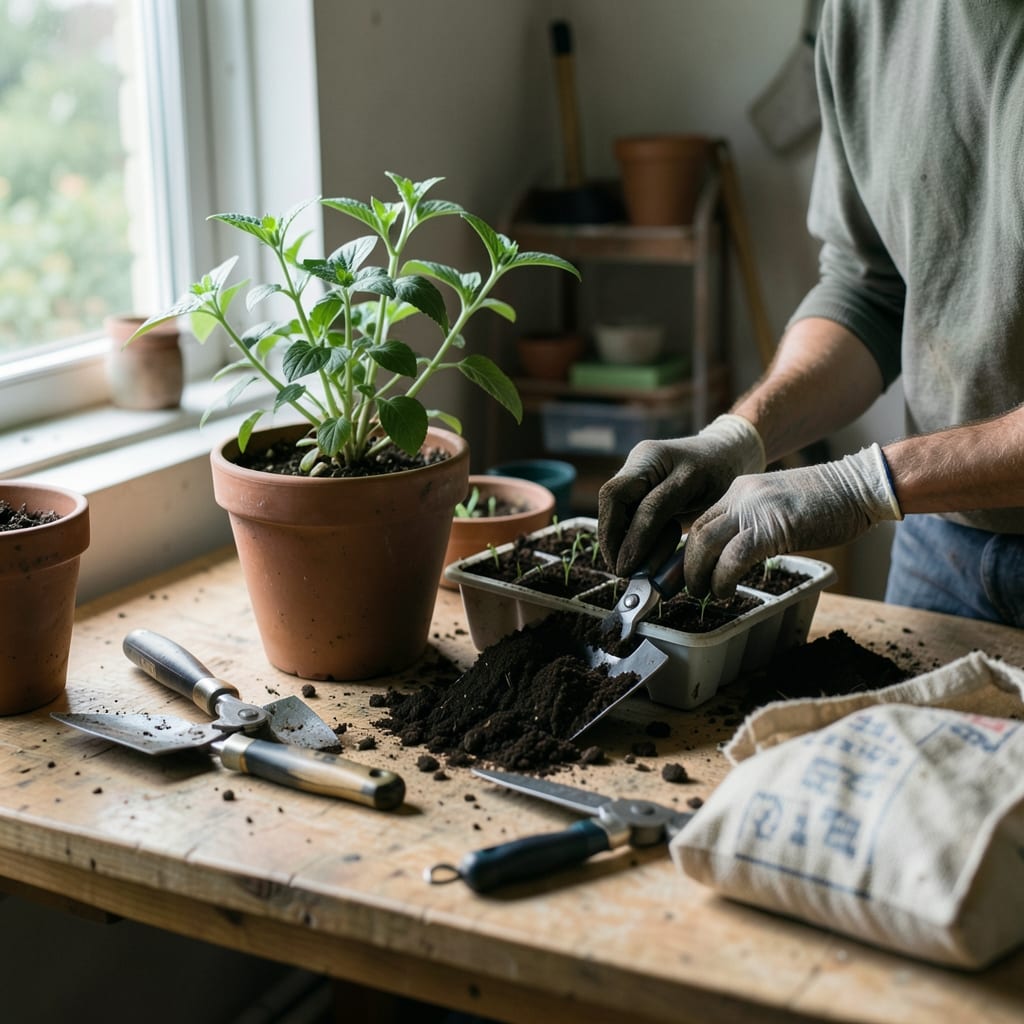

What this work is made with
This page is a list of things, not a story. Gardening is a craft of hands and soil, of patience and small victories—so the site lives in the objects that shape it, not just the words. Here, we name what holds the work together.
This is *Harvest Season*, a place for the quiet science of growing: the right time to plant, the way light bends through leaves, the stubbornness of seeds that refuse to sprout until the conditions are just right.
The things you’ll read about here depend on more than advice—they depend on the tools that shape it.
The things that do the work
These are the objects that turn intention into growth. Four things, each with its own wear and its own lesson. None of them are perfect. All of them are necessary.
The old wooden trowel
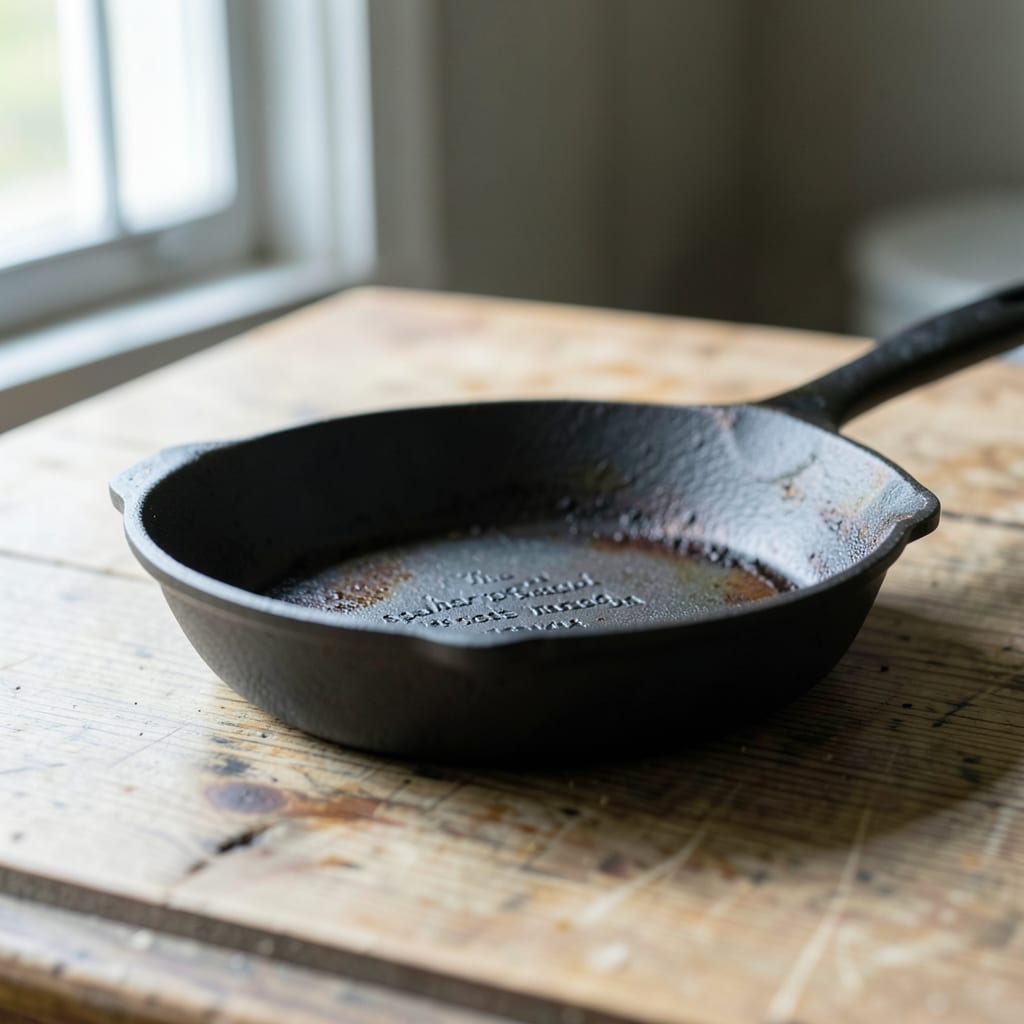
A split-handled trowel with a blade worn smooth from years of digging. It’s at least twenty years old, the wood cracked along the grain but still tight in the hand. The metal edge is nicked from years of prying up stubborn weeds.
It arrived with my grandmother’s garden tools, handed down when she decided she couldn’t bend to dig anymore. The first time I used it, the blade caught on a rock and bent slightly—now it’s permanently warped, but it still slices through soil cleaner than any newer tool.
It taught me that the best instruments aren’t the shiniest; they’re the ones that fit your hands and remember your rhythm.
The plastic nursery tray
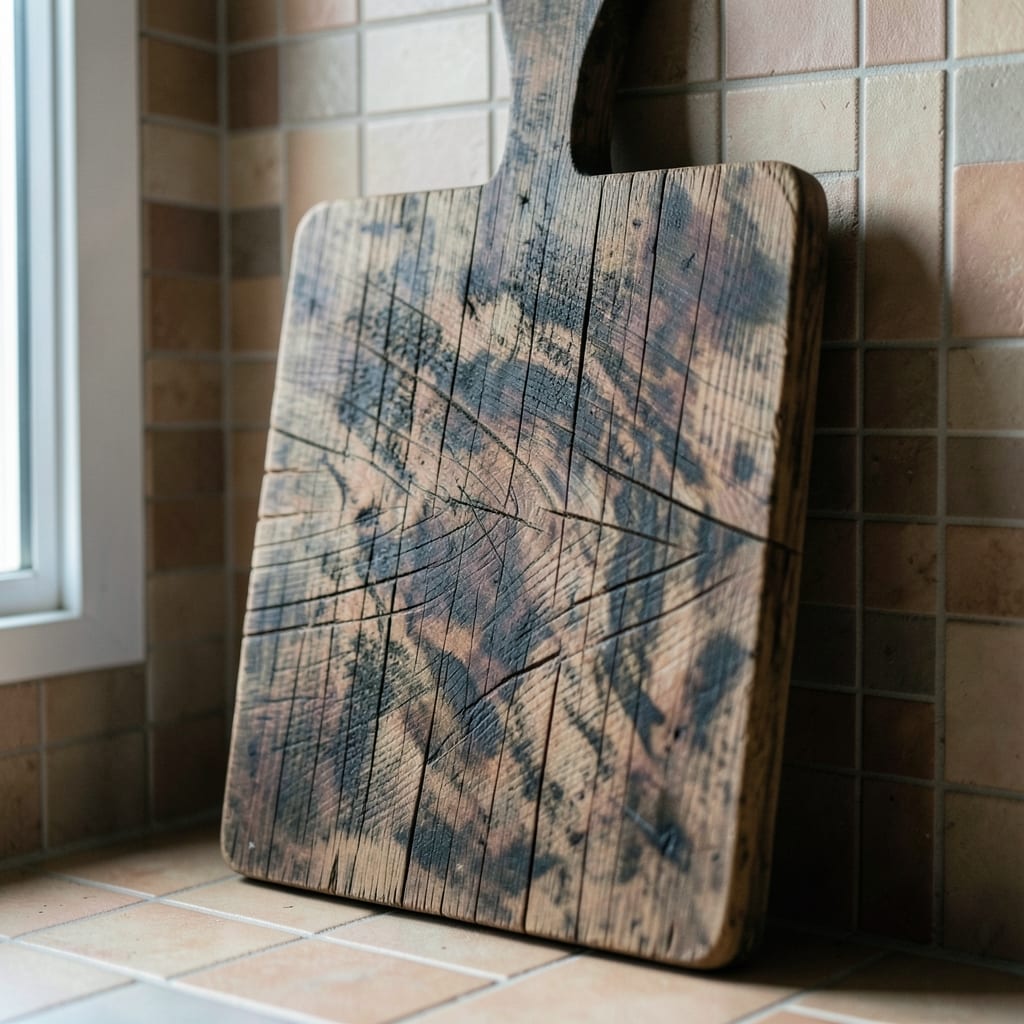
A cheap, flimsy black tray with 72 shallow cells, bought in bulk from a hardware store. The edges are chipped where it’s been dragged across gravel, and one corner is cracked from a dropped pot. It’s held together with duct tape and stubbornness.
It’s been here since the site’s first seed-starting guide, three years ago. The tray doesn’t hold moisture well, so it forces you to water carefully—too much, and the seedlings drown; too little, and they wilt.
It taught me that the right tool isn’t always the expensive one; sometimes it’s the one that fails in a way that makes you pay attention.
The rusted pruning shears
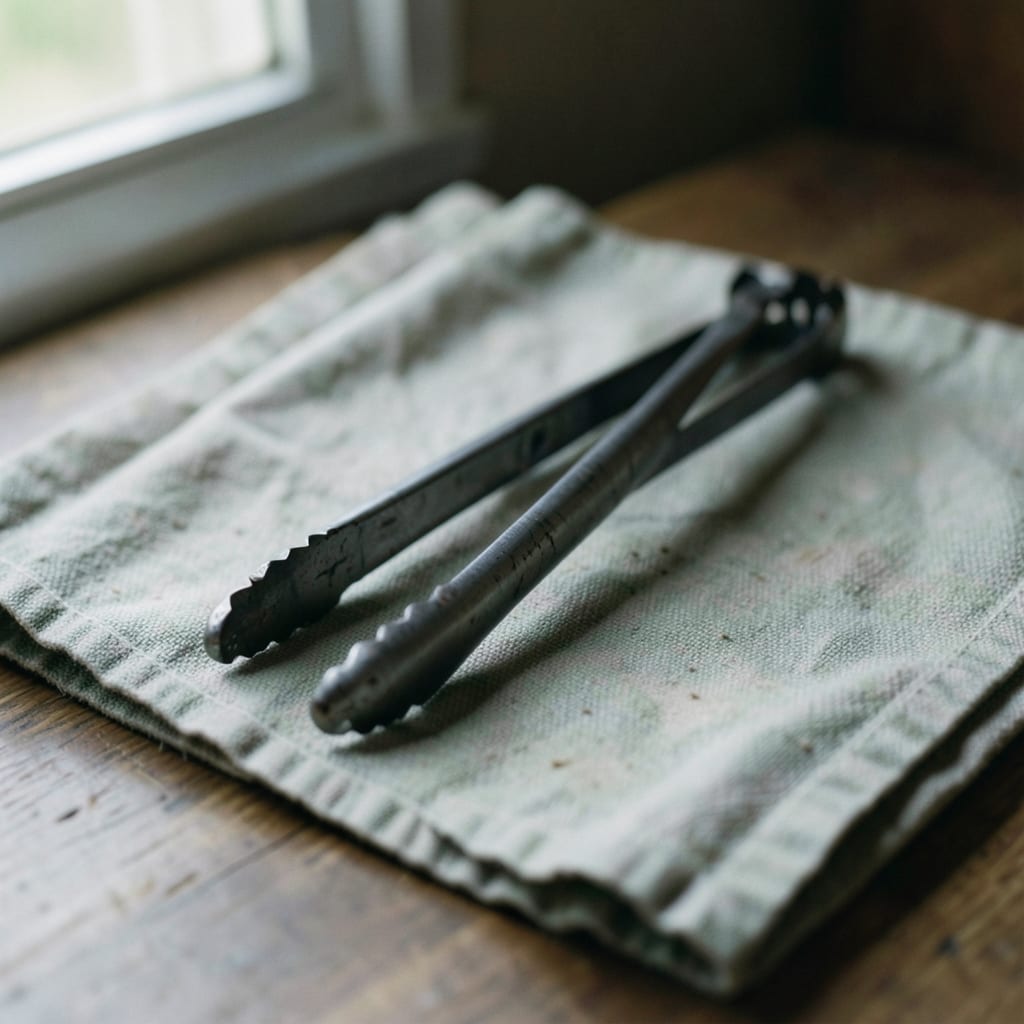
A pair of shears with a blade so dull it’s nearly useless for cutting, but the pivot still works if you squeeze hard enough. The handle is wrapped in frayed electrical tape where the original grip wore off. The rust flakes off onto the plants when you use them.
They’ve been in the shed since I was twelve, passed down from my grandfather, who swore by them for decades. The first time I tried to use them on a thick stem, the blade slipped and left a jagged edge.
Now, I only use them for deadheading roses or trimming back perennials that have grown too wild. They taught me that some tools aren’t meant to be sharp—they’re meant to be reliable, even when they’re falling apart.
The stone from the creek
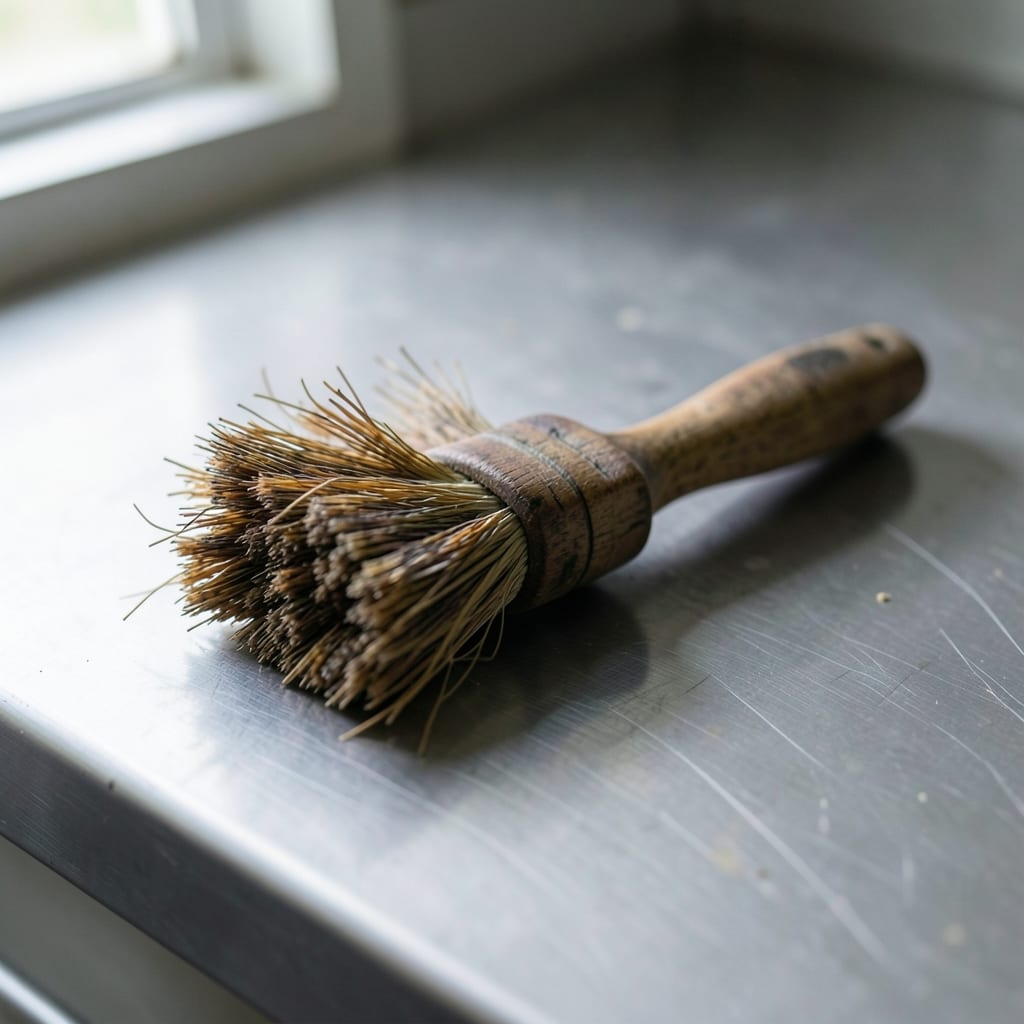
A smooth, flat river stone about the size of a fist, collected from the bottom of a creek near my childhood home. It’s pitted from decades of water and sand, and one side is slightly concave from years of being used as a makeshift mortar.
It’s been here since I moved back to the city, where I no longer have a garden bed to kneel in. Now, it sits on my balcony, and I use it to weigh down pots or press seeds into soil when I’m transplanting.
It taught me that some tools don’t need to be bought—they just need to be found.
What is not in the drawer
This work doesn’t depend on things that complicate the soil. No high-tech gadgets, no branded seed packets, no perfect measurements. The garden doesn’t need them.
Deliberately absent
- Digital soil meters—moisture is better judged by touch and experience.
- Pre-mixed fertilizers—the best nutrients come from compost and observation.
- Expensive seed catalogs—seeds are living things, not products.
- Pressure-treated wood for raised beds—it leaches chemicals into the earth.
Why any of this matters to you
These things—the worn trowel, the cracked tray, the rusted shears, the river stone—are what turn advice into action. They remind us that gardening isn’t about having the best tools; it’s about using what you have, learning from what breaks, and trusting the process.
When you read a guide here, you’re not just getting words. You’re getting the weight of experience: the way a seedling fights to push through soil, the way a plant bends toward light, the way a garden teaches you to wait. The things listed above are why the advice works.
Every page here is built on the same principles: real-world testing, no shortcuts, and a focus on what actually grows. You won’t find perfection—just honesty, and the occasional lesson from a stubborn plant that refused to cooperate.
The guides are grouped by category: Advice, Aphids, Blooming, Companion Plants, Container Gardens and Diseases.