
Vegetables
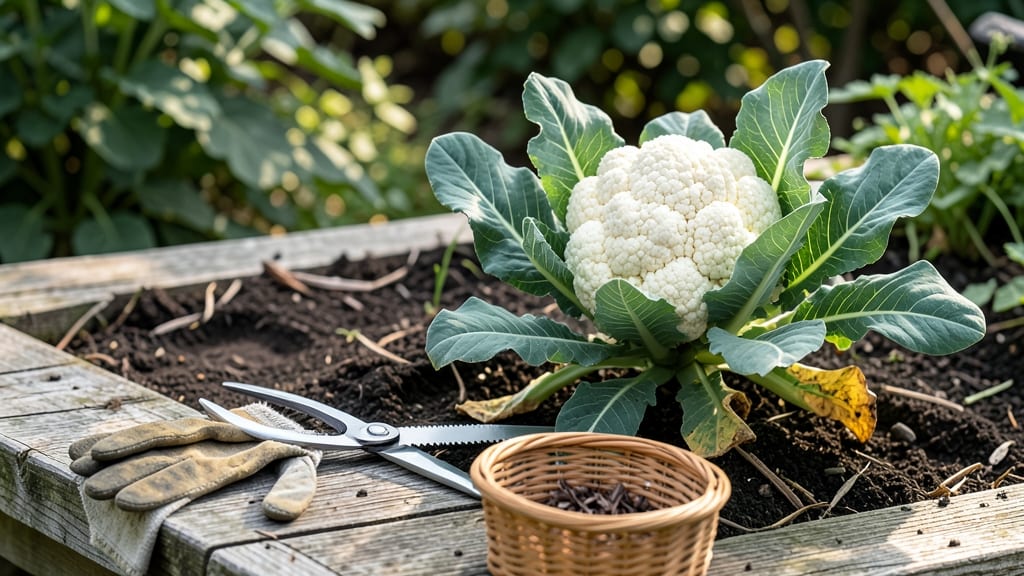
The harvest time for cauliflower arrives when those curds tighten like a fist—just as the outer leaves cup inward, signaling peak perfection 🥬.
Picture this: you’ve nurtured your cauliflower through 70-100 days of growth, watching it transform from a modest seedling to a towering head. But timing is everything—wait too long, and you’ll end up with tough, bitter florets instead of the tender, snow-white curds you’re dreaming of.
In USDA Zone 6, that means June through August is your window, but the real magic happens when you spot those telltale signs: firm heads, tightly packed buds, and leaves curling like they’re guarding a treasure.
Below, I’ll break down how to read your plant’s signals, the best time of day to harvest, and how to keep those curds fresh for weeks—so you can enjoy your homegrown bounty without a single regret.

How to identify the perfect cauliflower harvest time by visual cues
Harvesting cauliflower at the right moment transforms your garden's hard work into a tender, snow-white masterpiece. Miss this window, and you risk woody, bitter florets that ruin even the best recipes.
The key lies in visual cues—specifically, how those leaves curl and how firm the curds feel. Let's break down what to watch for, so you never guess again.
First, focus on the outer leaves. When they start curling inward like a protective fist, that's your plant's way of saying, "I'm ready!" This curling isn't just a random quirk—it's a sign of maturity.
The leaves should also be tightly wrapped around the curd, almost hugging it. If they're loose or flopping, the head isn't fully formed yet.
Next, check the curd itself. At peak harvest time, it should feel solid and compact, like a dense ball of cotton. Gently press a floret—if it holds its shape without crumbling, you're golden.
But if it feels soft or spongy, it's either too early or (worse) already past its prime. Size matters too: aim for 6-8 inches in diameter for most varieties.
Don't overlook the color. A perfectly ripe cauliflower head should be uniform in color—whether that's classic white, purple, or orange, depending on your variety. If you see yellowing or brown spots, that's a red flag.
These discolorations mean the head is overmature or stressed, often from heat or pests. Harvest immediately to salvage what you can.
Now, let's talk about regional variations. In cooler climates like USDA Zone 6, cauliflower typically reaches harvest readiness between 70-100 days after transplanting, usually in June-August.
But if you're in a hotter zone, like Zone 9, you might need to harvest earlier to avoid heat stress, which can cause the curds to loosen and yellow. Always adjust based on your local weather patterns.
Here’s where many gardeners go wrong: harvesting too early. If you pick cauliflower before the curds are fully formed, you’ll end up with small, underdeveloped heads. On the flip side, waiting too long leads to tough, fibrous florets that taste bitter.
The sweet spot? When the head is firm, compact, and fully colored, with leaves still green and healthy. This balance is your ticket to garden-fresh perfection.
| Visual Cue | Ready for Harvest? | Action Required |
|---|---|---|
| Outer leaves curling inward | ✅ Yes | Harvest within 1-2 days |
| Curds firm and compact (6-8 inches) | ✅ Yes | Harvest immediately for best texture |
| Uniform color (white/purple/orange) | ✅ Yes | Proceed with harvest |
| Loose or opening curds | ❌ No | Wait 2-3 more days or harvest smaller heads |
| Yellowing or brown spots | ❌ No | Harvest immediately to salvage |
| Leaves turning brown or dying | ❌ No | Check for pests or disease; may need to discard |
Pro tip: Harvest in the morning when temperatures are cool. This ensures the curds are crisp and hydrated, not wilted from daytime heat. Use a sharp knife to cut the stem about 1 inch below the curd.
Avoid pulling or twisting, as this can damage the plant and leave it vulnerable to rot or pests. After harvesting, store your cauliflower in the refrigerator for up to a week, wrapped in a damp paper towel to keep it fresh.
If you're growing multiple varieties, like purple or orange cauliflower, the same rules apply—but pay extra attention to color consistency. Some heirloom varieties, like 'Graffiti' or 'Purple of Sicily', might have slightly uneven coloring at maturity, but the curds should still be firm and tightly packed.
Always prioritize texture over color when deciding harvest time.
Finally, don’t forget to inspect the stem. A healthy cauliflower should have a thick, sturdy stem supporting the head. If the stem feels weak or hollow, the plant may be nutrient-deficient or struggling with disease.
In this case, harvest what you can and amend your soil for next season’s crop. With these visual cues in mind, you’ll never miss the perfect moment to harvest cauliflower again!
Step-by-step guide: when and how to harvest cauliflower for maximum yield
Harvesting cauliflower at the perfect moment ensures tender, flavorful florets instead of tough, bitter ones. The ideal harvest window occurs when heads reach 6-8 inches wide and curds feel firm to the touch.
Timing matters—wait too long, and you’ll get woody stems and loose florets that ruin even the best dishes.
For best results, harvest your cauliflower in the morning after the dew has evaporated but before the sun peaks. This timing preserves moisture and crispness. If you must harvest later in the day, do so in the late afternoon to avoid stressing the plant during heat stress hours.
Check for tight, compact curds (6-8 inches wide) with no gaps. Gently press the head—it should feel firm, not mushy or spongy.
Inspect the outer leaves. They should remain vibrant green, not yellowing or browning. Wilted leaves signal stress or over-maturity.
Use a sharp knife or pruners to cut the stem 1-2 inches below the head. Avoid tearing leaves—leave the plant intact for any side shoots to develop.
Remove any yellow or damaged leaves around the head immediately. This prevents pests and extends freshness.
Store harvested heads in the refrigerator (unwashed) for up to 5-7 days. For longer storage, blanch and freeze florets.
After harvesting, don’t toss the plant! Cauliflower often produces side shoots from the base or leaf axils. Pinch off any flower buds that form on these shoots to redirect energy into new heads. With proper care, you can coax 2-3 harvests from a single plant.
If your cauliflower heads start to yellow or split, it’s a sign of over-maturity or heat stress. In this case, harvest immediately—even if the curds aren’t perfect—to salvage what you can. Split heads can still be used (just trim the damaged parts) or composted to enrich your soil.
Pro tip: Keep a harvest journal to track the days to maturity for your specific variety. This helps you plan future plantings for consistent yields year after year. Happy harvesting! 🥬