
How To
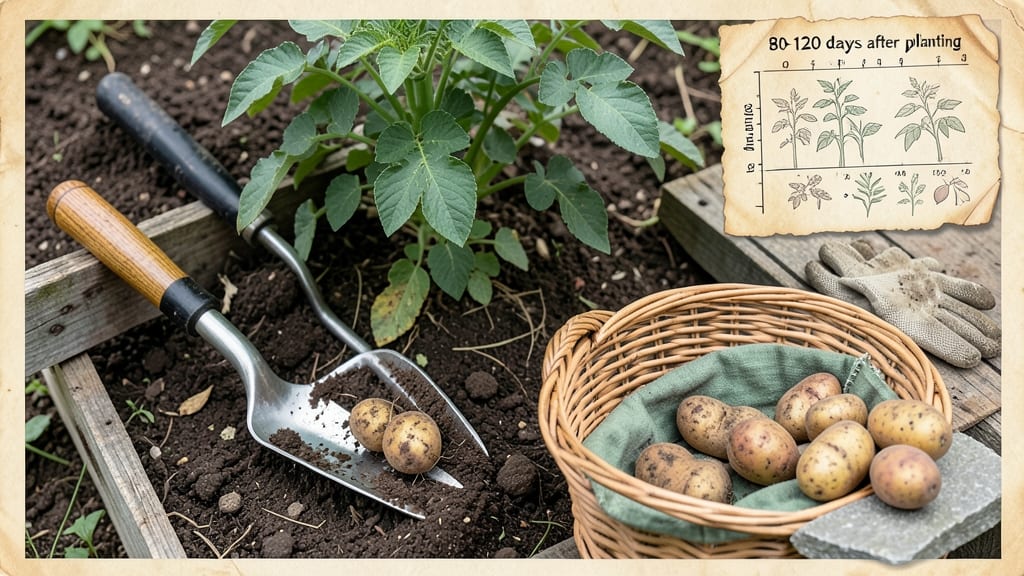
Harvesting potatoes at the right time means the difference between a perfect haul of firm, flavorful tubers and a pile of shrunken or rotting 🥔—and the exact days depend on your variety.
Picture this: you’ve spent weeks tending to your patch, and now the foliage is yellowing. But is it time to dig? Or will you miss the window and lose your crop to frost or spoilage?
The truth is, most gardeners harvest too late, risking soft, sprouted potatoes that won’t store well.
In this guide, I’ll break down the ideal harvest window for early, mid-season, and late varieties—down to the exact days after planting—and share the 5 foolproof signs your potatoes are ready (no guesswork).
You’ll also learn the best methods for digging without bruising your 🥔, plus how to cure and store them for months. No more wasted harvests—just a flawless season from start to table.
Harvest timing for potatoes by variety: days to maturity guide
Timing your potato harvest correctly is the difference between plump, flavorful tubers and shriveled, diseased potatoes. Most varieties reach maturity between 70 to 120 days, but exact timing depends on whether you're growing early, mid-season, or late varieties.
Understanding these windows ensures you harvest at peak quality, whether you're after baby potatoes or full-sized harvests.
Climate plays a huge role in harvest timing. In cooler regions, potatoes often mature faster due to shorter growing seasons, while warmer climates can extend the timeline.
For example, a Yukon Gold in Zone 5 might be ready in 90 days, but in Zone 9, it could take 110 days or more. Always adjust your expectations based on your local frost dates and soil temperatures.
Here’s a breakdown of popular varieties and their ideal harvest windows to help you plan:
For early varieties like Red Pontiac, you can start harvesting as soon as 70 days if you're after small, tender tubers.
These are perfect for baby potatoes or quick meals. Mid-season varieties like Yukon Gold hit their prime between 90 and 110 days, offering a balance of size and flavor. Meanwhile, late varieties like Russet Burbank need the full growing season to develop their signature thick skins and starchy texture.
If you're in a shorter growing season, prioritize early or mid-season varieties to avoid frost damage. In warmer climates, you might even get two harvests by planting early and late batches.
For example, in Florida, you can plant early varieties in February for a June harvest, then replant in August for a fall harvest before the first frost.
Always check for foliage changes as a backup to days-to-maturity. When the leaves yellow and die back, it’s a sure sign that tubers are ready. However, don’t wait until the plants are completely dead—this can lead to rotten tubers in the soil.
Aim to harvest 1–2 weeks before full die-off for the best results.
Pro tip: If you’re unsure, do a test dig by gently lifting a corner of the plant to check tuber size. This method works especially well for baby potatoes or when you’re experimenting with new varieties.
Just be sure to replace the soil and water well to avoid stressing the plant.
For longer storage varieties like Kennebec or Russet, harvest when the skins are firm and set—this means they won’t bruise easily during handling. Store these in a cool, dark place with good airflow to prevent sprouting and spoilage.
🌱
How to tell when potatoes are ready: 5 key signs beyond days
Counting days to harvest potatoes is helpful, but relying solely on a calendar can lead to missed harvest windows. Instead, focus on visual cues and physical changes that signal your potatoes are ready. These signs ensure you harvest at peak quality, whether you're growing baby potatoes or full-sized tubers.
I've learned the hard way that waiting for the "perfect" day based on days alone can leave you with shrunken or rotting potatoes.
For example, early varieties like Red Pontiac might be ready in 70-80 days, but if you don't check for these key indicators, you could dig too soon and end up with tiny potatoes.
The same goes for late varieties like Russet Burbank, which need 100-120 days—but again, timing isn't everything. Here's what to watch for instead.
- 🌿 Foliage Yellowing: When 50-70% of leaves turn yellow and start dying back, it's a clear signal. This happens as the plant redirects energy to the tubers. Wait 1-2 weeks after this starts for full-sized potatoes.
- 🌸 Flower Blooming: Most varieties bloom 2-3 weeks before harvest. Once flowers fade, count 2-3 more weeks for peak tuber size. Early bloomers like New Potatoes can be harvested sooner.
- 🥔 Tuber Size & Firmness: Dig up a test potato—it should be 2-3 inches in diameter with a thick, papery skin. If it's small and soft, wait longer. For baby potatoes, harvest when tubers are 1-2 inches.
- 🌡️ Soil & Weather Conditions: Harvest before the first frost or when soil temperatures drop below 50°F (10°C). Dry soil makes tubers easier to dig without damage, so water lightly 24 hours before harvesting.
- ✂️ Dig-and-Check Method: Use a garden fork to gently lift a small section of soil near the plant base. If tubers are plentiful and firm, it's time. If soil is too wet, wait a few days to avoid bruising.
One common mistake I see is harvesting potatoes based on flower color alone. While faded blooms are a clue, they don't guarantee tuber readiness. For instance, purple varieties like Violet LaRouge might have vibrant flowers but still need 2-3 more weeks for tubers to fully develop.
Always combine flower cues with tuber size checks.
Another pitfall is assuming all potatoes are ready at the same time. Early varieties like Yukon Gold (90-110 days) can be harvested first, while late varieties like Kennebec (110-130 days) need extra time.
I once dug up a patch of Kennebec too soon because I overlooked the soil temperature drop, and the remaining tubers rotted in the ground.
For baby potatoes, timing is even trickier. These are best harvested when tubers are 1-2 inches wide and the plant is still actively growing. Use a small hand fork to dig around the plant, being careful not to damage the tubers.
If you're growing container potatoes, check every 10-14 days starting at 40 days after planting.
Finally, don't forget to cure your potatoes after harvest. Lay them in a dark, dry place at 50-60°F (10-15°C) for 1-2 weeks to toughen the skin and improve storage life.
This step alone can reduce waste by up to 30%—a game-changer for gardeners who want their harvest to last all winter. 🌱