
How To
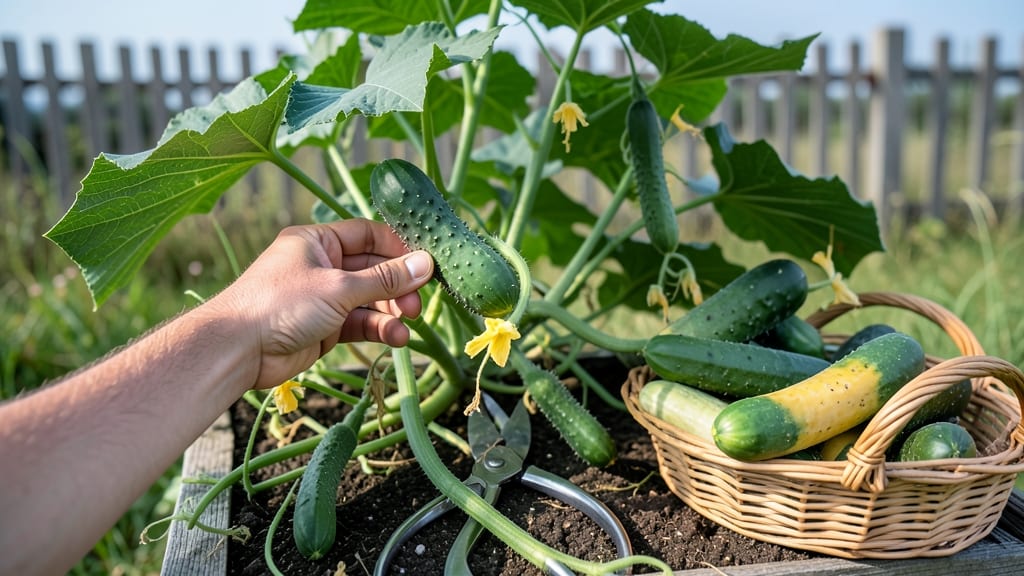
Harvest cucumbers when their prickly skin feels just right—sharp but not painful—because that’s the sweet spot between crunch and bitterness.
Those tiny, almost invisible prickles on 🥒 cucumbers aren’t just for show—they’re your secret weapon for knowing exactly when to harvest for maximum crunch and flavor.
Skip the guesswork: A cucumber’s prickles soften as it ripens, but if you wait too long, the texture turns mealy and the seeds harden. That’s why 3 simple tactile tests—skin firmness, prickle sharpness, and stem separation—can save your harvest from overripening.
In this guide, I’ll show you how to use these tests to pick cucumbers at their peak, whether you’re growing slicing types for salads or pickling varieties for jars.
3 Tactile tests to determine prickly cucumber harvest readiness
Harvesting cucumbers at the perfect moment transforms your garden into a crunchy, flavor-packed treasure trove. The prickly skin isn’t just decorative—it’s a built-in ripeness indicator. Unlike smooth-skinned varieties, prickly cucumbers (like 'Boston Pickling' or 'Northern Pickling') develop tiny spines that soften as they mature.
But how do you know when they’re just right? These 3 tactile tests will give you the confidence to pick at peak freshness.
First, let’s debunk a common myth: prickles don’t disappear when cucumbers are ripe—they simply soften and dull. Overripe cucumbers lose their crunch and develop a mealy texture, while underripe ones stay rock-hard.
The key is finding that sweet spot where the skin yields slightly to touch but still feels firm. Master these tests, and you’ll never waste a single cucumber again.
Press gently with your thumbnail. A ripe cucumber yields slightly but doesn’t dent.
Run your finger over the prickles. Ready cucumbers have dull, soft spines—not sharp or brittle.
Gently twist the cucumber at the stem. It should detach cleanly with minimal resistance.
The skin texture test is your first line of defense against bland cucumbers. Press your thumbnail into the cucumber’s skin—if it resists slightly but doesn’t feel like a rock, it’s ready. Think of it like testing a ripe avocado: just enough give to know it’s mature, not mushy.
I’ve learned the hard way that overripe cucumbers (which feel spongy) turn bitter and seedy, while underripe ones (hard as a baseball) lack sweetness. Aim for that firm-yet-slightly-yielding feel.
Next, focus on the prickle sharpness. When cucumbers are young, their prickles feel sharp and stiff—almost like tiny needles. As they ripen, these prickles soften and dull, almost like sandpaper that’s been smoothed by water. To test this, simply run your finger along the cucumber’s surface.
If the prickles don’t prick your skin but still feel textured, you’ve hit the sweet spot. This test is especially crucial for pickling cucumbers, which should be harvested when their prickles are just beginning to soften.
Don’t overlook the stem separation test, which reveals whether the cucumber is still connected to the vine’s life support. Grab the cucumber near its stem and give it a gentle twist. If the stem snaps cleanly (with the stem cap detaching easily), it’s ready to pick.
If the stem resists or tears the cucumber, it’s not quite there yet. This test also helps you avoid overmature cucumbers, which often stay attached longer but develop a woody stem—signs of bitterness ahead.
Why do these tactile tests matter so much? Because harvest timing directly impacts flavor and texture. A cucumber picked at the right moment will have maximum crunch, minimal seeds, and a sweet, refreshing taste.
Harvest too early, and you’ll get a hard, bland cucumber; too late, and you’re left with a mealy, seedy disappointment. These tests ensure you’re always in that golden window of perfection—no guesswork required.
Pro tip: Harvest in the morning when cucumbers are cool and crisp. This gives you the best chance to assess their readiness accurately. I’ve found that morning-picked cucumbers also stay fresher longer, thanks to lower daytime temperatures reducing moisture loss.
Plus, harvesting early means you’ll encourage your plants to produce more cucumbers throughout the season—a win-win for your garden’s productivity.
For pickling cucumbers, aim to harvest when they’re 4-6 inches long and their prickles are just starting to soften. Slicing cucumbers, on the other hand, can wait until they’re 6-8 inches long with fully dulled prickles.
Pay attention to your specific variety, as some (like 'Straight Eight') are bred for larger sizes and longer ripening times. When in doubt, err on the side of harvesting early—cucumbers won’t ripen further once picked, but they’ll only get worse if left too long on the vine.
Remember, these tactile tests work best when combined with visual cues. Look for a deep, even green color (or the color specific to your variety) and a uniform shape.
If you spot yellowing or brown spots, it’s a sign the cucumber has been on the vine too long. By mastering these 3 simple tests, you’ll never second-guess your harvest again—and your taste buds will thank you every time you bite into a perfectly crisp, sweet cucumber.
Now grab your gardening gloves and head to the garden. The next time you’re eyeing a cucumber, take a moment to touch, twist, and press. Your future salads, pickles, and snacks will thank you for it. Happy harvesting! 🥒
Prickly vs. smooth cucumbers: what the skin texture reveals
A cucumber’s prickly skin isn’t just a texture quirk—it’s a flavor and maturity indicator. Prickles start sharp when young, then soften as the fruit ripens. But here’s the catch: slicing cucumbers should be harvested when prickles are still slightly sharp, while pickling varieties can handle a smoother skin.
The key is understanding how prickle development correlates with sweetness and crunch.
Young cucumbers with sharp prickles are ideal for fresh eating—they’re crisp, mild, and packed with water content. As prickles soften, the cucumber becomes sweeter but loses that signature crunch. Meanwhile, seeds inside harden over time, turning bitter if left on the vine too long.
That’s why timing your harvest based on prickle sharpness can mean the difference between a refreshing salad and a mealy disappointment.
🥒 Comparison Table: When to Harvest Cucumbers by Prickle Texture
| Prickle Texture | Best For | Harvest Size | Seed Maturity | Flavor Profile |
|---|---|---|---|---|
| Very Sharp | Slicing, fresh eating | 4–6 inches | Soft, small | Crisp, mild, sweet |
| Slightly Sharp | Pickling, salads | 5–7 inches | Firm, medium | Balanced crunch, mild |
| Smooth or Dull | Pickling (overripe), cooking | 7+ inches | Hard, bitter | Mealy, bitter, sweet |
For pickling cucumbers, you can afford to wait slightly longer—until prickles soften but before the skin turns yellow. This stage ensures enough crunch and acidity for ideal fermentation.
Meanwhile, slicing varieties like Marketmore or Straight Eight should be harvested when prickles are still sharp, around 5–7 days after flowering, depending on your climate.
Pro tip: Run your thumb along the cucumber’s skin. If prickles feel sharp but not painful, it’s perfect for fresh eating. If they’re dull or smooth, the cucumber is past its prime for slicing—though it might still work for pickling or cooking.
Pay attention to the stem end too: a yellow or brown color signals the cucumber has stopped growing and is ready for harvest.
Overlooking prickle texture can lead to bitter cucumbers or wasted harvests. For example, Bush Champion cucumbers (a pickling favorite) can handle slightly softer prickles, while Armenian cucumbers (smooth-skinned) should be picked when still firm. Always check the variety’s guidelines—some are bred for specific textures!
Harvesting at the right prickle stage isn’t just about taste—it’s about encouraging more production. When you pick cucumbers early (with sharp prickles), the plant redirects energy to producing new flowers and fruits.
Skip this step, and you’ll end up with a few overripe cucumbers instead of a bountiful harvest all season long.