
Picking
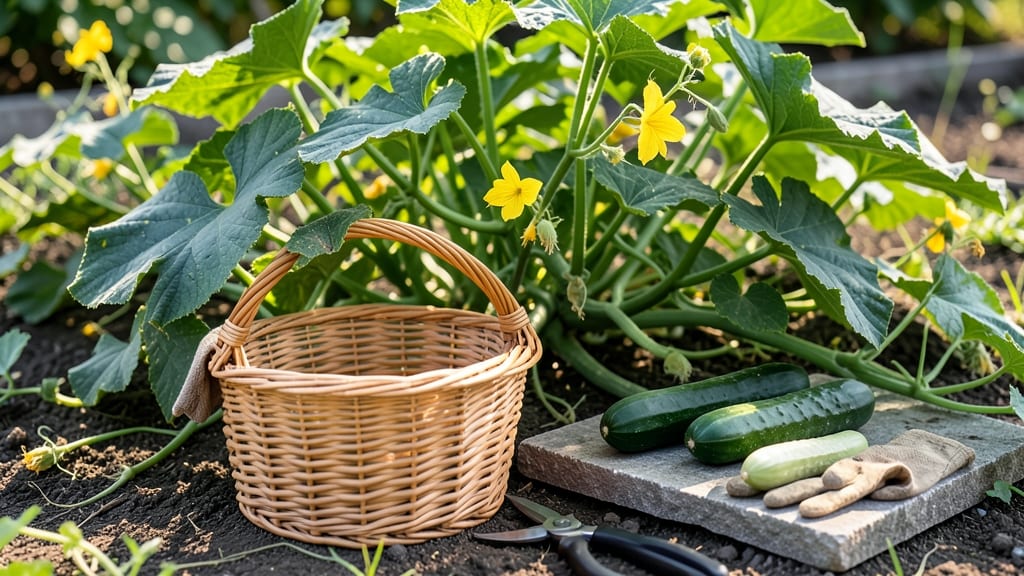
Harvesting cucumbers from your garden at the right time means the difference between a crisp, sweet bite and a mealy, bitter disappointment.
Picture this: you’ve been watching your 🥒 vines thrive all summer, but now you’re staring at a cucumber that’s either too small to use or too seedy to enjoy. Too late?
Too early? The truth is, timing isn’t just about guessing—it’s about knowing the 3 key checks that tell you exactly when to pick for peak flavor and texture.
Whether you’re growing slicing cucumbers for salads or pickling varieties for jars, the moment you harvest changes everything. Miss it, and you’ll end up with cucumbers that are either too tough or too soft, or worse, bitter from overripeness.
Get it right, and you’ll enjoy that satisfying crunch all season long.
In this guide, I’ll walk you through the size, color, and texture cues that signal the perfect harvest time, plus how to adjust for your climate zone and variety. By the end, you’ll never second-guess when to snip again.
3 Key size checks to harvest cucumbers at peak ripeness
Harvesting cucumbers at the perfect moment transforms your garden into a crisp, flavorful bounty—but timing is everything. Size matters most because overripe cucumbers turn bitter, while underripe ones lack that satisfying crunch.
The challenge? Different varieties demand unique size thresholds, and even within types, subtle cues determine readiness. Let’s break down the three essential size checks to nail your harvest every time.
First, recognize that slicing cucumbers and pickling cucumbers have distinct maturity standards. Slicing types like ‘Straight Eight’ or ‘Marketmore’ thrive at 6–8 inches long, while pickling varieties such as ‘Boston Pickling’ or ‘National Pickling’ should be harvested at 3–4 inches for that ideal tangy crunch.
Ignoring these differences often leads to bitter, seedy, or mealy textures—so always check the variety’s guidelines before picking.
| Variety Type | Ideal Length | Diameter | Weight | Key Maturity Cue |
|---|---|---|---|---|
| Slicing (e.g., 'Straight Eight') | 6–8 inches | 2–3 inches | 8–12 oz | Firm skin, slight give when pressed |
| Pickling (e.g., 'Boston Pickling') | 3–4 inches | 1–2 inches | 4–6 oz | Bright color, bumpy skin texture |
| Mini/Heirloom (e.g., 'Lemon Cucumber') | 4–6 inches | 1.5–2.5 inches | 3–5 oz | Yellowing stem end, tender skin |
| Overripe (Avoid!) | 10+ inches | 3+ inches | 16+ oz | Bitter taste, hard seeds, yellowed skin |
Beyond length, diameter and weight reveal a cucumber’s readiness. A slicing cucumber should feel heavy for its size—think of a softball’s weight for a 7-inch cucumber. Pickling types, however, stay lighter (4–6 ounces) to avoid mealiness.
Weighing your harvest isn’t just guesswork; it’s a science-backed shortcut to consistency. Use a kitchen scale for precision or compare to familiar objects like a tennis ball (6 oz) or apple (5 oz).
Don’t overlook the stem’s role in signaling ripeness. When a cucumber is ready, the stem near the vine will separate cleanly with a slight twist—almost like a popcorn kernel popping off the cob. If the stem resists or snaps back, the cucumber needs more time.
Conversely, if the stem crushes easily or the cucumber detaches with no resistance, it’s overripe. This stem test is your fastest way to avoid bitter cucumbers.
Common mistakes often stem from harvesting too late due to neglect. Cucumbers left on the vine beyond their prime develop bitter cucurbitacin compounds, a natural defense mechanism against pests. The fix? Check your plants every 2–3 days during peak season (July–September in most zones).
Set a reminder or tie a bright ribbon to the vine as a visual cue to inspect regularly. Pro tip: Morning harvests keep cucumbers crisp longer by preventing afternoon heat stress.
Underripe cucumbers are just as problematic—they’re watery, seedy, and lack flavor. To avoid this, start harvesting when cucumbers reach 50% of their ideal length (e.g., a 3-inch pickling cucumber at 1.5 inches). Use a gentle squeeze test: press your thumbnail into the skin.
If it dents slightly but doesn’t puncture, it’s ready. If the skin springs back like a trampoline, wait another day or two.
For bush varieties (like ‘Bush Champion’), focus on width over length—they rarely exceed 6 inches. These compact plants produce smaller, denser fruits, so harvest when they’re rounder than oval.
Meanwhile, vining types (e.g., ‘Arkansas Little Leaf’) can grow 12+ inches long if unchecked. Prune excess vines to redirect energy to <
How to tell when cucumbers are ready beyond size: 5 visual clues
Size alone isn’t the best indicator of cucumber ripeness—sometimes the smallest cucumbers are the sweetest, while larger ones can turn bitter. I’ve learned to rely on visual cues that reveal when cucumbers are truly ready to pick.
These clues help me avoid overripe cucumbers (which develop a bitter taste) and underripe ones (too tough to enjoy). Whether you're growing slicing cucumbers or pickling varieties, mastering these signs will transform your harvest.
Greenhouse-grown cucumbers often ripen faster due to controlled conditions, while outdoor plants may need extra time. I adjust my harvesting frequency based on these visual signals to keep my vines productive all season.
For example, in hot climates, cucumbers may ripen in just 50 days, while cooler zones might take up to 70 days. Paying attention to these ripeness indicators ensures you never miss the perfect moment to harvest.
- 1 Stem Color Change: Look for a yellow or white stem end—this signals the cucumber has fully matured. A green stem means it’s still too early.
- 2 Skin Firmness Test: Gently press the cucumber with your thumbnail. If it yields slightly but still feels firm, it’s ready. A soft or spongy texture means it’s overripe.
- 3 Color Uniformity: Check for an even deep green hue (or variety-specific color). Uneven or yellowing patches indicate overripeness, while pale spots mean it’s not ready.
- 4 Stem Separation: Gently twist the cucumber at its stem. If it snaps cleanly with minimal force, it’s ripe. Resistance means it’s not ready yet.
- 5 Blemish Patterns: Tiny surface bumps (like small raised dots) are normal, but large soft spots or mold mean it’s past its prime. Harvest before blemishes spread.
In greenhouse settings, cucumbers often ripen faster due to consistent warmth and humidity. I check for these visual cues every 2-3 days to avoid missing the window. For outdoor plants, uneven sunlight can cause uneven ripening, so I prioritize harvesting cucumbers facing full sun first.
Adjusting my harvesting schedule based on these clues keeps my plants producing continuously.
One common mistake is waiting for cucumbers to reach their maximum size—this often leads to bitter cucumbers. Instead, I harvest when they’re 6-8 inches long (for slicing types) or 2-3 inches long (for pickling).
The skin texture is another key factor: a smooth, slightly waxy surface is ideal, while a dull or wrinkled skin signals overripeness. By combining these visual checks with regular harvesting, I ensure a steady supply of crisp, flavorful cucumbers all season.
Pro tip: Use a sharp pair of pruners to harvest cucumbers cleanly, leaving a small stem attached. This reduces vine stress and prevents disease entry points. For continuous production, I pick 2-3 cucumbers per plant every 2 days** during peak season.
This encourages the plant to focus on producing more fruit rather than letting existing cucumbers overripe.