
How To
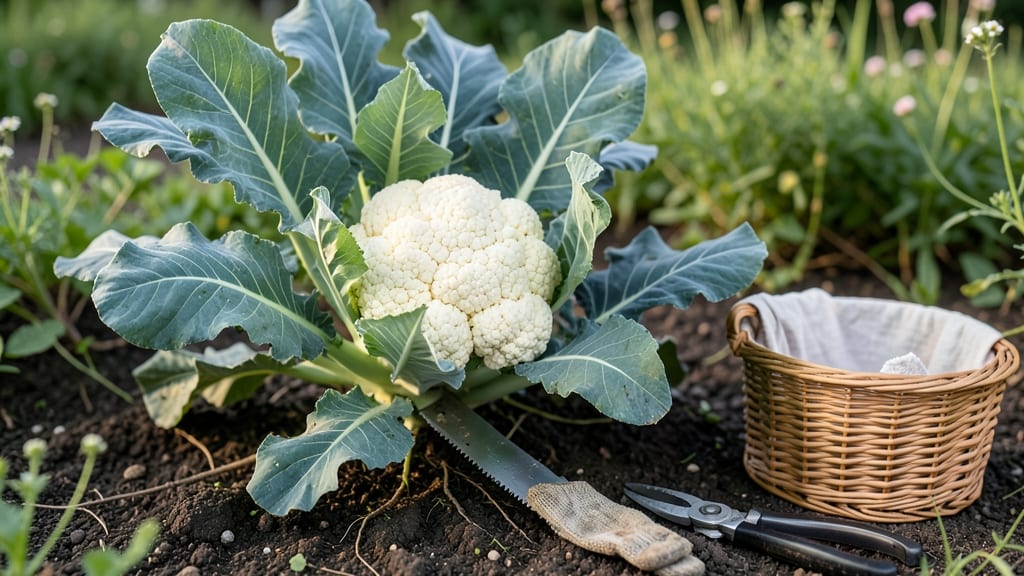
To harvest cauliflower at its peak, watch for tight curds and cupping leaves—this is the perfect moment to pick before the buds open and the flavor toughens.
Picture this: you’ve nurtured your 🥬 from a tiny seedling, and now the head is firm, compact, and the outer leaves are starting to yellow. That’s your cue—wait any longer, and you’ll end up with a woody, bitter mess. Trust me, I’ve learned the hard way.
Timing is everything, and the right technique makes all the difference. In this guide, I’ll walk you through the exact signs to look for, how to cut the head cleanly without damaging the plant, and even how to encourage a second harvest if your variety allows it.
By the end, you’ll know when to pick, how to do it right, and how to store your harvest so it stays fresh for weeks—no more wasted effort or sad, overripe curds.
When to harvest cauliflower: key visual and physical signs
Timing your cauliflower harvest correctly ensures you get the tightest, whitest curds packed with flavor. Miss the window, and you’ll end up with loose, yellowing heads that crumble at the touch. The secret lies in watching for three key visual cues: head size, leaf color, and firmness.
I’ve learned from years of garden trials that even a single day’s delay can turn a perfect harvest into disappointment.
First, focus on the head diameter. Ideal cauliflower curds reach 6-8 inches across when fully formed. Smaller heads (under 5 inches) often lack the tight, compact texture you crave, while oversized ones (over 10 inches) become loose and stringy.
My purple cauliflower varieties, like ‘Graffiti,’ mature slightly faster than whites, so I check them 2-3 days earlier than standard types.
Next, observe the outer leaves. When they start yellowing and dying back, it’s your plant’s way of signaling that the head is ready. These leaves will eventually wilt and cup inward, creating that classic bowl shape around the curd.
If you see green leaves still thriving around the head, wait 3-5 more days—the curd isn’t mature yet. I once harvested a batch too early because I ignored this sign, and the curds were spongy and underdeveloped.
Finally, perform the firmness test. Gently squeeze the cauliflower head—it should feel solid and heavy for its size, like a dense cabbage. If it feels soft or spongy, it’s overripe. Underripe heads will be lightweight and loose.
Pro tip: Check the color consistency too. White cauliflower should be creamy and uniform, while purple varieties like ‘Graffiti’ should have deep, even hues without green streaks.
| Sign | Description | Action |
|---|---|---|
| Head Size | 6-8 inches in diameter | Harvest when fully formed |
| Leaf Color | Outer leaves yellowing and dying back | Check for cupping leaves |
| Firmness | Solid, heavy, and compact | Squeeze gently to test |
| Color | Uniform and fully developed | No green streaks or browning |
| Weather Impact | Cooler temps slow ripening | Adjust harvest window by 2-3 days |
Weather plays a surprising role in harvest timing. Hot, dry spells can accelerate maturity, while cool, cloudy weather slows it down. In my Zone 6a garden, I’ve found that June harvests often ripen 5-7 days faster than those in late July due to summer heat.
If your plants are struggling in extreme heat, provide light shade cloth to protect them while maintaining consistent moisture—this can delay harvest by 3-5 days.
Premature harvesting is just as bad as waiting too long. If you pick your cauliflower too early, the curds will be small, loose, and underdeveloped, lacking the tight cell structure that makes them perfect for roasting or steaming.
I once harvested a batch a week early because I misjudged the signs, and the curds were so flimsy they fell apart when blanched. On the flip side, overripe cauliflower turns yellow, bitter, and stringy, with buds opening at the center—a clear sign it’s past its prime.
One trick I’ve perfected is the "leaf test". If you see the outer leaves curling inward like a half-closed umbrella, that’s your plant’s way of protecting the fully formed head inside. This cupping action happens 24-48 hours before the curd is ready.
I’ll often mark these plants with a small stake so I don’t miss the harvest window. For large varieties like ‘Romanesco,’ which can weigh 5+ pounds, I harvest 1-2 days earlier than smaller types—they mature faster and are more prone to overripening.
Don’t forget about regrowth potential. If you notice small side shoots forming after the main head, you can harvest those too! These secondary curds are often smaller but just as flavorful.
To encourage regrowth, cut the main head 1 inch above the base and keep the plant well-watered and fertilized with a low-nitrogen feed. I’ve harvested 2-3 smaller curds from a single plant this way, extending my harvest season by 3-4 weeks.
For container growers, timing is even trickier because potted cauliflower matures 5-10 days faster than in-ground plants. The limited root zone stresses the plant, pushing it to ripen quicker.
If you’re growing in 5-gallon containers, watch for harvest signs 2-3 days earlier than recommended. I once grew ‘Snowball Y Improved’
Step-by-step guide to harvesting cauliflower without damaging the plant
Harvesting cauliflower at the right time and with the right technique ensures you get a tender, flavorful head while keeping your plant healthy for potential regrowth.
The key is acting quickly once you spot those yellowing outer leaves and a firm, compact curd—this is your plant’s way of saying, "Pick me now!"
I’ve made every beginner’s mistake: waiting too long and ending up with a woody, bitter head, or cutting too aggressively and damaging the stem.
Don’t worry—this step-by-step guide will show you exactly how to harvest like a pro, from the tools you’ll need to the precise cutting technique that leaves your plant ready for a second chance at a harvest.
- Gather your tools: A sharp pruning shears or chef’s knife, a clean bucket of water, and a gardening glove (optional, for grip).
- Check for readiness: Gently squeeze the cauliflower head. It should feel firm and heavy for its size, with outer leaves yellowing but not fully brown.
- Cut cleanly: Hold the pruning shears at a 45-degree angle and slice about 1 inch below the curd, leaving the stem intact to encourage regrowth.
- Handle large heads: If the head is oversized (10+ inches), support its weight with your other hand to avoid tearing the stem or damaging nearby leaves.
- Store immediately: Place the harvested cauliflower in water in a cool, shady spot for up to 2 hours before storing to maintain freshness.
- Encourage regrowth: After cutting, water the remaining stem and apply a balanced fertilizer (like 5-10-10) to promote a second harvest in 4-6 weeks.
One common mistake I see is cutting too close to the stem, which can expose the plant to pests or rot. Always leave that 1-inch buffer—it’s the difference between a healthy regrowth and a struggling plant.
For purple or orange varieties, the color will deepen as it matures, so don’t wait until it’s fully vibrant.
If your cauliflower head starts to split or open, it’s already past its prime. The buds inside will turn yellow and woody, making it inedible.
Harvesting at the right moment ensures you get a tight, snow-white (or colorful!) curd that’s perfect for roasting, steaming, or raw snacks like crudités.
Pro tip: For continuous harvests, plant a mix of early, mid, and late-maturing varieties. This way, you’ll have fresh cauliflower ready to pick every few weeks throughout the growing season. Just remember—timing and technique are your best friends in the garden! ✂️🥬