
Picking
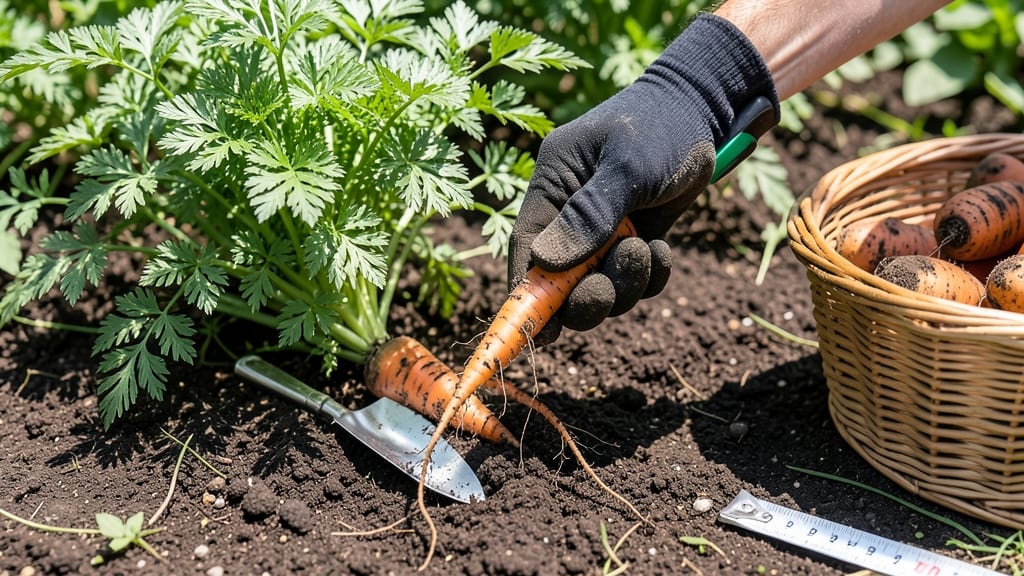
Harvesting carrots from your garden at the right time means the difference between sweet, crisp roots and tough, bitter disappointments 🥕 — and the best part? You don’t need a calendar to know when.
Pulling too early means tough, bitter roots, while waiting too long risks splitting or woody texture. But how do you really know when your carrots are ready? The answer lies in three simple tactile tests that reveal the perfect moment for peak sweetness and texture.
First, check the soil resistance: gently wiggle a mature carrot—if it slides out easily, it’s ready. Next, assess the leaf size: tops should be about 4-6 inches tall with vibrant green color. Finally, look at the root’s diameter: most varieties hit 1-3 inches when fully mature.
Below, I break down these three tactile tests, how to adjust for your region’s climate, and the best storage tips to keep your harvest fresh for weeks. No guesswork—just perfect timing.
3 Tactile tests to determine carrot harvest readiness
Carrots are ready to harvest when they’ve reached their full flavor potential—but determining that perfect moment often feels like guessing. Overlooking these subtle tactile cues can mean sacrificing crispness for toughness or letting roots split in the ground.
The good news? You don’t need fancy tools to assess maturity. Instead, rely on simple touch-based checks that reveal when your carrots are primed for pulling.
These three tests—soil resistance, finger-width gauge, and leaf color analysis—work together to pinpoint the ideal harvest window. Each method builds on the last, ensuring you never pull a carrot too soon or too late.
I’ve used these techniques for years in my garden, and they’ve saved me from bitter, woody roots and overgrown messes.
Here’s how to apply them step by step, with clear indicators for each stage of maturity:
-
Soil Resistance Test
Press gently on the soil around the carrot tops. If the earth resists slightly but gives way with light pressure, the roots are likely 1-2 inches thick—the perfect size for sweetness. Too soft? They’re still growing. -
Finger-Width Gauge
Wrap your thumb and forefinger around the exposed carrot top. If your fingers meet with 1/4 to 1/2 inch to spare, the root below is ready. This method works best for Danvers or Chantenay varieties, which grow thicker. -
Leaf Color Analysis
Check the topmost leaves. Ready carrots have deep green, lush foliage with no yellowing. If leaves start browning or wilting, harvest within 2-3 days to avoid woodiness.
Timing matters most in cooler climates (USDA Zones 3-5), where carrots mature slower. In these regions, combine the soil test with the finger-width gauge—if your fingers meet with less than 1/2 inch to spare, it’s time to harvest.
Warmer zones (Zones 6-10) can rely more on leaf color, as heat accelerates growth.
For baby carrots (harvested at 1 inch), skip the finger test and focus on the soil resistance—light pressure should reveal tender roots. My early-season Nantes carrots often reach this stage in just 50 days, so I check soil resistance weekly starting at day 45.
One common mistake? Ignoring the stem end color. A yellow or brown stem signals maturity, while a green stem means more time in the ground.
I learned this the hard way—once, I pulled carrots with green stems, and they tasted bland. Now, I always cross-check this with the tactile tests.
Pro tip: Harvest in the morning after dew has dried. The soil is cooler, roots are firmer, and you’ll avoid disturbing nearby plants. Use a fork or trowel to loosen soil gently before pulling—never yank! This prevents splitting, especially for larger Danvers varieties.
After harvesting, store carrots in a cool, dark place (50-60°F) with high humidity. A damp towel in the crisper drawer mimics their ideal growing conditions, keeping them crisp for 2-3 weeks. If you’ve mastered these tactile tests, you’ll always pull carrots at peak flavor—no guesswork needed!
Carrot variety harvest timelines: when to expect peak sweetness
Not all carrots mature at the same pace—variety, climate, and soil conditions dramatically shift harvest timelines. While Nantes carrots may reach peak sweetness in 60-70 days, Danvers varieties can take 75-85 days to develop their signature bold flavor.
Understanding these differences helps you plan planting schedules and avoid disappointment when pulling carrots that aren’t quite ready.
Climate plays a critical role: cooler regions (Zones 3-5) often see delayed maturation by 10-15 days compared to warmer zones (Zones 6-10). Soil temperature below 50°F slows root development, while consistent warmth accelerates growth.
Even within the same variety, early spring plantings may take 2 weeks longer to harvest than fall plantings in the same location.
| Variety | Days to Maturity | Root Size | Climate Adjustment |
|---|---|---|---|
| Nantes | 60-70 days | 1-2 inches (long, tapered) | +10 days in Zones 3-5 |
| Danvers | 75-85 days | 2-3 inches (short, stout) | +15 days in high altitudes |
| Chantenay | 70-80 days | 1.5-2.5 inches (cylindrical) | -5 days in Zones 8-10 |
| Paris Market | 50-60 days | 0.5-1 inch (round, baby) | No adjustment needed |
For early-season planting (March-April), aim to harvest Nantes varieties by late June to avoid heat stress. In my Zone 6a garden, I plant Nantes in early April and use row covers to extend the season—this pushes harvest to mid-July instead of late June.
Late-season plantings (August) should be harvested by October 15 before frost sets in.
Soil type also matters: sandy soils speed up maturation by 10-15 days compared to clay, while loamy soil provides the ideal balance. I always amend my clay-heavy soil with compost and sand to prevent delayed harvests.
If your carrots are taking longer than expected, check soil drainage—waterlogged conditions can stall growth entirely.
Pro tip: Use successive planting to stagger harvests. Plant Nantes every 2 weeks from March to June for continuous harvests through October. This works especially well in warmer climates (Zones 7-10), where you can extend the season into early November.
Always keep a planting journal to track which varieties perform best in your microclimate.
Remember: peak sweetness occurs when roots are fully colored and firm to the touch. Don’t rely solely on days-to-maturity charts—combine variety timelines with the tactile tests from Section 1 for foolproof results. With this approach, you’ll always pull carrots at their sweetest, crispest stage.