
How To
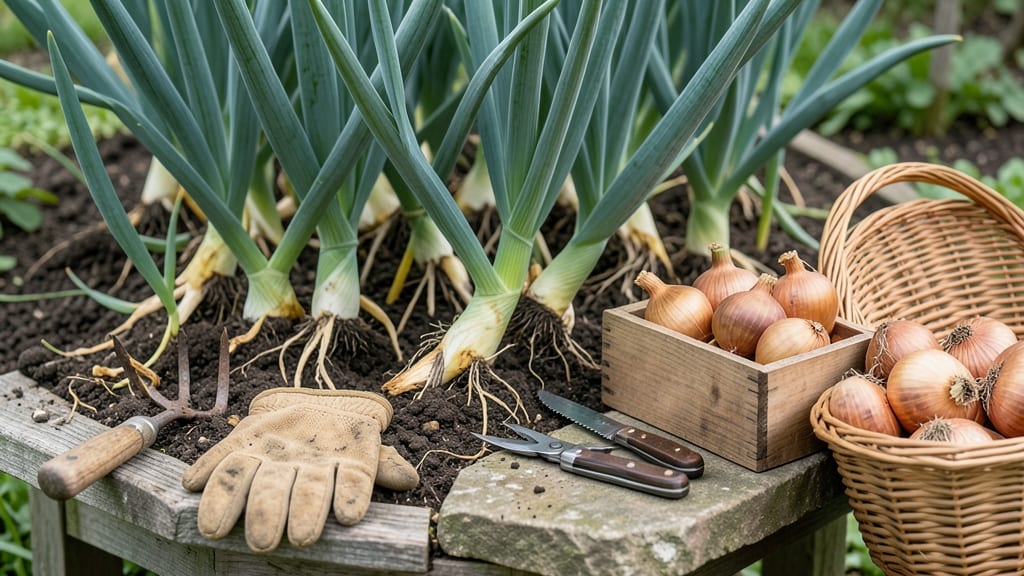
Harvesting onions at the right time ensures sweet, flavorful bulbs instead of bitter, overgrown disappointments—here’s how to nail the timing with foolproof methods.
Picture this: you’ve spent months tending to your 🧅 onions, and now the moment of truth arrives. But how do you know when those bulbs are truly ready? The answer lies in two simple clues: a papery neck and a 1-inch diameter.
Miss these signs, and you risk ending up with tough, pungent onions that won’t store well.
For most gardeners in USDA Zone 6a, the ideal harvest window falls between late summer and early fall—typically July through August for spring plantings. But timing can shift depending on your onion variety and local climate.
Short-day onions mature faster in warmer regions, while long-day types need that extra cool snap to sweeten up.
In this guide, I’ll walk you through the exact visual cues to watch for, how to test maturity with a simple finger squeeze, and why harvesting at the right moment makes all the difference. No more guesswork—just perfect, storage-ready onions every time.

The papery skin & 1-Inch diameter rule: visual cues for perfect harvest timing
Harvesting onions at the right moment transforms your garden into a treasure trove of flavorful bulbs. The two most reliable indicators—papery neck skin and a 1-inch bulb diameter—are your secret weapons.
When these signs appear together, your onions are primed for peak sweetness and storage potential. Ignoring them risks bitter, pithy bulbs that spoil quickly.
First, let’s tackle the papery skin clue. This isn’t just any dryness—it’s a crisp, almost translucent texture forming around the bulb’s neck where it meets the soil. Think of it like the wrinkled paper of a dried apple.
This natural process signals the onion has stopped actively growing upward and redirected energy into bulb development. Short-day varieties (common in warm climates) often show this first, while long-day onions (northern climates) may take 2-3 weeks longer.
Next, the 1-inch diameter rule is your fail-safe backup. Use a ruler or your thumb as a guide—when bulbs reach about the size of a quarter, they’re typically ready. Pro tip: Dig up one test bulb to check its firmness.
If it feels solid like a baseball when gently squeezed, it’s harvest-ready. Soft bulbs mean you waited too long; hard-as-rock ones need more time.
| Harvest Indicator | What to Look For | When It Happens | Action |
|---|---|---|---|
| Papery Neck Skin | Crisp, dry skin forming at bulb base | Late summer to early fall | Harvest within 1-2 weeks |
| 1-Inch Bulb Diameter | Bulbs reach ~1" (quarter-sized) | 90-120 days after planting | Test firmness; harvest if ready |
| Yellowing Tops | Green leaves turn yellow/brown | Follows papery skin by 3-7 days | Harvest immediately |
| Green Onions Exception | Harvest when greens reach 6-8" | 4-6 weeks after planting | Cut tops 1" above soil |
Seasonal timing matters more than you might think. In USDA Zone 5-7, aim for harvest between late July and early September for spring-planted onions. Fall-planted varieties (like storage onions) should be harvested the following May-June before bolting.
Southern gardeners in Zones 8-10 can extend harvests into October-November, but watch for early frost warnings.
There’s one critical exception: green onions (scallions) follow different rules. They’re ready when their greens reach 6-8 inches tall, regardless of bulb size. Simply snip the tops 1 inch above the soil—this encourages regrowth for multiple harvests.
For storage onions, though, never harvest green onions this way; it stunts bulb development.
Pro move: Test one bulb from each plant to avoid over-harvesting. If it’s firm and papery, go for the whole batch. If it’s still soft or under 1 inch, wait 5-7 days.
Overripe onions become hollow and pithy, while underripe ones lack flavor and store poorly. Balance is key—like Goldilocks and her porridge, but for onions.
After harvest, cure your onions for 2-3 weeks in a dry, shaded spot with good airflow. This toughens the skins and extends storage life. Skip this step, and your onions will spoil within weeks.
For long-term storage, braid or hang them in a cool, dark place. With perfect timing, your harvest could last until next spring’s first planting.
Remember: Papery skin + 1-inch diameter is your golden ticket to onion perfection. Master these cues, and you’ll never again wonder, "Are my onions ready?" The answer will be written right there in your garden’s visual language. 🧅
How to test onion maturity before harvesting: the finger squeeze method
When your 🧅 onions reach the right stage, they’ll tell you with a simple touch. The finger squeeze method is my go-to trick for determining maturity without guessing. This tactile test reveals whether your bulbs are perfectly ripe or still need time in the ground.
I’ve used it for years, and it’s saved me from harvesting too early—and dealing with those disappointing, pungent results.
The key is understanding what firmness feels like versus softness. A mature onion bulb should feel solid when gently squeezed, almost like a ripe apple. If it gives slightly but holds its shape, you’re in the sweet spot.
But if it feels mushy or hollow, you’ve waited too long. This method works for both storage onions and fresh harvests, making it a versatile tool for any gardener.
Before you grab that onion, make sure the tops have yellowed and fallen over. This is your first visual cue that the bulb below is maturing. Once you see this, it’s time to test the firmness.
The neck of the onion should also feel dry and papery—this is nature’s way of signaling it’s harvest time. If the neck is still green and flexible, your onions need more time.
⚠️ callout warning ⚠️
Premature harvest: Bulbs <1 inch—soft, pungent, won’t store. Overripe harvest: Hollow centers, bitter flavor. Test firmness + papery neck before digging. For USDA Zone 6a, aim for July-August when tops yellow naturally. If unsure, wait 1-2 weeks—better late than early!
To perform the test, gently grasp the bulb between your thumb and forefinger. Apply just enough pressure to feel the outer skin’s resistance. A mature onion will feel dense and slightly springy, almost like a well-inflated balloon.
If it feels hollow or squishy, it’s overripe. This test works best in the morning when the bulbs are cool and hydrated—afternoon heat can make them feel softer than they are.
If your onions feel firm but the tops are still green and upright, they’re not ready yet. Give them another 1-2 weeks and retest. Patience is key here—rushing the harvest leads to small, weak bulbs that won’t store well.
For green onions or scallions, the rules are different: harvest when the green shoots reach 6-8 inches tall, regardless of bulb size.
Once you’ve confirmed maturity with both the visual and tactile tests, it’s time to harvest. Use a garden fork to loosen the soil around the base, then gently lift the onion. Let them cure in the sun for 3-5 days to toughen the skins before storing.
This simple method has never failed me, and it’ll give you the confidence to harvest onions at their peak flavor and storage potential.