
How To
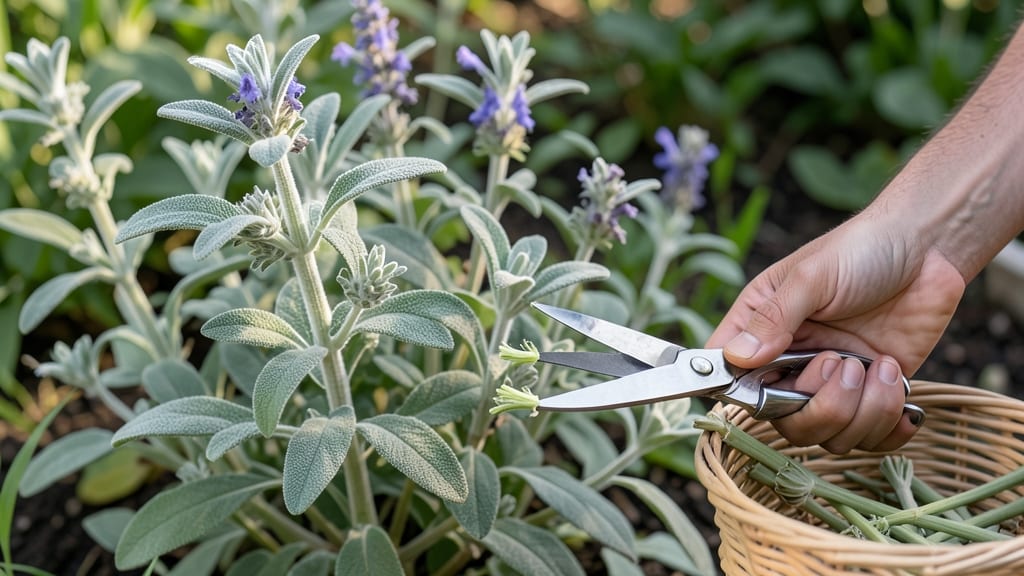
To harvest sage so it keeps growing, focus on timing and technique—cutting too much or too late can stress the plant and stunt future yields.
Harvesting fresh sage from your garden shouldn’t mean sacrificing future growth—with the right techniques, you can keep your sage thriving while enjoying a steady supply of aromatic leaves all season long.
Many gardeners make the mistake of snipping leaves willy-nilly, only to watch their sage struggle to bounce back. The key is patience: wait until the plant has at least 6-8 inches of growth before harvesting, and never take more than one-third of the plant at once.
In this guide, I’ll walk you through the best times to harvest, how to prune for maximum regrowth, and seasonal care tips to keep your 🌿 sage productive from spring through fall.
When and how to harvest sage without killing the plant
Harvesting sage at the right time ensures you get the most flavorful leaves while keeping your plant healthy and productive. The key is timing—harvesting too early or too aggressively can stunt growth, while proper techniques encourage bushier, more vigorous plants.
I’ve learned that spring and early fall are the best times to harvest, but there’s more to it than just picking leaves.
Sage is a hardy perennial that thrives when you follow a few simple rules. The most important is to never remove more than one-third of the plant at once. This rule protects the plant’s energy reserves and encourages regrowth.
If you over-harvest, you’ll end up with a leggy, weak plant that struggles to recover. I’ve seen gardeners make this mistake and end up with sage that takes years to bounce back.
Another critical factor is when you harvest. Morning is the best time because the oils in the leaves are most concentrated after a cool night. Plus, harvesting in the morning means the leaves dry faster, reducing the risk of mold or rot.
If you must harvest later in the day, choose a shady spot to avoid wilting.
Before you start cutting, make sure your sage plant is healthy and mature. Look for deep green leaves with a strong aroma—this means the plant is ready. If the leaves are small or lack fragrance, wait a few more weeks.
Young sage plants are especially sensitive, so avoid heavy harvesting until they’re at least 12 inches tall and well-established.
Step-by-Step Guide to Harvesting Sage
- 1 Choose the right time: Harvest in spring or early fall when the plant is actively growing. Avoid harvesting in winter or late fall when growth slows.
- 2 Select the stems: Look for healthy, woody stems with at least 4-6 inches of growth. Avoid cutting stems that are too soft or have yellowed leaves.
- 3 Use clean pruners: Use sharp, sterilized pruners or scissors to make clean cuts. Avoid tearing the stems, which can damage the plant and invite disease.
- 4 Cut just above a leaf node: Make your cut 1/4 inch above a leaf node (where leaves grow from the stem). This encourages new growth from that spot.
- 5 Limit harvest to 1/3 of the plant: Never remove more than one-third of the plant’s foliage in a single harvest. This rule keeps the plant strong and ensures it can recover.
- 6 Harvest in the morning: Pick leaves early in the day (before 10 AM) when essential oils are at their peak. This also reduces stress on the plant.
- 7 Post-harvest care: After harvesting, water the plant lightly and add a thin layer of mulch to retain moisture and protect roots.
Seasonal timing plays a huge role in how well your sage recovers. In spring, the plant is just waking up from dormancy, so focus on harvesting new growth rather than mature stems.
This encourages the plant to fill out and become bushier. By early fall, sage is storing energy for winter, so limit harvesting to avoid stressing the plant before its dormant period.
If you’re growing sage in containers, be extra cautious with harvesting. Potted sage has less root space, so it’s more vulnerable to over-harvesting. Stick to the one-third rule and avoid cutting into old, woody stems, which won’t regrow. Instead,
Pruning mistakes that stunt sage growth (and how to avoid them)
Sage is a hardy herb, but it’s surprisingly sensitive to aggressive pruning. Many gardeners accidentally over-prune or cut the wrong stems, which weakens the plant and slows regrowth. The key is to prune strategically—always targeting older growth while preserving the plant’s energy reserves.
One of the biggest mistakes is harvesting new growth too early in the season. Young sage stems are tender and haven’t stored enough energy to recover from heavy cuts. Wait until the plant has at least 6-8 inches of mature growth before making your first harvest.
Another common error is cutting stems too close to the base. Always leave at least 1-2 inches of stem above a leaf node. This ensures the plant retains its ability to regenerate new shoots from the remaining stem.
⚠️ ⚠️ WARNING: Avoid These Pruning Mistakes ⚠️ ⚠️
⚠️ Harvesting New Growth Too Early
Cutting tender new shoots in spring starves the plant of energy. Wait until leaves are fully mature and aromatic before pruning.
⚠️ Removing More Than 1/3 of the Plant
Never take more than 30% of the plant at once. Heavy pruning stresses sage and can lead to stunted regrowth or even death.
⚠️ Cutting at the Wrong Angle
Use clean, sharp shears to make cuts at a 45-degree angle above a leaf node. Ragged cuts invite disease and slow healing.
Timing matters too—avoid pruning in late summer or fall when the plant is preparing for dormancy. Instead, focus on early spring or late spring when new growth is just starting. This gives sage enough time to recover before winter.
To encourage bushier growth, I recommend pruning just above a set of leaves rather than at the very base. This stimulates lateral branching, resulting in a fuller, more productive plant. Think of it as "training" your sage to grow wider rather than taller.
Finally, never skip the post-pruning care. After harvesting, give your sage a light watering and a dose of balanced fertilizer (like 5-10-10) to replenish nutrients. This helps the plant bounce back faster and prepares it for the next harvest cycle.
With these tips, your sage will stay healthy, bushy, and productive for years—no more struggling plants after harvest! 🌿