
Vegetables
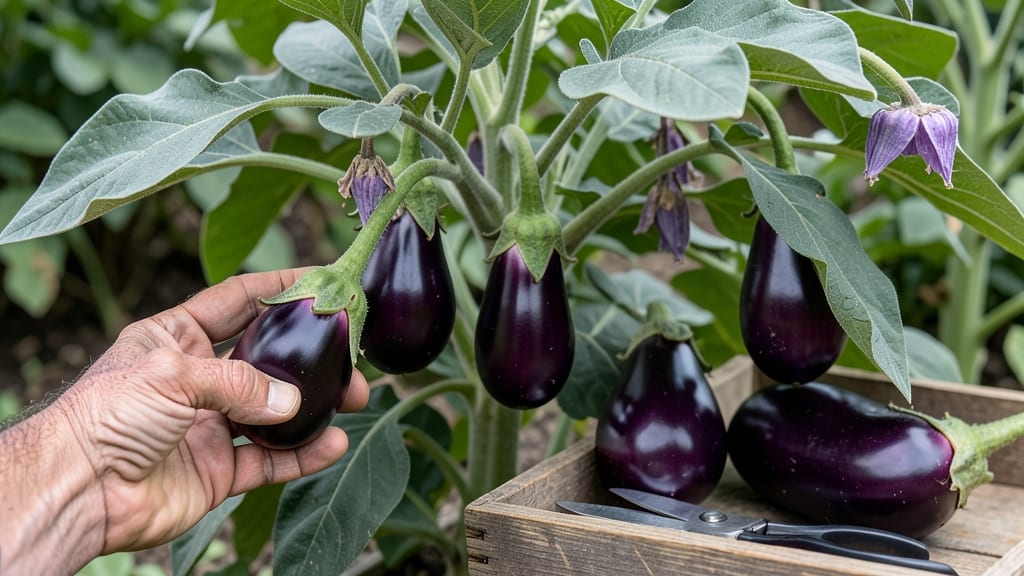
Knowing the exact eggplant harvest time can turn a good crop into an extraordinary one—because waiting too long means tough, bitter fruit, while picking too soon leaves you with bland, seedy disappointment.
Most gardeners miss the sweet spot because they focus on days after flowering instead of the subtle visual cues that matter most: skin color, size, and how the fruit yields to gentle pressure.
I’ve wasted entire harvests by ignoring these signs, and I’m here to help you avoid the same mistake.
In USDA Zone 6a, your 🍆 eggplants typically reach peak ripeness between July and September, but timing depends on variety and growing conditions. A glossy, deep purple (or your chosen color) skin and a firm texture that gives just slightly when pressed are your best clues.
Below, I’ll walk you through the step-by-step method to test ripeness, regional adjustments for cooler climates, and what happens if you harvest too early or too late—so you can enjoy eggplants at their absolute best.
How to identify eggplant harvest time by skin color and size
Eggplants reveal their ripeness through subtle changes in skin color and fruit size, but these cues vary dramatically between purple, white, and green varieties.
For example, a Black Beauty eggplant might appear deep purple at harvest, while a White Eggplant will turn creamy white with faint yellow-green undertones. Understanding these differences ensures you pick your eggplants at their flavor peak.
Sunlight exposure plays a critical role in color development. Eggplants grown in full sun (6+ hours daily) develop richer, deeper hues faster than those in partial shade. However, overripe eggplants exposed to too much direct sunlight can develop sunburned patches—look for uneven coloration as a warning sign.
The key is balancing sunlight with consistent moisture to maintain vibrant, even coloring.
Here’s how to spot the perfect harvest window using visual cues and size benchmarks for common varieties:
| Variety | Mature Color | Ideal Size (Length) | Harvest Time After Flowering | Key Ripeness Cues |
|---|---|---|---|---|
| Black Beauty | Deep purple/black | 6–8 inches | 70–80 days | Glossy, firm skin; stem snaps easily |
| Ichiban | White with green stripes | 4–6 inches | 65–75 days | Creamy white; slight glossiness |
| Rosa Bianca | Pale green/white | 5–7 inches | 75–85 days | Soft white hue; firm texture |
| Green Eggplant (e.g., Thai) | Bright green | 4–5 inches | 60–70 days | Smooth, shiny skin; no yellowing |
For purple varieties like Black Beauty, the skin should transition from dull green to a rich, glossy purple. If the color remains uneven or patchy, the eggplant likely needs more time on the vine.
Meanwhile, white eggplants like Ichiban should turn a creamy white with no green streaks—these varieties are often harvested slightly smaller than their purple counterparts.
Size matters just as much as color. Most eggplants reach harvest readiness between 4–8 inches in length, depending on the variety. For instance, Thai green eggplants are typically harvested at 4–5 inches, while Black Beauty can grow up to 8 inches before peaking in flavor.
Overlooking size can lead to bitter or seedy fruit, so always measure your eggplants against their variety’s ideal range.
Sunlight exposure accelerates color development but can also cause sunburn if eggplants aren’t adequately watered. In hot climates, provide afternoon shade to prevent discoloration while ensuring morning sunlight for optimal ripening. A well-balanced approach keeps your eggplants vibrant and flavorful.
Pro tip: Check for stem separation—a ripe eggplant’s stem should snap cleanly when bent gently at the base. If it resists, the fruit isn’t ready; if it pulls away too easily, it may be overripe.
This simple test, combined with color and size cues, ensures you harvest at the perfect moment.
Regional differences can also affect ripening. In cooler climates, eggplants may take 10–15 extra days to reach harvest size compared to hotter regions. Adjust your expectations based on your local growing season and microclimate conditions.
Finally, avoid harvesting in humid conditions, as moisture can speed up rot. Early mornings are ideal for picking, as the fruit is cooler and firmer. Use a sharp knife or pruners to cut stems, leaving a small stub to encourage new fruit production.
By mastering these color and size cues, you’ll transform your eggplant harvest from meh to magnificent—every time. Happy harvesting! 🌱
The gentle pressure test: why it works and how to perform it
When I first started growing eggplants, I assumed bigger always meant better—but that led to bitter, seedy fruits that were past their prime. The truth? Firmness is the real indicator of peak ripeness, not just size or color.
A gentle pressure test reveals when your eggplant's skin has reached the perfect balance of firmness and tenderness, ensuring that sweet, flavorful harvest every time.
This simple method works because eggplant flesh becomes spongy and watery when overripe, while underripe fruits stay hard and unyielding. The test mimics how the fruit naturally softens as it matures, giving you a tactile cue that visual checks alone can't provide.
Plus, environmental factors like heat waves or high humidity can trick your eye, making the pressure test even more reliable.
⚠️ callout warning
Applying too much pressure can bruise or damage the fruit, especially in hot, dry conditions. Use just enough force to indent the skin slightly—about 1/8 inch—without leaving a permanent mark. If your thumb leaves a white imprint that disappears within seconds, your eggplant is ready!
To perform the test, gently press your thumb or index finger into the eggplant's skin near the stem. Look for a slight give—the fruit should yield just enough to show it's mature but still firm.
If it feels rock-hard, it needs more time; if it dents deeply or leaves a bruise, it's overripe. I like to test multiple fruits on the same plant, as ripening can vary by 1-2 weeks depending on sunlight exposure.
Environmental conditions play a huge role in pressure test results. In humid climates, eggplants may feel firmer even when overripe because excess moisture keeps the skin taut. Conversely, in dry, hot weather, fruits can appear ready but are actually underripe due to accelerated water loss.
To compensate, I harvest slightly earlier in 100°F+ heat and wait an extra day or two in cool, damp seasons.
Timing is everything—harvesting at the right firmness ensures your eggplants have developed their full flavor profile while avoiding the bitter aftertaste of overripe varieties. For purple varieties, aim for a deep, glossy color combined with that gentle give.
White or green eggplants should feel similarly firm but may reach harvest size slightly earlier. Pro tip: Check for stem separation—if the stem snaps cleanly when bent, that's another sign of readiness!
Once you master the pressure test, you'll never second-guess your eggplant harvest again. I’ve found that morning harvests work best because fruits are cooler and firmer after a night's rest.
Store your freshly picked eggplants in a cool, dark place (like a pantry) for up to 5 days, or refrigerate for longer storage. With this method, you'll go from guessing to knowing exactly when to pick—transforming your harvest from meh to magnificent!