
Picking
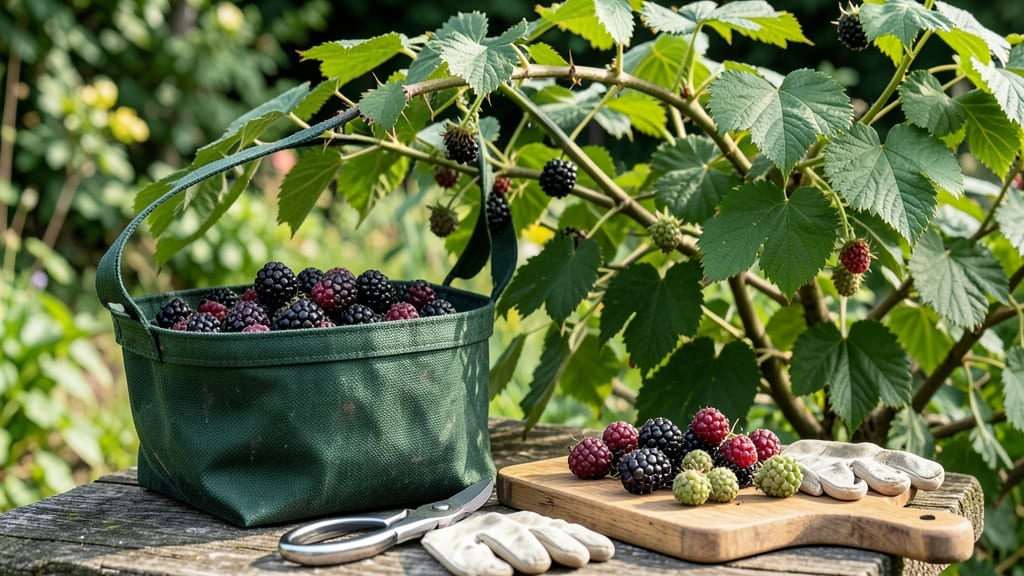
Timing your blackberry harvest right means the difference between sweet, juicy berries 🫐 and mealy, bitter disappointment.
Picture this: you’ve spent months tending to your blackberry bushes, and now the moment has arrived—except you’re not sure if those deep purple berries are ready. One wrong move, and you’ll either pick too early (tart and underripe) or too late (mushy and overripe).
The key is knowing exactly when to pluck them for that perfect balance of flavor and texture.
In this guide, I’ll walk you through the foolproof way to test for ripeness, including color, texture, and even taste cues, so you never miss the sweet spot.
Plus, I’ll share the best times of day and season to harvest, regional tips for Zone 6a growers, and the mistakes that turn a great yield into a waste.
By the end, you’ll know exactly when to start harvesting—so you can enjoy berries that are perfectly ripe, every single time.

How to identify the perfect blackberry harvest time by color, texture, and taste
Nothing beats the taste of freshly picked blackberries at their peak ripeness. The difference between a sweet, juicy berry and a bland or overly tart one often comes down to timing.
Learning to read your blackberry plants will help you avoid the disappointment of underripe or overripe fruit. Let’s break down the visual, tactile, and flavor cues that signal the perfect harvest time.
Blackberries ripen from the inside out, so even if they look dark on the outside, they might still be firm and tart inside. The key is to combine color, texture, and taste checks to ensure you’re picking at the ideal moment.
Different varieties also ripen at slightly different times, so knowing your specific plant’s tendencies is crucial for a consistent harvest.
| Ripeness Cue | Visual/Physical Sign | What It Means |
|---|---|---|
| Color | Deep black/purple and glossy | Fully ripe and ready to pick |
| Texture | Firm but yields slightly to gentle pressure | Juicy and sweet, not mushy |
| Taste | Sweet with minimal tartness | Peak flavor and sugar content |
| Stem Separation | Berry detaches easily with a slight tug | Fully mature and ready for harvest |
| Size | Fully enlarged, no longer growing | Reached maximum sweetness potential |
Start by examining the color of your blackberries. Fully ripe berries should be a deep, uniform black or purple, depending on the variety.
If they still have hints of red or green, they’re not ready yet. Thornless Evergreen varieties, for example, tend to ripen to a rich black, while some heirloom types may stay slightly purple.
Next, perform a gentle touch test. Press a berry lightly with your thumb—it should feel firm but yield slightly, like a ripe peach. If it’s too hard, it’s underripe; if it’s mushy, it’s overripe.
This texture check is one of the most reliable ways to gauge ripeness without tasting every berry.
Finally, always do a taste test on a few berries. At peak ripeness, blackberries should be sweet with just a hint of tartness. If they taste overly tart or bland, they’re not ready.
Some gardeners swear by the "sugar test"—crushing a berry between your fingers and checking for a sweet aroma. This trick works especially well for varieties like Triple Crown, known for their intense sweetness.
Seasonal variations also play a role in ripeness. In cooler climates, blackberries may ripen more slowly, so monitor them daily during peak harvest months (July to September). In warmer regions, harvests can happen earlier or later, depending on the variety.
For example, Chester blackberries often ripen in late summer, while Natchez may produce fruit as early as June.
Pay attention to the stem separation test—this is a foolproof method. Gently grasp a berry and give it a slight tug. If it releases easily from the plant, it’s ready to pick.
If it resists or the stem snaps, wait a day or two. This test is especially useful for floricane varieties, which produce fruit on second-year canes.
Avoid picking berries when they’re wet from dew or rain, as this can spread disease. Early morning is the best time to harvest, as the berries are cool and firm. If you must pick later in the day, do so in the shade to preserve quality.
Store freshly picked blackberries in the refrigerator for up to 3 days or freeze them for long-term storage.
Remember, blackberries don’t ripen further after picking, so timing is everything. Master these cues, and you’ll enjoy a bounty of sweet, juicy berries straight from your garden. Happy harvesting!
Blackberry harvest time mistakes that ruin your yield (and how to avoid them)
Harvesting blackberries at the wrong time can turn your hard work into a bitter disappointment. Even the most careful gardeners make mistakes—like picking too early for tart berries or too late for mushy ones. These errors don’t just affect flavor; they waste your entire yield.
The good news? Knowing the key mistakes and how to avoid them will ensure every berry you pick is perfectly ripe and bursting with flavor.
One of the biggest mistakes is ignoring ripeness cues. Many gardeners pluck berries based on color alone, but blackberries don’t always follow the "red to black" rule. Some varieties stay purple even when fully ripe, while others turn darker as they overripen.
Without testing for texture and taste, you risk picking berries that are either underdeveloped or past their prime. Even a single wrong harvest can reduce your plant’s productivity for the entire season.
Another critical error is overhandling ripe berries. Once you start harvesting, every squeeze or drop increases the risk of bruising and spoilage. Blackberries are delicate, and their skin is thin—so rough handling turns your bounty into a mushy mess in minutes.
Even storing them improperly after picking can lead to rapid spoilage, especially in hot or humid conditions. If you’re not careful, your harvest could go from fresh to fermented faster than you think.
⚠️ Callout Warning: The 3 Harvest Mistakes That Kill Your Blackberry Yield
1. Picking Too Early: Berries that are still red or purple-tinged are underripe and will taste tart or bland. Early harvesting also stresses the plant, reducing next year’s fruit production.
2. Overhandling Ripe Berries: Dropping or squeezing berries causes bruising, which leads to mold and spoilage. Handle gently—use a soft container and avoid stacking them.
3. Ignoring Weather Before Harvesting: Picking after rain or in extreme heat can make berries waterlogged or sunburned. Wait for dry, cool mornings for the best quality.
Weather plays a surprising role in harvest timing. Many gardeners forget that temperature and humidity affect ripeness. For example, blackberries grown in hot, dry climates like the Southwest ripen faster than those in cooler, wetter regions.
If you’re in Zone 6a, like me, your harvest window might shift based on late spring frosts or early summer heatwaves. Always check the forecast and adjust your picking schedule accordingly—heatwaves can speed up ripening, while cool snaps slow it down.
Storage is another area where mistakes happen. Many people assume blackberries can sit on the counter for days, but they actually spoil quickly. Within 24 hours of picking, store them in the fridge in a paper towel-lined container to absorb excess moisture.
If you’re not using them right away, freeze them whole on a tray before transferring to a bag—this prevents clumping and preserves flavor. Never wash berries until ready to eat, as moisture speeds up rot.
Finally, don’t overlook the signs of overripe or spoiled berries. If your blackberries develop a grayish mold, smell fermented, or feel mushy when pressed, they’re past their prime. Even worse, overripe berries can spread disease to the rest of your harvest.
When in doubt, taste a small sample—if it’s overly sweet with a fermented tang, it’s time to stop picking from that branch. By catching these mistakes early, you’ll maximize your yield and enjoy fresh, flavorful berries all season long.