
Trees
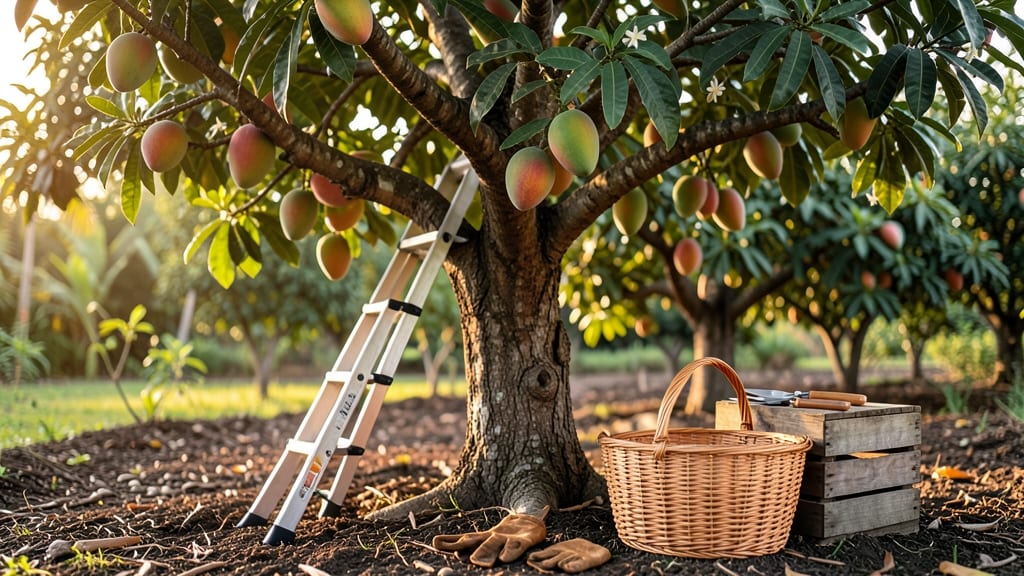
Harvesting mangoes at the right time means the difference between a sweet, juicy reward and a mealy disappointment—so knowing when your 🥭 tree’s fruit is ready is the key to success.
Imagine plucking a perfectly ripe mango that falls effortlessly from the tree—only to discover it’s still rock-hard inside. Timing your mango harvest correctly ensures sweet, juicy fruit every time, but when exactly should you pick them?
In tropical and subtropical zones like USDA 10-11, mangoes typically ripen between April and September, but the exact moment depends on variety, climate, and a few telltale signs.
Below, I’ll walk you through how to spot the perfect harvest time—from color shifts to the "thumb test"—plus tips to ripen them faster if you prefer your fruit slightly firmer for storage.


How to identify the perfect mango harvest time by color, smell & texture
Picking mangoes at the right moment transforms your harvest from meh to magical. Unlike many fruits, mangoes don’t ripen well after picking, so timing is everything.
The key lies in three simple cues: color shifts, stem separation, and texture—plus a bonus scent test that’ll make your garden smell like a tropical paradise.
Start by observing the fruit’s color. Most mango varieties transition from bright green to yellow, orange, or red depending on the type. For example, Alphonso mangoes turn golden-yellow, while Tommy Atkins develop a reddish blush.
But here’s the catch: color alone isn’t enough—you’ll need to combine it with tactile and olfactory clues for accuracy.
I’ve harvested mangoes for years, and I can’t stress enough how texture tests save the day. The finger press method is my go-to: gently press the fruit near the stem.
If it yields slightly (like a ripe avocado) but doesn’t feel mushy, it’s ready. A hard, unyielding mango? Not yet. One that’s too soft? Too late—it’ll spoil quickly.
| Ripeness Indicator | What to Look For | Action |
|---|---|---|
| Color Shift | Green → yellow/orange/red (varies by variety) | Check against variety’s mature hue |
| Stem Separation | Fruit twists easily from branch | Gently twist near stem—no force needed |
| Texture Test | Yields slightly to thumb pressure | Press near stem—should feel firm but not hard |
| Scent Check | Sweet, tropical aroma near stem | Sniff—ripe mangoes smell like candy! |
Don’t overlook the scent test, which is often the most reliable indicator. A ripe mango emits a sweet, tropical fragrance near the stem—think perfume-like and intoxicating.
If your mango smells bland or slightly fermented, it’s either underripe or overripe. Pro tip: Pick in the morning when scents are strongest and temperatures are cooler.
One mistake I’ve seen gardeners make is waiting for the fruit to detach naturally. While this can happen, it’s not a reliable method—many mangoes drop too late or rot on the ground.
Instead, harvest slightly before full ripeness if you plan to transport them. Mangoes ripen 1-2 days after picking at room temperature, but they won’t improve much beyond that.
For tree-ripened mangoes, wait until all three cues align: color change, gentle give, and sweet scent. If you’re unsure, pick a few test mangoes and let them ripen indoors.
This way, you’ll learn your tree’s unique ripening pattern over time. Patience pays off—perfectly ripe mangoes taste like liquid sunshine!
Regional climate plays a role too. In hotter zones (USDA 10-11), mangoes ripen faster—sometimes in just 2-3 weeks after color change. In cooler subtropical areas, the process stretches to 4-6 weeks. Always adjust your timing based on your local weather patterns.
Finally, avoid the common mistake of harvesting based on size alone. A mango can be large but unripe or small but perfectly sweet. Stick to the color-scent-texture trio, and you’ll never miss the window again. Trust me—your taste buds will thank you!
With these cues mastered, you’ll go from guessing to gourmet-level harvesting in no time. Now grab your pruners and head to the tree—the sweetest rewards are just a twist away! 🥭
Mango tree harvest seasons by variety: when each type reaches peak ripeness
Timing your mango harvest depends heavily on the variety you're growing, as different types ripen at distinct times throughout the year.
In tropical regions like Florida or Hawaii, harvest seasons can stretch from April to September, while subtropical areas like South Texas or Southern California may see shorter windows between May and July. Temperature plays a crucial role—warmer climates accelerate ripening, while cooler subtropical zones slow the process.
For gardeners in Asia's tropical belt (India, Thailand, Philippines), mango seasons vary dramatically by variety. The famous Alphonso mango peaks in June-July, while Dasheri ripens slightly earlier in May-June.
In the United States, Tommy Atkins and Keitt varieties dominate commercial harvests, typically between April and August, with peak sweetness occurring in June-July when temperatures stabilize.
| Variety | Primary Harvest Window (US) | Primary Harvest Window (Asia) | Ripening Speed |
|---|---|---|---|
| Alphonso | June-July | June-July (India) | Moderate (3-4 weeks) |
| Tommy Atkins | April-August | April-July (Mexico) | Fast (2-3 weeks) |
| Keitt | May-July | May-June (Florida) | Slow (4-6 weeks) |
| Dasheri | N/A (rare in US) | May-June (India) | Very Fast (2 weeks) |
| Kent | June-August | June-July (Australia) | Moderate (3 weeks) |
Temperature dramatically affects ripening speed. In hotter climates (USDA 11), mangoes like Tommy Atkins may ripen in just 2-3 weeks after color change, while in cooler subtropical zones (USDA 10), varieties like Keitt can take 4-6 weeks.
I've noticed that evening temperatures above 80°F accelerate ripening, while cooler nights slow the process—this is why Florida's harvest season extends longer than California's.
For home gardeners, understanding your local microclimate is key. If you live in South Florida, you might see two harvest seasons—one in spring and another in fall—while Southern California typically has a single summer harvest.
Always monitor fruit color changes and stem separation (from the previous section) alongside these seasonal guidelines for the most accurate timing.
Pro tip: If you're growing multiple varieties, create a harvest calendar marking each tree's expected ripening window. I use colorful flags tied to branches as visual reminders—it's a simple but effective system that prevents missed harvests.
For example, Alphonso mangoes in Florida might need yellow flags in May, while Keitt trees get red flags in June.
Remember that transporting mangoes requires harvesting slightly earlier than full ripeness. Most varieties ripen 1-2 days after picking at room temperature, but they won't improve significantly beyond that point.
Plan your harvest timing based on whether you'll eat the fruit immediately or need to store it for later—this small adjustment can mean the difference between perfectly ripe and overripe mangoes.
With these variety-specific timelines and climate considerations, you'll never miss the perfect harvest window again. The key is observation—watch your trees, adjust for local conditions, and let the fruit guide you. Soon, you'll be harvesting mangoes that taste like sunshine in every bite! 🌿