
Picking
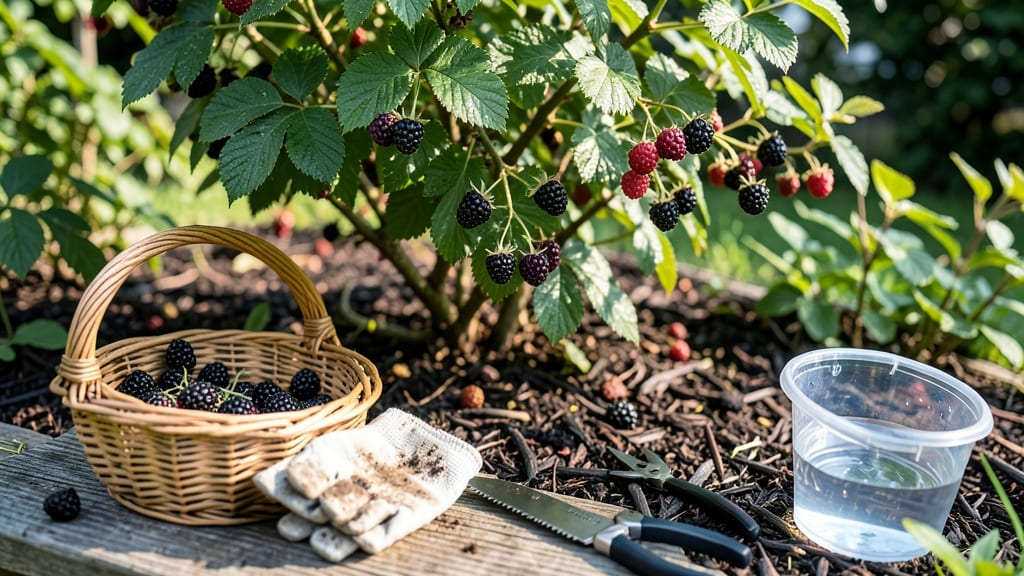
The summer blackberry harvest season delivers the juiciest, most flavorful treats when you know the exact signs—deep black color, soft texture, and that telltale "pull-away-easy" moment 🍇.
Picture this: you’re reaching for a berry, and it slips right off the bush like it’s been waiting for you. That’s the perfect harvest window, and missing it means mealy fruit or berries snatched by birds before you even notice.
In Zone 6, that window opens in late June and peaks in July, but regional variations can shift your timing by weeks.
Beyond just waiting for color, there’s a science to harvesting—like knowing when to prune post-harvest to boost next year’s yield or spotting the early signs of pests that thrive in summer’s warmth. These tips turn a good harvest into a bountiful one, with berries that taste like summer itself.
You’ll learn how to spot ripeness, pick without bruising a single berry, and even extend your harvest season with the right varieties. Let’s make sure your blackberries don’t just ripen—they explode with flavor.
When do blackberries ripen in summer: key signs your harvest is ready
Knowing when to harvest blackberries transforms a good crop into an exceptional one. The difference between peak ripeness and overripe, mushy berries often comes down to three key indicators: color, texture, and the pull test.
In most regions, summer-bearing varieties ripen between mid-June and August, with July being the prime month for harvest. But timing varies by variety and climate zone.
Early-season varieties like 'Natchez' often ripen first, while late-season types such as 'Ouachita' may linger into August. If you're in the Southern Hemisphere, your harvest window shifts to December through February.
Paying attention to these cues ensures you pick berries at their sweetest, juiciest stage—just before birds or pests get to them first.
| Ripeness Indicator | What to Look For | When to Harvest | Regional Window |
|---|---|---|---|
| Color | Deep black or dark purple (no red or green) | Fully colored berries | June-August (Northern Hemisphere) |
| Texture | Firm yet yielding (slightly soft when pressed) | Berries that dent but don’t squish | Mid-July peak |
| Pull Test | Detaches easily with slight twist (no resistance) | Ready-to-pick berries | Early morning (coolest temps) |
| Flavor | Sweet with slight tartness (no sour or mealy taste) | Fully developed flavor | Late July-August |
| Foliage | Slight yellowing around berries (sign of maturity) | Near-end-of-season harvest | August (late varieties) |
The color transition is your first clue—blackberries start green or red and gradually darken to a rich, deep black or purple. Avoid picking berries that still show red or green patches, as they’ll lack full flavor.
Instead, wait until the entire berry is uniformly dark. This usually takes 4-6 weeks after flowering, depending on your climate.
Next, perform the texture test. Gently squeeze a berry between your fingers—it should feel firm yet yielding, almost like a ripe peach. If it’s rock-hard, it’s not ready.
If it’s mushy or squishes easily, you’ve missed the window. The ideal berry will dent slightly under gentle pressure but won’t crush. This texture indicates peak sweetness and juiciness.
Here’s where the pull test comes into play. Grasp a berry between your thumb and forefinger and give it a gentle twist. If it detaches effortlessly from the plant, it’s ready to pick.
If it resists or the stem snaps, wait another day or two. This test ensures you’re harvesting berries at their perfect ripeness without damaging the plant or wasting underripe fruit.
Regional differences matter when planning your harvest. In cooler climates (Zones 5-6), blackberries typically ripen 2-3 weeks later than in warmer zones (Zones 7-9).
For example, in Zone 6, expect your first ripe berries around mid-July, while in Zone 8, harvesting may begin as early as late June. Always monitor your plants daily during peak season to avoid missing the harvest window.
Pro tip: Harvest early in the morning when temperatures are coolest. Berries picked in the heat are more prone to bruising and spoiling quickly. Use a wide-mouth container or shallow basket lined with a cloth to prevent damage.
And always wear gardening gloves—blackberry canes are armed with thorns that can make harvesting a prickly affair!
If you miss the prime harvest window, don’t despair. Late-season varieties like 'Arapaho' can extend your harvest into early September in favorable climates. However, berries picked past their peak will lack flavor and may be mealy or seedy.
To maximize your yield, check your plants every 2-3 days during peak season and harvest only what’s fully ripe.
Once you’ve mastered these signs, you’ll never again wonder, "Are my blackberries ready to pick?" Instead, you’ll confidently harvest plump, flavorful berries that are perfect for fresh eating, jams, or freezing.
Just remember: the key to a successful blackberry harvest lies in color, texture, and the pull test—and a little patience pays off with berries at their absolute best.
Blackberry harvest tips: how to pick for maximum flavor and yield
Harvesting blackberries at their peak requires more than just reaching into the bush—it’s about timing, technique, and tools. When berries are ripe, they’ll slip off effortlessly with a gentle twist, but even a slight delay can turn sweetness into mealiness.
I’ve learned the hard way that harvesting every 2-3 days in summer keeps berries at their best, preventing overripening and bird raids.
Start by wearing lightweight gloves to protect your hands from thorns while preserving berry integrity. A shallow, wide container with a soft lining (like a towel) catches berries without crushing them.
Pro pickers use two hands: one to support the berry cluster and the other to twist gently—never pull straight down, which can snap canes or damage fruit.
⚠️ WARNING: Common Mistakes That Waste Berries ⚠️
For high-volume picking, focus on mature canes (2+ years old) where most fruit forms. Use a small hand pruner to trim clusters if they’re too heavy, but avoid cutting more than 1/3 of the plant at once.
I’ve found that plastic clamshell containers stack neatly in the fridge and keep berries crisp for up to 5 days—longer if you rinse and dry them first.
Watch for bird activity as a sign to harvest sooner. Stringing netting over bushes buys you 1-2 extra days, but don’t rely on it—birds can still peck through. If berries start shriveling at the edges, they’ve passed their prime.
The sweetest berries often appear on south-facing canes that get the most sun, so prioritize those clusters first.
After harvesting, prune out old canes (those without fruit) to redirect energy to new growth. I mark my calendar for late August to do this—just before the first frost—so the plant can recover before winter.
For fall-bearing varieties, leave some berries to ripen fully for a second harvest in early autumn.
Store harvested berries in single layers in the fridge, never stacked, to prevent mold. Freeze extras on a tray first, then transfer to bags for up to 6 months of storage. With these tips, you’ll turn your blackberry patch into a flavor factory instead of a bird buffet.