
Picking
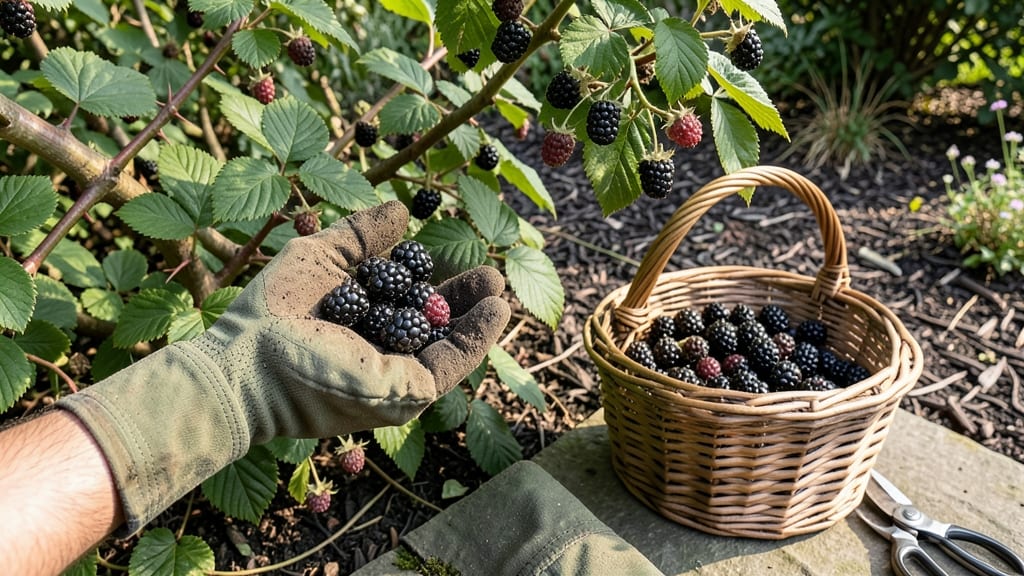
Summer’s blackberry harvest season in the Northern Hemisphere is your chance to beat the birds to the sweetest 🫐 berries—but timing is everything.
Picture this: you’ve spent months nurturing your blackberry patch, only to arrive in July and find your bushes picked clean by wildlife. That’s the reality when you miss the narrow window between ripening and ravenous birds.
The good news? With the right cues—like color, firmness, and that telltale twist-off stem—you can turn a chaotic harvest into a bounty of jam, pies, or fresh snacks.
Regional differences matter too. In the US Pacific Northwest, berries may ripen as early as June, while Southern gardeners might wait until August or even September. European climates can shift those windows even further, and thornless varieties like Chester often mature faster than their prickly cousins.
Below, I’ll break down the exact months to watch, plus how to stretch your harvest with smart storage and preservation.
You’ll also discover how to outsmart wildlife, recognize the perfect moment to pick (before the birds do), and preserve your harvest for months to come. Let’s make this your most productive blackberry season yet.
Northern Hemisphere blackberry harvest timeline by region and variety
Timing your blackberry harvest is like catching a summer wave—miss it, and you’re left with overripe berries or a bird buffet instead of a pantry full of sweet treats.
The peak harvest window spans June through September, but exact dates shift dramatically depending on your USDA zone, local climate, and the variety you’re growing. In my Zone 7 garden, for example, Triple Crown blackberries ripen in early July, while Chester varieties linger until late August.
European gardeners face similar variability, with UK growers often harvesting 1-2 weeks earlier than their US counterparts due to cooler maritime climates. Even within the same region, a hot summer can push harvests forward by weeks, while cool, rainy conditions may delay ripening.
Understanding these patterns means the difference between jams, pies, and frozen treats and wasted effort.
Below, I’ve mapped out the harvest timelines for popular blackberry varieties across key Northern Hemisphere regions, including the US, Canada, and Europe. Use this as your harvest calendar to plan when to net your plants, set up bird deterrents, and stock up on containers for your bounty.
| Region/Zone | Variety | Primary Harvest Window | Notes |
|---|---|---|---|
| US (Zones 5-6) | Chester | Late July–Early September | Early-season, thornless; ripens gradually over 4-6 weeks. |
| US (Zones 7-8) | Triple Crown | Mid-June–Late August | Thornless, high-yielding; harvests in 2-3 waves. |
| US (Zones 9-10) | Natchez | Early June–Mid-September | Early ripening; thrives in heat; extended harvest. |
| Canada (Zones 4-5) | Black Satin | Late July–Early August | Cold-hardy; short harvest window; needs protection from frost. |
| UK/Europe (Maritime) | Loch Ness | Mid-July–Late August | Thornless; ripens 1-2 weeks later than US varieties. |
| Southern Europe (Zones 8-9) | Arapawa | Early June–Mid-September | Heat-tolerant; long harvest season; sweet flavor. |
If you’re growing multiple varieties, like I do in my garden, you can stretch your harvest season from early June to late September. For example, planting Natchez (early) alongside Chester (late) ensures a steady supply.
In cooler climates, like Zone 4, focus on early-ripening varieties like Black Satin to avoid early frosts cutting your harvest short.
Climate plays a huge role in shifting these timelines. A warmer-than-average summer can push harvests forward by 2-3 weeks, while cool, wet conditions may delay ripening.
In my Zone 7 garden, I’ve seen Triple Crown berries ripen as early as late June in hot years, but more typically in mid-July. Pay attention to your local weather forecasts and adjust your harvest expectations accordingly.
For European gardeners, maritime climates—like those in the UK or Northern France—often result in later harvests compared to continental climates. Loch Ness, a popular thornless variety in Europe, ripens about 1-2 weeks later than its US counterparts due to cooler temperatures.
Meanwhile, in Southern Europe, varieties like Arapawa thrive in the heat, offering an extended harvest from early June to September.
Pro tip: Mark your calendar with harvest reminders based on your local zone and variety. I use colorful flags on my plants to track ripening progress—green flags for unripe berries and red flags for those ready to pick.
This visual cue helps me stay organized, especially when dealing with multiple varieties or large patches. It also signals to my family that
How to tell when blackberries are ripe for picking (before birds do)
When blackberries reach their peak ripeness, they send clear visual and tactile signals—if you know what to look for. The color shift from green to deep black or purple (depending on variety) is your first clue.
But don’t rely solely on color; some berries stay greenish until fully ripe. Instead, focus on the firmness test: a ripe blackberry should feel plump yet slightly soft when gently squeezed, like a ripe peach.
Another foolproof trick is the stem separation test. Gently grasp a berry and twist it—if it detaches cleanly from the plant without tearing, it’s ready to pick. This twist-and-release method ensures you harvest at the perfect moment, avoiding both underripe and overripe fruit.
Pro tip: Check berries on the shady side of the plant first, as they often ripen slightly earlier than those in full sun.
🌱 Key Takeaway: 3 Signs Your Blackberries Are Perfectly Ripe
- 🫐 Color: Fully black or deep purple (no green patches)
- 🤏 Firmness: Plump but yields slightly when squeezed
- ✂️ Stem Test: Detaches easily with a gentle twist
Harvest in the early morning when berries are coolest and birds are least active. Use pruning shears to avoid damaging canes.
Timing your harvest is just as critical as identifying ripeness. Birds and wildlife are early risers, so beat them to the berries by picking in the cool hours of morning.
If your bushes are a magnet for birds, consider lightweight netting (like floating row covers) over the plants a few days before peak ripeness. This lets sunlight through while keeping feathered thieves at bay.
For thornless varieties like Chester, you can even wear gloves and hand-pick berries without fear of pricks.
Don’t ignore the new cane growth either—it’s a sign your plant is ready for another harvest cycle. If you see bright green primocanes (first-year canes) emerging alongside your fruiting floricanes (second-year canes), it’s time to start checking ripeness more frequently.
Some varieties, like Triple Crown, produce two harvests in one season: the first on floricanes in early summer and the second on primocanes in late summer or fall.
If you miss the perfect window, unripe berries won’t improve on the plant—so don’t wait too long. Overripe blackberries become mushy and fermented, attracting pests and losing flavor. To extend your harvest, prune lightly after the first wave of ripening to encourage more fruit production.
And if your bushes are overloaded with fruit, thin some berries to improve air circulation and reduce disease risk.
Once you’ve mastered these cues, you’ll never again let birds claim your blackberry bounty. The key is consistency: check your bushes every 2-3 days during peak season, and harvest only what’s ripe to avoid spoilage.
With these strategies, you’ll enjoy a longer harvest season and sweeter berries straight from your garden to your table. Happy picking! 🫐