
How To
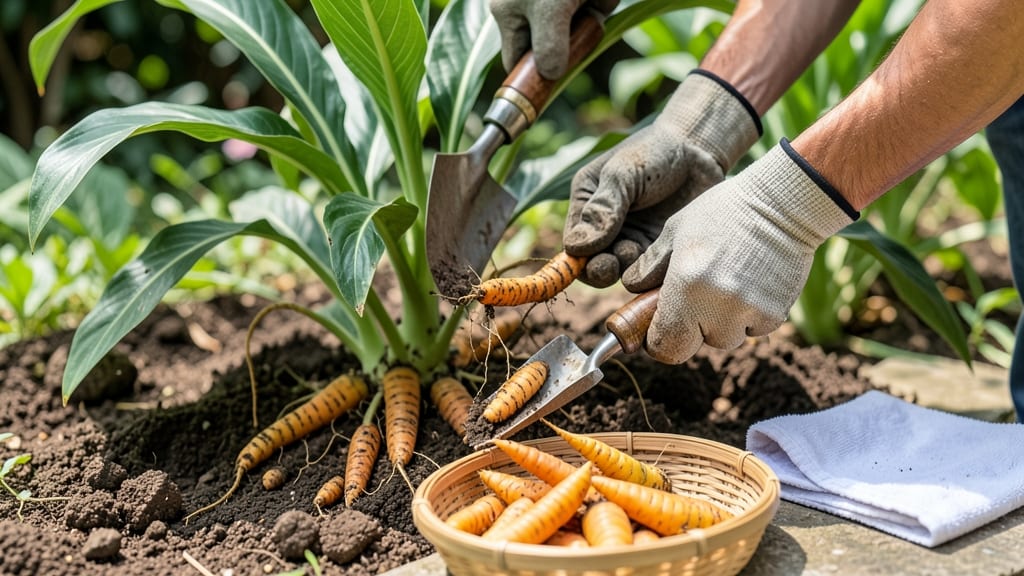
Harvesting turmeric at the right time ensures the boldest flavor and richest color—and missing that window means tough, bitter rhizomes. 🌿
Turmeric isn’t just a golden spice—it’s a vibrant, high-value crop that thrives when harvested at the perfect moment. Miss the window, and you’ll either lose flavor or yield.
Here’s how to spot the exact signs your turmeric rhizomes are ready: the leaves turn yellow and wither, the rhizomes shift from green to golden, and growth slows dramatically.
In this guide, I’ll walk you through the color shifts, size checks, and the pro gardener’s trick—the soil lift test—to harvest at peak flavor.
How to tell when turmeric rhizomes are ready by color & size
Harvesting turmeric at the right time ensures maximum flavor and medicinal potency. The key lies in watching for visual color shifts and rhizome size—both tell you whether your crop is ready.
Unlike many herbs, turmeric rhizomes don’t ripen on the plant, so timing is everything. I’ve grown turmeric for years, and these color and size cues never fail me.
Start by observing the leaves first. When they begin turning yellow and crispy, it’s your first sign that the rhizomes below are maturing. This usually happens 8-10 months after planting, depending on your climate.
In warmer zones like USDA Zone 9-11, this could be as early as October, while cooler regions may wait until late fall or early winter.
Next, focus on the rhizome color. Young rhizomes start green or pale yellow, but when they’re ready to harvest, they’ll shift to a deep golden-yellow or orange hue. This color change signals peak curcumin content, the compound that gives turmeric its health benefits.
If you wait too long, the rhizomes can turn brown or woody, ruining their flavor and texture.
The ideal rhizome size for harvest is 1-2 inches long. Smaller rhizomes (under 1 inch) are still developing and won’t have the full aromatic punch you’re after.
Larger ones (over 2 inches) may be overripe, especially if they’ve started sprouting new shoots. Think of it like harvesting carrots—you want them plump but not oversized.
Here’s where many gardeners go wrong: they assume full leaf drop means it’s harvest time. While yellowing leaves are a good sign, waiting for complete leaf death can lead to bitter, fibrous rhizomes.
The moment the leaves turn mostly yellow with some brown edges, that’s your window. Act fast—rhizomes can go from perfect to overripe in just 2-3 weeks.
| Sign | Mature Rhizome | Overripe Rhizome |
|---|---|---|
| Leaf Color | Mostly yellow with brown edges | Completely brown and crispy |
| Rhizome Color | Golden-yellow or orange | Brown or dull gray |
| Rhizome Size | 1-2 inches long | Over 2 inches, woody |
| Texture | Firm, smooth skin | Hard, shriveled, or sprouting |
| Growth Stage | Slow growth, no new leaves | Dormant, may resprout |
Pro tip: If you’re unsure, do a soil lift test on one rhizome. Gently dig up a small section and check the color and size. If it’s ready, harvest the rest within 3-5 days to avoid overripening.
I always save one plant as a test subject—it’s saved me from harvesting too early (or too late!) more times than I can count.
One mistake I see often is ignoring the rhizome size and focusing only on leaf color. A 1-inch rhizome might look golden, but it’ll lack the bold flavor of a fully mature one.
Similarly, a 3-inch rhizome with yellow leaves could already be past its prime. Always check both color and size—they’re your best indicators.
For tropical climates, where turmeric grows year-round, aim to harvest in late fall or early winter when days shorten. In temperate zones, wait until the first frost threat (usually October-November).
If frost hits before harvest, the rhizomes will turn mushy—so plan ahead! I’ve even grown turmeric in containers and moved them indoors for a controlled harvest.
Once you’ve confirmed your turmeric is ready, act quickly. Use a fork or spade to gently lift the rhizomes, being careful not to damage them. Rinse off the soil, then dry them in sunlight for 3-5 days to cure.
Proper drying enhances flavor and preserves them for up to a year. If you’re lucky, you’ll end up with bright yellow rhizomes that rival store-bought—and taste even better!
The soil lift test: a pro gardener’s trick to harvest turmeric at peak flavor
When your turmeric leaves start yellowing but you’re still unsure if the rhizomes are ready, the soil lift test is my go-to method. This gentle excavation lets you check rhizome firmness and color depth without damaging the plant.
Unlike digging up the whole plant, this test reveals underground maturity with minimal risk.
Timing matters—harvesting too early gives you small, fibrous rhizomes, while waiting too long results in woody, bitter roots. The soil lift test helps you strike that perfect balance by letting you peek underground without full excavation.
I’ve used this trick for years, and it’s saved me from ruined harvests.
- Step 1: Choose a sunny, dry day—soil will be easier to work with and won’t stick to your hands.
- Step 2: Gently loosen soil around the plant’s base with a trowel, about 2-3 inches deep.
- Step 3: Look for golden-yellow rhizomes (not green) that are 1-2 inches long.
- Step 4: Check for firm texture—they should feel solid, not mushy or hollow.
- Step 5: If rhizomes are deep orange and well-formed, it’s harvest time!
Pay close attention to soil moisture during the test—if the soil feels dry and crumbly, your rhizomes are likely ready. Overly wet soil can mask maturity, so avoid testing after heavy rain. I always do this in the morning when soil is slightly damp but workable.
If your rhizomes are still small or pale, wait another 2-3 weeks and retest. Overripe turmeric loses its bright color and aromatic oils, so don’t delay if you spot the perfect golden hue. Patience here pays off with flavor-packed harvests every time.
Pro tip: After the test, cover the hole with soil to protect the roots. If the rhizomes pass, harvest within 3-5 days to lock in peak freshness. The soil lift test isn’t just a trick—it’s a game-changer for turmeric growers who want restaurant-quality rhizomes.