
How To
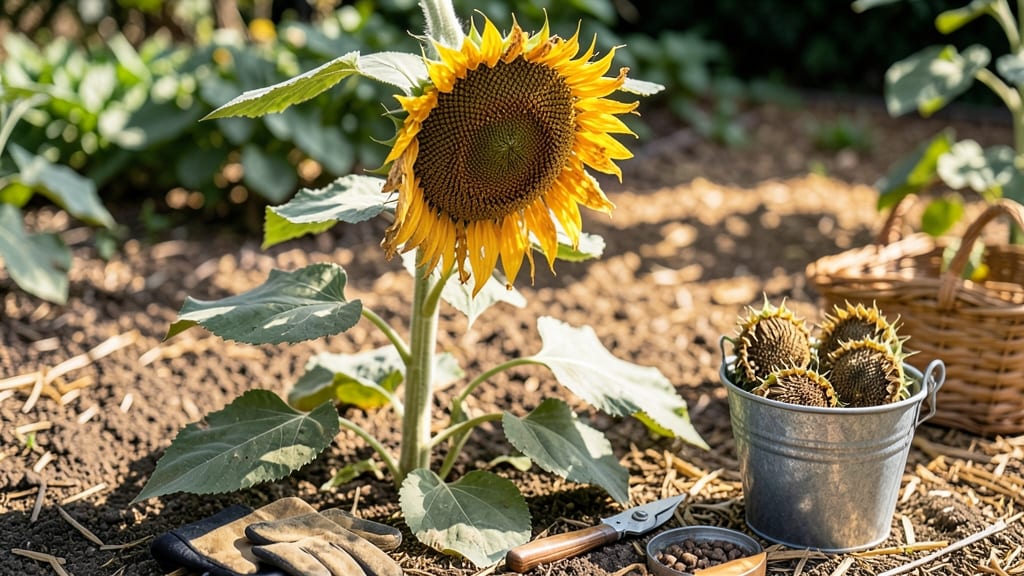
Harvesting sunflower heads for seeds at the right time means the difference between a bountiful stash and a wasted crop—birds, pests, or frost will claim them fast if you wait too long.
Sunflowers aren’t just stunning garden centerpieces—their seeds are a treasure trove for gardeners, bird lovers, and homesteaders. But timing your harvest wrong means losing your crop to birds, pests, or poor germination.
You’ll know they’re ready when the back of the head turns deep brown, the petals droop, and a gentle shake produces a loud rattle—proof the seeds are mature and dry. Miss this window, and you’ll end up with shriveled seeds or empty heads.
Below, I’ll walk you through the rattle test, color shifts to watch for, and how to store your seeds so they stay viable for next year’s planting.
How to perform the rattle test: the #1 sign sunflower seeds are ready
There’s no better way to confirm sunflower seed maturity than the rattle test, a simple yet foolproof method gardeners swear by. This tactile check tells you exactly when seeds are fully dry and ready to harvest—before birds or pests get to them.
The test works for both single-stem varieties like 'Mammoth' and multi-branched types like 'Autumn Beauty', making it universally applicable.
To perform the test, you’ll need just your hands and a few seconds of patience. The key is listening for that distinctive hollow sound that signals seeds have detached from the head’s base.
This sound isn’t just a cue—it’s proof that seeds are genetically stable and ready for storage. Skip this step, and you risk harvesting seeds that won’t germinate or are already compromised by moisture.
Timing matters because sunflowers mature quickly in late summer. A 3-day window between perfect maturity and overripeness (when seeds scatter or sprout in the head) means you can’t afford to wait too long.
The rattle test eliminates guesswork, ensuring you harvest at the peak of viability—when seeds are dry but haven’t lost their germination potential.
Here’s how to do it without damaging the head or missing the signs:
- 🔊 Ready: Deep, resonant "clacking" (seeds moving freely inside).
- 🔇 Not ready: Muffled thud or silence (seeds still attached).
- 💥 Overripe: Seeds scatter or sound like dry corn kernels.
One common mistake is testing heads that are still partially green on the back. Even if petals have dropped, a green base means seeds aren’t mature. Another error is shaking too hard—this can dislodge seeds prematurely or damage the head’s structure.
Always shake gently and focus on the sound quality, not the intensity.
For tall varieties (6+ feet), use a ladder or stool to reach heads without straining. If you’re harvesting in humid conditions (like late summer in Zones 8-10), prioritize the rattle test over color cues—moisture can trick you into thinking heads are ready when they’re not.
Pro tip: Test heads in the morning when humidity is lowest for the most accurate results.
Once you’ve confirmed maturity with the rattle test, store heads in a paper bag or mesh sack to allow airflow while preventing seed loss. Avoid plastic bags, which trap moisture and risk mold growth.
In dry climates, you can even leave heads on the plant until they’re completely dry, but watch for squirrels or birds—they’ll strip a head in minutes if you’re not careful.
The rattle test is your best defense against poor germination and wasted effort. By mastering this technique, you’ll know exactly when to harvest—before seeds scatter, after petals drop, and while viability is peak.
Once you hear that perfect rattle, you’re just steps away from a bountiful seed stash for next year’s garden.
Color shift guide: what sunflower head colors mean for seed harvest timing
Sunflower heads go through a clear color progression from green to brown, each stage signaling a different phase of seed development. Understanding these shifts helps you harvest at the perfect moment—before birds or frost ruin your crop.
The back of the head is your best indicator, not the petals, which often fade first.
Most sunflowers follow this pattern: green (immature), yellow-green (developing), tan (nearly ripe), and finally deep brown (fully mature). However, varieties like 'Moulin Rouge' may retain reddish hues even when seeds are ready—don’t let color fool you!
Premature color changes—like yellowing or browning from drought, pests, or early frost—can trick you into harvesting too soon. If heads turn brown but feel damp or lightweight, the seeds may not be viable. Always pair color cues with the rattle test for accuracy.
For unusual varieties like 'Autumn Beauty' or 'Russian Giant', the back may stay lighter longer. Focus on seed dryness and papery texture over color. If unsure, wait 1-2 days—overripe seeds shatter easily and lose germination.
Once the back is fully brown and petals droop, act fast. Birds and squirrels spot ripe heads in seconds! Cut stems 2-3 inches below the head, hang upside-down in a dry, dark place, and let seeds fully dry before storage.
Pro tip: Mark your calendar 90-120 days after planting—most sunflowers take this long to mature. In Zone 6a, aim for harvest by late September to avoid frost damage.