
Vegetables
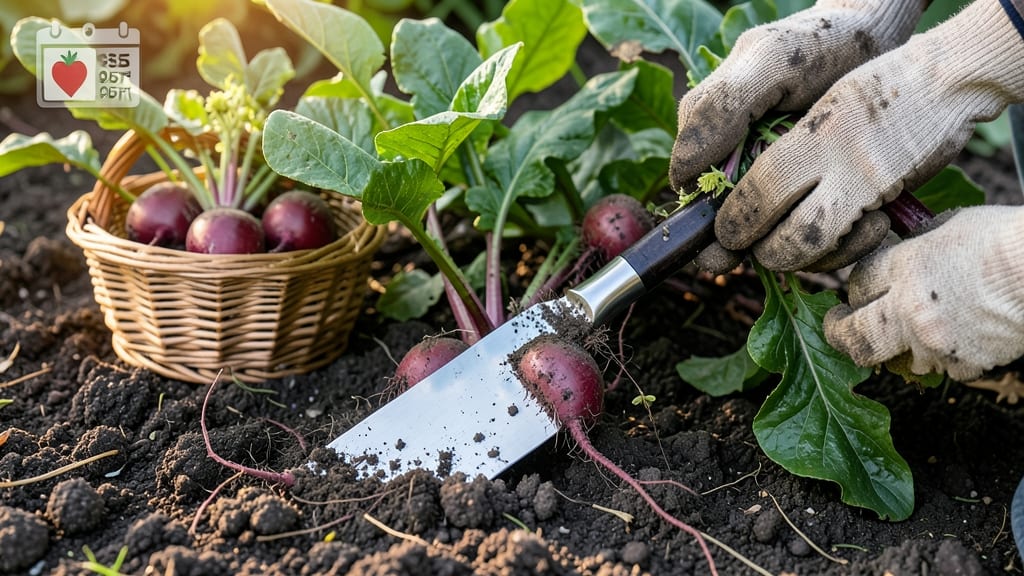
Harvesting red beets 🍠 when they’re at their sweetest means watching for three key signs—root size, leaf color, and soil readiness—before they bolt or turn tough.
Picture this: you’ve waited months for those deep red roots, only to pull one that’s either still underdeveloped or bitter from sitting too long. The difference between a perfect beet and a disappointing one often comes down to timing—and knowing exactly when to dig.
In this guide, I’ll walk you through the tactile tests that take the guesswork out of harvest, including how to check root firmness, leaf size, and soil temperature.
You’ll also learn how to avoid the two biggest mistakes—harvesting too early (for tiny, watery beets) or too late (for woody, fibrous roots).
By the end, you’ll know not just when to harvest, but how to store your beets for maximum flavor, so your kitchen stays stocked with sweet, tender roots all season long.


3 Tactile tests to determine when red beets are ready for harvest
Harvesting red beets at the perfect moment transforms them from ordinary to extraordinary—sweet, tender, and packed with flavor. But how do you know when they're ready? Unlike some vegetables that rely on color alone, beets need a combination of visual cues, physical tests, and even a peek underground.
I’ve learned the hard way that waiting too long turns sweet roots into tough, woody disappointments, while harvesting too early means missing out on their full potential. The key is using these three simple but effective tactile tests that go beyond just eyeballing your plants.
First, let’s talk about why timing matters. Red beets develop their richest flavor and ideal texture when they reach a specific size and maturity. Harvest too early, and you’ll have small, watery roots that lack depth of flavor.
Leave them in the ground too long, and they’ll become fibrous and bitter, especially if they start to bolt due to heat or drought. The good news? With these three hands-on tests, you can confidently determine the perfect moment to pull your beets for the best results every time.
Soil Probing for Root Size
Use a trowel or your fingers to gently dig around the base of the plant. Look for roots that are 1-3 inches in diameter for baby beets or 2-3 inches for mature varieties. Smaller roots may still need time, while larger ones risk becoming tough.
Leaf Size and Color Assessment
Healthy beet greens should be 3-4 inches tall for baby beets or 6-8 inches for mature ones. Leaves should be deep green and vibrant, not yellowing or wilting. If leaves start turning yellow, it’s a sign the beet is past its prime.
Root Firmness and Texture Test
Gently squeeze the exposed root (or dig one up for testing). A ready beet feels firm and smooth, like a small potato. If it feels soft or spongy, it’s underdeveloped. If it’s hard and woody, it’s past its peak.
Let’s start with the first test: soil probing. This is my go-to method because it gives you an accurate read on what’s happening underground. I like to use a small hand trowel or even my fingers to gently loosen the soil around the beet’s base.
The goal is to expose enough of the root to judge its size and shape. For baby beets, aim for roots that are about the size of a golf ball (1-2 inches in diameter). For mature beets, think closer to a tennis ball (2-3 inches).
If the roots are smaller, give them another week or two. If they’re larger, it might be time to harvest before they get tough.
Pro tip: If you’re growing beets in containers or raised beds, soil probing is even easier because you can see the roots more clearly through the sides.
Just be gentle—beets have delicate roots that can bruise easily. Once you’ve confirmed the size, move on to the next test to double-check your findings.
The second tactile test focuses on the foliage, which is often overlooked but incredibly telling. Healthy beet greens should be a vibrant deep green color and stand about 3-4 inches tall for baby beets or 6-8 inches for mature varieties.
I always check for a few key signs: leaf rigidity (they shouldn’t wilt easily) and uniform color (no yellowing or browning). If the leaves look pale or leggy, your beets might need more sunlight or nutrients.
Conversely, if the leaves start to yellow or bolt (send up a flower stalk), it’s a clear signal that the beet is ready to be harvested—before it goes to seed.
Here’s where I often make a mistake: ignoring the leaves and focusing only on the roots. But the foliage is like a report card for your beet’s health.
For example, if the leaves are large but the roots are still small, it might mean your soil is too fertile, causing the plant to prioritize leaf growth over root development. In that case, I’ll hold off on harvesting and let the roots catch up.
On the other hand, if the leaves are small but the roots are already large, it’s a sign the beet is ready to harvest—even if the tops don’t look fully mature.
The third and final test is the most tactile of all: the root firmness and texture test. This is where you get hands-on with your beets. After probing the soil, gently pull up one or two beets for a quick check.
A perfectly ripe beet should feel firm to the touch, with a smooth skin that’s free of bumps or cracks. If the beet feels soft or mushy, it’s not ready yet—it needs more time in the ground.
If it’s hard and woody, it’s past its prime and may have developed a bitter flavor. The ideal texture is somewhere in between: firm but not rock-hard, like a ripe avocado.
I’ve found that this test is especially useful when growing heirloom or slow-maturing varieties, which can sometimes trick you with their size. For instance, the Detroit Dark Red variety can look large but still be underdeveloped if the roots aren’t firm enough.
To avoid disappointment, I always do this test on a few beets before committing to a full harvest. It’s a small effort that saves you from ending up with a batch of less-than-perfect roots.
One common question I get is whether to harvest beets by their color alone. While deep red color is a good indicator, it’s not enough on its own. Some varieties, like Golden Beets, change color as they mature, making it harder to judge readiness.
That’s why I rely on these tactile tests—they give you a more reliable and consistent way to determine harvest time,
How to avoid bolting: critical timing and environmental triggers
Red beets 🍠 bolt when stressed by heat, drought, or long daylight hours—transforming sweet roots into bitter, fibrous messes. Understanding these environmental triggers lets you control harvest timing and keep your beets tender.
The key lies in soil temperature, daylight exposure, and moisture balance, all of which signal when to pull roots before they send up flower stalks.
Beets are cool-season crops that thrive in 50-70°F soil, but temperatures above 75°F accelerate bolting. In my Zone 6a garden, I’ve seen beets bolt in just 10 days during heatwaves—even if they looked perfect a week earlier.
The same happens when daylight stretches past 14 hours, which is why late-summer plantings often fail unless you use shade cloth.
Soil conditions also play a critical role. Beets grown in poorly drained soil or with inconsistent watering develop shallow roots that bolt faster. I once lost an entire row because I skipped watering during a 90°F heatwave, only to find woody, bolted roots the next week.
The lesson? Consistent moisture and rich, loamy soil delay bolting by weeks.
🚨 Bolting Warning Signs: Act Fast!
Leaf changes: Yellowing or curling leaves mean stress—check soil moisture immediately. Stalk emergence: If a thin green stalk appears, harvest within 24 hours before roots toughen. Bitter taste: Cut a root open; if it’s white or fibrous, you’ve waited too long.
Pro Tip: Mulch with straw to keep soil cool and moist, and harvest before 14-hour days in summer.
Day-length sensitivity is the final piece of the puzzle. Beets bolt when daylight exceeds 14 hours, which happens in late June in most regions. To extend harvest, I plant succession crops every 2 weeks in spring, ensuring a steady supply before summer’s long days trigger bolting.
For fall harvests, start seeds in late July to mature before frost.
Even with perfect conditions, some beet varieties bolt faster. Detroit Dark Red and Chioggia are more heat-tolerant, while Golden Beets bolt earlier. If you’re growing heirlooms, research their bolting resistance—some varieties stay sweet in 80°F+ heat.
In my trials, Boltardy hybrids lasted 3 weeks longer in summer than open-pollinated types.
To prevent bolting, prioritize shade cloth in peak sun, deep watering (1-2 inches per week), and harvesting before flower stalks appear. When roots reach 2-3 inches in diameter and leaves are 6-8 inches tall, they’re at their sweetest—before stress sets in.
With these strategies, you’ll avoid the heartbreak of bitter beets and enjoy tender roots all season.