
How To
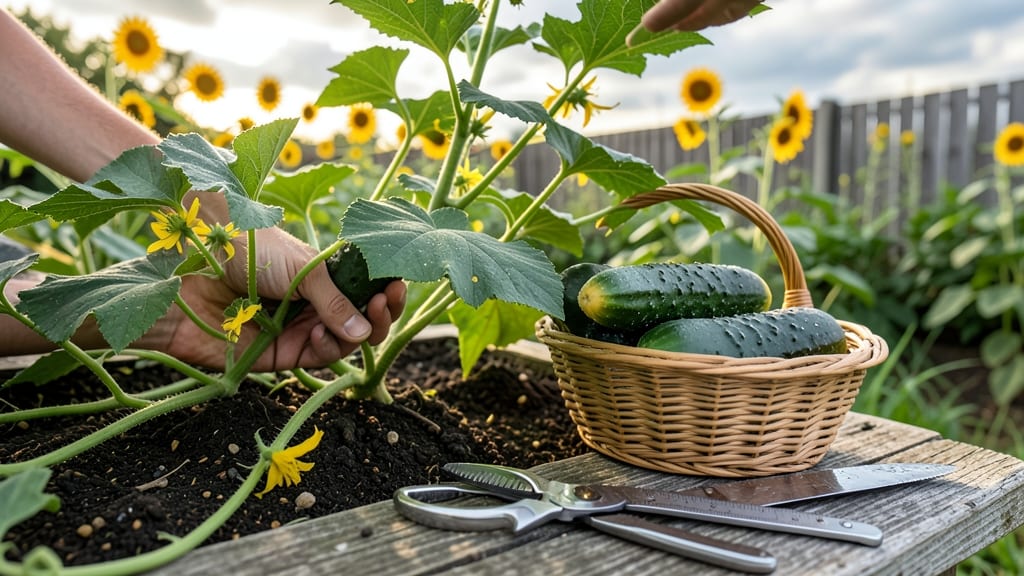
Harvesting pickling cucumbers at the right time means the difference between crisp, seedless gems and mealy, overripe disappointments — and it all comes down to size, firmness, and a little patience.
Picture this: you’ve spent weeks tending to your 🥒 plants, and now they’re begging for attention. But wait too long, and those perfect little cucumbers turn bitter or seedy, ruining your homemade pickles before they even hit the jar.
The key? Knowing when they’re ready — and it’s not just about guessing.
In this guide, I’ll walk you through the 3-step size test that guarantees you pick them at their peak: when they’re 3-5 inches long, firm but not hard, and still free of seeds.
Plus, I’ll share how climate zones like 6a can shift your timing by weeks, and the one trick that keeps them fresh until you’re ready to pickle.
Skip the trial-and-error — by the end, you’ll know exactly when to snip, how to store them, and why your pickles will turn out crunchier than the store-bought stuff every time.
The 3-Step size test: how to pick pickling cucumbers at peak crunch
Harvesting pickling cucumbers at the right moment transforms your garden bounty into crisp, seedless gems perfect for fermenting. The key lies in a 3-step size test that checks length, texture, and seed development—each critical for avoiding bitter, seedy, or mushy results.
I’ve learned the hard way that waiting even 24 hours past peak can turn your prized cucumbers into tough, unappetizing rejects. Let’s break down the exact criteria to harvest at ideal pickling maturity.
First, focus on length as your primary guide. Pickling varieties like Boston Pickling or National Pickling should be harvested when they reach 3 to 5 inches long. This range ensures they’re large enough to handle but small enough to stay tender.
Smaller than 3 inches? They’re still growing and may lack flavor. Longer than 5 inches? You risk developing large, mature seeds and a tough skin that resists fermentation.
Next, examine the skin texture with gentle pressure. A perfectly ripe pickling cucumber should feel firm but slightly yielding—like a ripe avocado. Press your thumbnail into the skin: if it leaves a slight dent but doesn’t puncture, it’s ready.
If the skin resists completely (rock-hard), it’s overgrown. If it dents too easily, it’s still immature. This test is your best defense against bitterness, which develops as cucumbers overmature.
Here’s where most gardeners go wrong: ignoring the seed development. Slice open a candidate cucumber to check the seeds. At peak harvest time, seeds should be tiny white dots—not visible to the naked eye when whole.
If you can see developed seeds (even slightly), the cucumber is past its prime. Overripe seeds release enzymes that make pickles soft and seedy, ruining texture and taste. This step is non-negotiable for crisp, seedless pickles.
| Harvest Cue | Ideal Specification | Result If Ignored |
|---|---|---|
| Length | 3–5 inches | Bitter, seedy, tough skin |
| Skin Texture | Firm but yielding | Soft, mushy pickles |
| Seed Stage | Tiny white dots (invisible) | Large seeds, poor texture |
| Stem Snap Test | Clean break at stem | Overripe, woody stem |
| Color Consistency | Uniform dark green/yellow | Uneven ripening, poor flavor |
Don’t overlook the stem snap test, a quick way to confirm maturity. Gently bend the cucumber near the stem: if it snaps cleanly, it’s ready. If the stem bends without breaking, the cucumber is still growing.
If it feels woody or resists bending, it’s past its prime. This test works especially well for bush varieties, which can be harder to monitor due to their compact growth habit.
Regional climate plays a surprising role in harvest timing. In hotter zones (USDA 9-11), cucumbers mature faster—sometimes in as little as 45 days. In cooler regions (USDA 5-7), they may take up to 70 days to reach ideal size.
Adjust your harvest schedule by checking cucumbers every 2-3 days during peak production (typically July–September). Pro tip: Morning harvests yield the freshest cucumbers, as daytime heat can accelerate overripening.
One common mistake I see is harvesting based on color alone. While uniform dark green (or variety-specific colors like yellow or white) is a good sign, it’s not enough. A cucumber can look perfect on the outside but be seedy and bitter inside.
Always combine all three tests: length, texture, and seed stage. This multi-step approach ensures you’re picking cucumbers at their absolute peak for crunchy, seedless pickles every time.
For continuous harvests, pick cucumbers frequently—every 2-3 days during peak season. This encourages more production and prevents overgrowth. Use a sharp knife or pruning shears to avoid damaging the vine, and always harvest in the morning when cucumbers are coolest.
Store them in a shady, well-ventilated spot (like a garage or basement) for up to 3 days before processing to maintain crispness.
Remember, the goal is crisp, seedless pickles that hold their shape during fermentation. By mastering these three steps—size, texture, and seed check—you’ll transform your garden into a pickling powerhouse.
The first batch you harvest using this method will taste so much better than your previous attempts, you’ll wonder why you didn’t start earlier!
Common harvest mistakes that ruin pickling quality (and how to avoid them)
Even experienced gardeners sometimes make critical mistakes when harvesting pickling cucumbers, and these errors can turn your homemade pickles into a mushy, bitter mess. The biggest culprit? Harvesting at the wrong stage—whether that means waiting too long for the perfect size or picking them too early when they’re still underdeveloped.
I’ve seen firsthand how a single day too late can ruin an entire batch, so let’s break down the most common pitfalls and how to sidestep them.
One of the biggest mistakes is ignoring the 3-5 inch rule. Many gardeners assume bigger is better, but overripe cucumbers develop tough skins, large seeds, and a bitter taste that no amount of pickling brine can fix.
Another classic error is harvesting based solely on color—dark green doesn’t always mean ready, and pale yellow can still be firm and perfect. Let’s fix these oversights before they affect your next jar of pickles.
⚠️ callout warning ⚠️
Waiting until cucumbers reach 6+ inches guarantees tough skins, bitter flavor, and large seeds that turn your pickles into a chewy disappointment. The ideal window is 3-5 inches—any longer, and you’ve missed your chance for perfect pickles.
🔹 Pro Tip: Check cucumbers every 2-3 days—they grow fast, and missing this window means ruined batches.
Another frequent mistake is harvesting when the cucumbers are too soft. While firmness is key, some gardeners confuse "ready" with "rock-hard," which is actually a sign of overmaturity. The perfect cucumber should yield slightly to gentle pressure but not feel mushy.
I once harvested a batch that felt like rubber bands—turns out, they’d been left on the vine too long, and no amount of vinegar could save them. Always test with your thumb: if it leaves a slight dent but bounces back, it’s ready.
Climate also plays a sneaky role in harvest timing. In hotter zones (8a+), cucumbers mature faster, so you might need to harvest every 48 hours to keep up. Meanwhile, in cooler Zone 6a, growth slows, and you can stretch harvests to 3-4 days.
Pay attention to your local weather—if temperatures spike, your cucumbers will race to maturity, and you’ll need to act fast.
Don’t overlook the stem test, either. A mature cucumber’s stem should snap cleanly when bent—this means it’s fully grown but not overripe. If the stem twists instead of snapping, it’s still developing.
I’ve seen gardeners skip this step and end up with cucumbers that were either too small or too large, both of which throw off pickling consistency.
Finally, storing harvested cucumbers incorrectly can undo all your hard work. Once picked, keep them in a cool, dark place (like a crisper drawer) for no more than 3-4 days.
Leaving them on the counter or in direct sunlight speeds up spoilage, and that’s a fast track to soft, unusable cucumbers. If you’re not ready to pickle right away, store them stem-end up in a paper bag—this traps ethylene gas and keeps them crisp longer.
By avoiding these common mistakes, you’ll ensure your pickling cucumbers stay crisp, seedless, and flavorful—ready for the perfect jar of homemade pickles every time. The key is consistency: check them often, test for firmness, and harvest at the right size.
Your taste buds (and your future pickles) will thank you.