
Picking
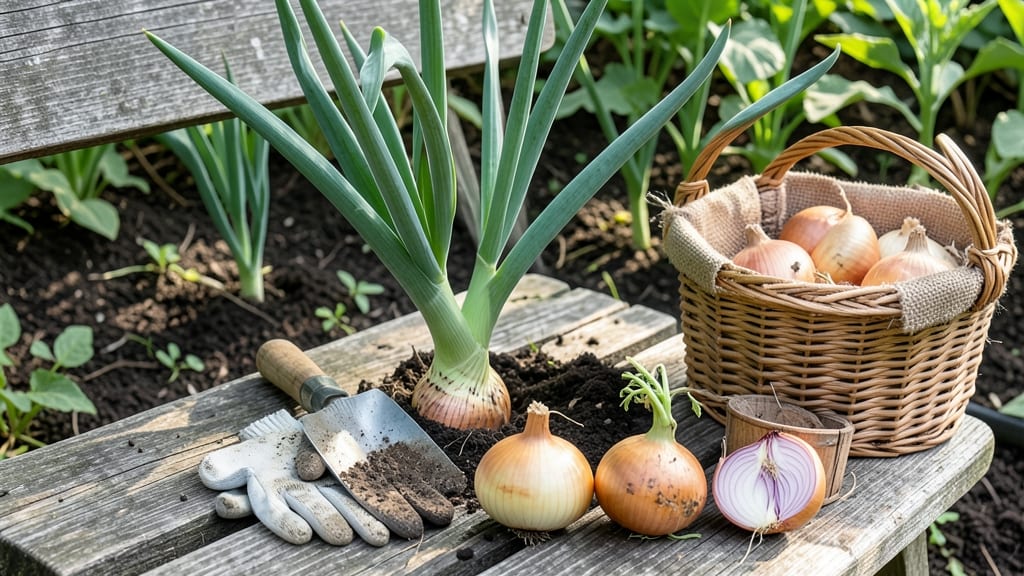
Harvesting onions from the garden at the right time ensures bulbs packed with flavor instead of hollow, pungent disappointments.
Picture this: you’ve nurtured your 🧅 for months, only to pull them too soon—tiny, watery, and useless—or too late, with papery skins and no taste. The secret lies in knowing when the tops yellow, the neck tightens, and the soil test confirms it’s go time.
This guide breaks down the foolproof topsoil lift test, seasonal cues, and regional timing so you never guess again. Whether you’re in Zone 6a or further south, you’ll learn how to spot perfect harvest-ready onions before they overmature.
From avoiding common mistakes to storing your harvest for months, you’ll discover expert tricks to turn your garden into a flavor factory. Let’s get those onions out of the ground at their peak!
How to use the topsoil lift test for ideal onion harvest timing
The topsoil lift test is my go-to trick for determining when onions are ready to harvest—no guesswork involved. This simple method helps you avoid the two biggest harvest mistakes: pulling onions too early (small, pungent bulbs) or leaving them too late (hollow, flavorless centers).
Whether you're growing spring onions or summer varieties, this test works like magic.
Timing matters because onions continue to grow even after their tops yellow. If you harvest too soon, you’ll end up with tiny, sharp bulbs that lack storage potential. But if you wait too long, the bulbs can split or rot in the soil.
The topsoil lift test gives you an exact moment to act—right when the bulb is at its peak flavor and size.
Here’s how to perform the test—it takes just a few seconds and could save your harvest:
- 1 Choose a sunny day after your onions have been growing for 90-120 days. Avoid rainy or windy conditions, as wet soil can distort results.
- 2 Gently loosen the soil around one onion plant using your fingers or a small hand trowel. Work about 1-2 inches deep—just enough to expose the bulb without damaging it.
- 3 Lift the bulb slightly to check its size. If the bulb is 1-2 inches in diameter and feels firm, it’s ready. Look for a tight neck where the bulb meets the stem—this indicates maturity.
- 4 Check the skin. Ready onions have papery, dry skin that peels back easily. If the skin is still green or moist, wait 1-2 weeks and test again.
- 5 Harvest within 2-3 days of passing the test. Use a fork to loosen the soil around the bulb, then gently pull it up. Shake off excess dirt and let it cure in the sun for 3-5 days before storing.
For spring onions (like scallions), the topsoil lift test works differently. These varieties are harvested when the bulb is pencil-sized (about ½ inch thick) and the tops are still green.
Use the same soil-loosening method, but focus on bulb thickness over neck tightness—spring onions don’t develop the same papery skin as storage onions.
If you’re growing summer onions (like Texas Super Sweet), wait until the tops fall over and turn yellow-brown. The topsoil lift test confirms the bulb is fully mature, but you’ll also notice the neck shrinks dramatically—this is your final cue.
Harvest these within 3-5 days of the tops dying back to avoid flavor loss.
Pro tip: Test 3-5 onions from different parts of your garden to account for uneven growth. If most pass the test, it’s time to harvest your entire patch. And remember—morning harvests are best because the soil is cooler and firmer, making it easier to lift bulbs without damage.
Once you’ve mastered the topsoil lift test, you’ll never second-guess your onion harvest timing again. The key is consistency: perform the test weekly once your onions hit 80 days of growth, and you’ll catch them at peak perfection every time.
🌱
Signs your onions are ready for harvest (beyond the topsoil test)
Beyond the classic topsoil lift test, onions send clear visual signals when they’re primed for harvest. The key is watching for leaf yellowing, bulb firmness, and neck shrinkage—all signs your onions have reached peak flavor and storage potential.
These cues work together like a symphony, ensuring you harvest at the perfect moment before they overmature.
Start by observing your onion tops. When the green blades begin turning straw-yellow and flop dramatically (like a bowing marionette), that’s your first clue. This happens naturally as the plant redirects energy from leaves to bulb maturation.
However, don’t confuse this with disease stress, which causes yellowing too—healthy yellowing feels crisp, not mushy.
The bulb’s firmness is another game-changer. Gently squeeze a bulb through its papery skin—if it feels solid and dense (like a tennis ball), it’s ready. A soft, spongy bulb means it needs more time, while a bulb that’s already hollow or shriveled has passed its prime.
Pro tip: Dig one test onion to check its size (aim for 1-2 inches in diameter) before committing to a full harvest.
Pay attention to the neck between bulb and leaf. When it tightens and shrinks (like a cinched waistband), the bulb is done growing. This is nature’s way of signaling harvest time—ignore it, and you risk bulbs splitting or developing hollow centers.
For spring onions, this usually happens 90-120 days after planting, while fall varieties may take slightly longer.
| Sign | Harvest-Ready Onion | Not Ready Onion |
|---|---|---|
| Leaf Color | Straw-yellow, dry tops | Green, vigorous growth |
| Bulb Firmness | Solid, dense feel | Soft, spongy feel |
| Neck Appearance | Tight, shrinking | Thick, flexible |
| Bulb Size | 1-2 inches diameter | Smaller than 1 inch |
| Skin Texture | Papery, dry | Green, moist |
Regional timing matters too. In Zone 6a, spring-planted onions typically signal readiness in late June to July, while fall varieties cue harvest in October.
If your area experiences hot, dry summers, onions may mature faster—watch for early signs like leaf yellowing and neck shrinkage to avoid missing the window. Conversely, cooler climates may delay these cues by 1-2 weeks.
One final trick: Pull a test onion at dawn when soil is moist. The bulb should slip easily from the soil with minimal resistance—a sign roots are mature. If it resists, give it 7-10 more days.
Once you’ve confirmed readiness, harvest on a dry, sunny morning to cure bulbs quickly and prevent rot. Store them in a cool, dark place with good airflow for months of flavor-packed onions.