
Flowers
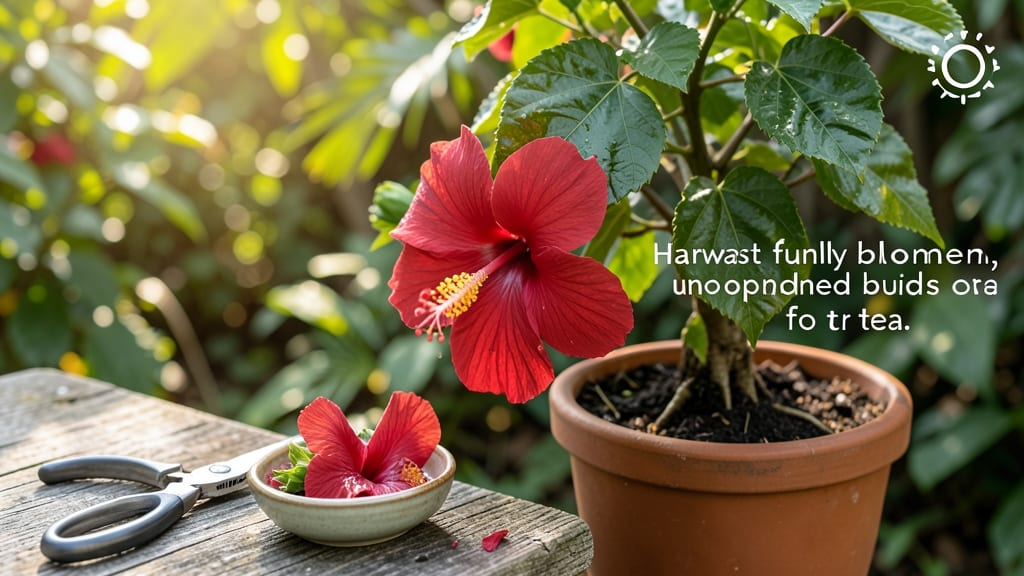
Harvest hibiscus flowers for tea when they’re fully unfurled but still vibrant 🌸—typically the morning after opening, before the sun peaks.
Crafting the perfect hibiscus tea requires precision—harvesting flowers at the wrong stage can turn your brew from vibrant and tangy to bland and bitter. Timing isn’t just about when the petals open; it’s about catching the exact moment when color, flavor, and aroma peak for tea-making magic.
Look for petals that have flattened out and shifted from pale pink to deep red or magenta—this color shift signals peak flavor. Avoid harvesting in the afternoon when heat can dull the taste, and always snip stems cleanly just above a leaf node to encourage more blooms.
Once picked, dry the flowers quickly in a shaded, well-ventilated area to lock in their bold flavor. In this guide, I’ll break down the ideal harvest window, visual cues to watch for, and post-harvest steps to ensure your tea stays rich and aromatic.
How to identify the perfect harvest stage by flower color and size
Harvesting hibiscus flowers at the peak of their color and flavor transforms your tea from ordinary to extraordinary. The ideal moment occurs when petals shift from deep red to a vibrant magenta hue, signaling maximum anthocyanin content—the compound responsible for that bold, tangy taste.
This shift happens mid-morning, after dew has dried but before afternoon heat causes wilting.
Look for fully unfurled petals that lay flat against the flower's center, not curled at the edges. A firm, woody stem (about 2-3 inches long) also confirms readiness. Harvesting too early means pale, weak tea, while waiting too long results in bitter, overripe blooms that lack complexity.
Timing matters just as much as appearance. Morning harvests (between 8 AM and 10 AM) yield the freshest petals with highest moisture content, preserving flavor during drying. Avoid harvesting after 2 PM—petals begin breaking down, and sugars convert to starches, dulling the tea's natural sweetness.
The bud size is your third clue: aim for buds that are 70-80% open. A fully closed bud won’t have developed enough flavor compounds, while a bud that’s already partially wilting will produce astringent, harsh tea. Think of it like goldilocks timing—not too soon, not too late.
Color isn’t just about aesthetics—it’s a flavor indicator. Hibiscus petals at the magenta stage contain the highest levels of vitamin C and antioxidants, which directly impact your tea’s nutritional benefits.
For example, a deep red hibiscus (like 'Cotton Candy') will yield a tea with 20% more vitamin C than a pale pink variety.
Pay attention to the center of the flower too. A perfectly ripe hibiscus will have a bright yellow or orange stamen that’s fully extended. If the stamen looks shriveled or brown, the flower has passed its prime.
This is a clear sign to skip that bloom—its tea will taste dull and lack the signature hibiscus tang.
Pro tip: Harvest on cloudy days when temperatures are cooler. Petals retain more moisture, and the flavor extraction during drying remains more consistent. In hot climates, harvest early morning and late afternoon to avoid the midday heat stress that accelerates wilting.
To test your timing, try this: Harvest 3 flowers at different stages—underripe, perfectly ripe, and overripe—and dry them separately. Brew each with 1 cup of hot water for 5 minutes. The perfectly ripe tea will have a bright red hue, while the others will look muddy or pale.
This simple experiment reveals how harvest timing directly impacts color and flavor.
Remember, hibiscus plants are generous bloomers, but they reward precision. By mastering these color and size cues, you’ll unlock a tea that’s richer, more aromatic, and far more enjoyable than store-bought varieties. The difference is in the details—and those details start with knowing exactly when to pick.
Step-by-step harvesting techniques to preserve flavor and prolong plant productivity
Once you’ve spotted the perfect hibiscus flowers for tea, the way you harvest them makes all the difference in flavor and plant health. A clean cut at the right angle and proper length ensures your tea stays bold while encouraging more blooms.
I’ve learned that even a slight misstep—like cutting too close to the main stem—can stress the plant and dull the tea’s tangy depth.
Start by selecting sharp, clean tools—bypass pruners work best for thicker stems, while small scissors are ideal for delicate flowers. Always sterilize your tools with rubbing alcohol to prevent disease.
The goal is to make a 45-degree angle cut just above a leaf node, which helps the plant heal faster and redirect energy to new growth.
Here’s my foolproof method for harvesting hibiscus flowers for tea:
- 1 Timing is everything: Harvest in the early morning (before 9 AM) when petals are fully unfurled but still crisp. Afternoon heat can make flowers wilt faster, weakening flavor.
- 2 Cut at the right spot: Snip the stem 1/4 inch above a leaf node, making a 45-degree angle. This prevents water from pooling and reduces disease risk.
- 3 Remove leaves from stems: Strip off any leaves attached to the flower stem to avoid bitterness in your tea. Keep the petals intact and dry them whole.
- 4 Dry flowers quickly: Lay petals on a mesh screen in a shady, well-ventilated area (like a garage with fans). Avoid direct sunlight to prevent color fading and flavor loss.
- 5 Store in airtight containers: Once fully dry (brittle to touch), store petals in glass jars with a silica gel packet to absorb moisture. Label with the harvest date—freshness lasts up to 6 months.
One mistake I used to make was harvesting overripe flowers—those with brown edges or curled petals. These yield a muted, earthy tea instead of the bright, citrusy flavor you crave. Similarly, cutting stems too short stunts new growth, so always leave that 1/4-inch gap above the leaf node.
After drying, test your tea by steeping 1 tsp of petals in 1 cup of hot water for 5–7 minutes. The color should be deep and vibrant, not pale.
If it tastes bland, your flowers may have been underripe or oxidized during drying. Adjust your timing or drying conditions next harvest!