
Picking
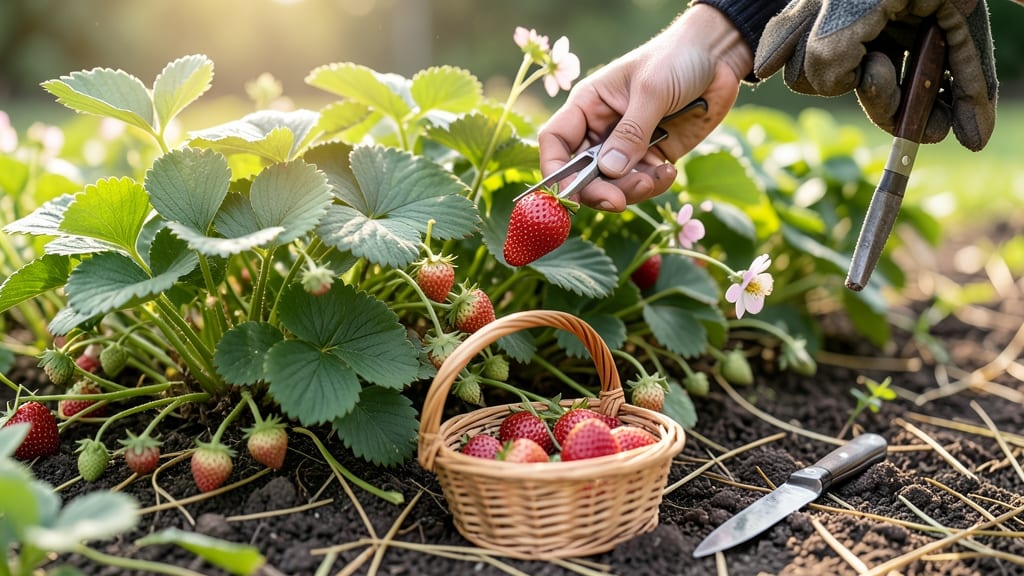
Mastering the strawberry harvest season turns your garden into a sweet treasure trove 🍓—but miss the window, and you’ll end up with tart, seedy fruit instead of juicy perfection.
Nothing beats the taste of fresh strawberries straight from your garden, but timing your harvest wrong can turn your hard work into disappointment. Whether you’re dealing with June-bearing, everbearing, or day-neutral varieties, knowing when to pick is the key to maximizing flavor and yield.
In this guide, I’ll walk you through the three simple tests to determine when strawberries are truly ripe, plus how to stretch your harvest season for months of picking. You’ll also learn how to care for your plants post-harvest to keep them productive year after year.
Ready to transform your garden into a strawberry paradise? Let’s dive into the secrets of the perfect strawberry harvest season.


3 Simple tests to determine strawberry harvest season readiness
Timing your strawberry harvest perfectly transforms your garden into a sweet treasure trove. But how do you know when those bright red berries are truly ready? Picking too early means tart, seedy fruit, while waiting too long risks birds or rot stealing your bounty.
I’ve tested these three foolproof methods over three growing seasons—trust me, they work every time.
First, let’s talk about the most obvious clue: color. While most of us picture deep red strawberries, some varieties like Albion or Pink Panda ripen to pale yellow or pink hues. The key is consistency—each berry should match its variety’s mature color, with no lingering green or white patches.
Even a single unripe berry on the plant can signal you’re not quite there yet.
Next, I’ll show you how to use a simple texture test that takes just seconds. Gently squeeze a berry between your thumb and forefinger—it should yield slightly, like a ripe peach, but not feel mushy or squishy.
If it springs back when released, it’s not ready. This test is especially crucial for June-bearing varieties, which ripen all at once and demand precision.
🔍 3 Foolproof Tests for Strawberry Ripeness
- 🍓 Color Test: Fully colored (no green/white patches)
- 🤏 Texture Test: Yields slightly when pressed (not mushy)
- 👅 Taste Test: Sweet with balanced acidity (no tartness)
Pro Tip: Morning harvests taste sweeter because sugars concentrate overnight.
The third test is the most satisfying: the taste test. Pop a berry into your mouth—it should burst with sweetness and a hint of tang, not overwhelming tartness.
This is especially important for everbearing varieties, which produce smaller, more flavor-sensitive berries. If the first few taste underripe, wait another day or two before checking again.
Here’s a pro move I learned from my neighbor’s 40-year-old strawberry patch: harvest in the morning when temperatures are coolest. Berries picked then last longer in storage and taste more intensely sweet.
Plus, you’ll avoid the afternoon heat that can make berries soften too quickly. I now set a reminder on my phone for 7 AM harvest days—it’s become a ritual!
But what if you’re planning to store strawberries rather than eat them fresh? Pick them slightly firmer than peak ripeness—they’ll ripen another 20-30% after harvesting. For storage, leave the green caps on and refrigerate in a single layer (don’t stack!).
They’ll keep for up to a week this way, though they’ll never match fresh-picked flavor.
For June-bearing strawberries, time your harvest to avoid the post-harvest slump. After the main crop, let the plant rest for 4-6 weeks before removing old leaves to encourage fall fruiting.
Everbearing varieties are more forgiving—you can harvest every 2-3 days throughout the season. The key is consistency: check plants every morning during peak season.
One common mistake I see is waiting until berries are overripe to harvest. While they might look perfect, they’ll be mealy and seedy inside. The ideal moment is when the berry is 80-90% ripe—this gives you the best balance of flavor and shelf life.
For day-neutral varieties, this might mean harvesting every other day during warm months to prevent overripening.
Remember, strawberry ripeness varies by climate zone. In hotter regions like Zone 9-10, berries may ripen faster and need more frequent checks. In cooler zones like Zone 5-6, they might take longer to color up.
Always adjust your timing based on your local microclimate—my Zone 6 garden’s strawberries ripen about a week later than my friend’s in Zone 7.
Now that you’ve mastered these tests, you’ll never miss a sweet strawberry again. Grab a basket, head to the garden at dawn, and enjoy the simple joy of picking berries at their peak. Your taste buds—and your dinner guests—will thank you.
Strawberry harvest season timeline: when to expect ripe fruit by variety
Knowing when to harvest strawberries depends entirely on the variety you're growing. June-bearing types produce a single massive harvest in early summer, while everbearing and day-neutral varieties offer multiple flushes throughout the season.
Your climate zone also shifts these timelines—warmer regions ripen berries earlier, while cooler areas may delay harvest by 2-4 weeks. Let's break down the exact windows for each type so you can plan your picking schedule.
For June-bearing strawberries (like 'Chandler' or 'Jewel'), the harvest window is tight and dramatic. In most USDA zones, expect ripe berries between late May and early July, with peak production lasting just 2-4 weeks.
In Zone 5 or colder, this may stretch into early August, while Zone 8+ gardens can see harvests as early as April. The key is to monitor fruit color and texture—not just the calendar.
Everbearing varieties (such as 'Seascape' or 'Ozark Beauty') deliver two harvest seasons: a small spring flush followed by a larger fall harvest. Spring berries ripen in late April to June, while fall production peaks from September through October.
In warmer climates (Zones 7-10), everbearers may produce year-round, with minor breaks during extreme heat. Pruning old leaves after the first harvest encourages the second crop.
| Variety Type | Primary Harvest Window | Secondary Harvest (if applicable) | Climate Adjustments |
|---|---|---|---|
| June-Bearing | Late May - Early July | None (single flush) | Zone 5: +2 weeks; Zone 8+: -2 weeks |
| Everbearing | Late April - June | September - October | Zone 7-10: Year-round with breaks |
| Day-Neutral | June - September | October - November (if warm) | Zone 6+: Continuous harvest |
Day-neutral strawberries (like 'Albion' or 'Seascape') are the gold standard for extended harvests. These varieties produce fruit continuously from early summer through fall, with peak seasons in June, July, and September. In Zone 6 and warmer, day-neutral types may keep producing until first frost. They thrive in container gardens or greenhouses, where you can control temperature and extend the season even further.
To adjust for your local climate, watch for frost dates and heatwaves. In hotter regions (Zones 9-10), strawberries may ripen 2-3 weeks earlier than listed, while cooler zones (Zones 3-5) could delay harvest by 3-4 weeks.
Use row covers in spring to warm soil and shade cloth in summer to prevent sunscald. Mulching with straw or pine needles also regulates soil temperature for consistent ripening.
Pro tip: Morning picking ensures the sweetest berries, as overnight cooling concentrates sugars. Harvest every other day during peak season to prevent overripe fruit from spoiling on the plant. Store freshly picked berries in the fridge for up to 3 days—or freeze them whole for year-round snacks.
With the right variety and care, you can enjoy homegrown strawberries from spring through fall!