
Picking
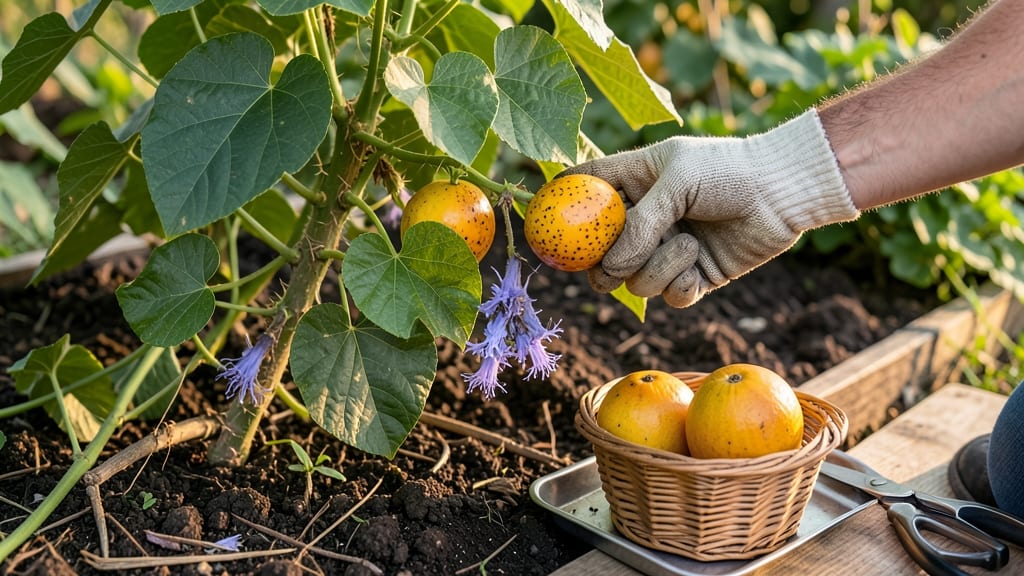
Knowing the exact passion fruit harvest time means the difference between sweet, juicy fruit and a bitter disappointment 🍈.
Ever plucked a passion fruit only to find it still hard as a rock inside? Or worse, left it too long and watched it split open on the vine? The right moment to harvest is all about three key visual cues—and missing them can mean losing your crop.
In this guide, I’ll walk you through how to spot ripe passion fruit, including color changes, texture shifts, and the one simple test that confirms it’s ready to pick.
Whether you’re in a tropical paradise or a protected zone like 8a-10a, these tips will help you maximize your harvest every season.
Ready to turn your vine into a fruit-producing powerhouse? Let’s dive into the signs that tell you it’s finally time to harvest.

3 Visual signs your passion fruit is ready for harvesting
Harvesting passion fruit at the perfect moment transforms your vine into a sweet, flavor-packed treasure. But how do you know when it's truly ripe? Unlike many fruits, passion fruit doesn't soften dramatically—it relies on subtle visual cues that tell you it's time to pick.
Miss these signs, and you might end up with tart, underripe fruit or even drop your crop before harvest.
Passion fruit comes in two main varieties: the yellow passion fruit (common in Florida and California) and the purple passion fruit (popular in tropical regions). While their ripening cues are similar, there are key differences in color shifts and texture that I’ll cover.
Whether you're growing Passiflora edulis (purple) or Passiflora ligularis (yellow), these visual signs apply to both.
⚠️ PRO TIP: Always harvest in the morning when temperatures are cooler. This preserves the fruit's flavor and prevents bruising during picking. 🌞
| Sign | Yellow Passion Fruit | Purple Passion Fruit | What It Means |
|---|---|---|---|
| Color Change | Deep golden-yellow | Rich purple-brown | Fruit is fully ripe and sweet |
| Skin Texture | Slightly waxy, yields under pressure | Slightly leathery, softens near stem | Seeds are fully developed and flavor peaks |
| Stem Separation | Twists off easily with slight resistance | Pulls away cleanly at the base | Nutrients have fully transferred to the fruit |
| Size & Shape | Plump, oval-shaped | Rounder, slightly elongated | Fruit has reached full maturity |
| Regional Note | Common in USDA Zones 9b-11 | Thrives in tropical climates | Harvest seasons vary by location |
Let’s break down the three critical visual signs that your passion fruit is ready to harvest. First, pay attention to the color transformation. For yellow passion fruit, look for a shift from green to a deep golden-yellow hue.
Purple varieties will turn a rich, deep purple-brown—almost like a dark plum. If your fruit still has green patches, it’s not ready yet.
Next, check the skin texture. A ripe passion fruit will have a slightly waxy or leathery feel. Gently press your thumb against the fruit—if it gives just a little (like pressing a ripe avocado), it’s time to pick.
Avoid fruits that feel rock-hard or mushy, as these indicate underripe or overripe fruit, respectively.
Finally, test the stem separation. Grab the fruit and twist gently at the stem. If it detaches cleanly with slight resistance, your passion fruit is perfect for harvesting. If the stem resists or the fruit doesn’t come away easily, it’s not ripe enough.
This sign is especially important because passion fruit won’t ripen further after picking—unlike bananas or tomatoes.
Regional variations play a role too. In warmer climates like Florida or Hawaii, passion fruit may ripen year-round, but peak harvest typically occurs in late spring to early fall.
In cooler zones like Southern California or Arizona, you’ll see harvests from May through September. Always align your picking with these seasonal cues to maximize yield.
One common mistake I see is waiting too long for the fruit to change color. Don’t assume it’ll ripen on the vine—passion fruit relies on these visual cues to tell you it’s ready.
If you miss the window, the fruit may drop prematurely or develop a bitter, seedy pulp that’s unpleasant to eat. 🍈
Pro tip: Use a small harvest basket lined with a soft cloth to collect your ripe passion fruit. This prevents bruising and makes it easier to transport them to your kitchen or storage spot.
Once harvested, store them at room temperature for 1-2 days to let the flavors fully develop before refrigerating.
How to test passion fruit ripeness beyond appearance
Visual cues like color changes and stem separation are great starting points, but sometimes passion fruit ripeness hides beneath the surface. That’s where tactile tests and aroma cues come into play—these methods reveal whether your fruit is truly ready or still hiding its sweet potential 🍈.
If you’ve ever plucked a passion fruit that was too firm or too mushy, you know how frustrating it can be. The key lies in understanding the three subtle signs that confirm ripeness beyond just looking at the fruit.
Let’s explore how to use your hands and nose to perfect your harvest timing.
⚠️ callout warning
Don’t rely solely on color—overripe passion fruit can look ripe but feel squishy and smell fermented. Underripe fruit may appear yellow-orange but stay rock-hard when squeezed. Always combine the squeeze test and aroma check for accuracy.
💡 Pro Tip: If the fruit detaches with no resistance, it’s likely overripe.
Start with the gentle squeeze test, the most reliable way to gauge ripeness. Gently press your thumb and forefinger into the fruit’s skin—ripe passion fruit should yield slightly like a ripe peach, not bounce back like a tennis ball or collapse like overripe fruit.
This flexibility indicates the seeds have fully developed and the pulp is juicy 🌱.
Next, trust your nose—the aroma of a ripe passion fruit is intensely sweet and tropical, almost like a mix of citrus and honey. If the fruit smells mild or sour, it’s not ready yet.
On the other hand, a fermented or alcoholic scent means it’s past its prime and best harvested immediately to avoid spoilage.
For yellow passion fruit varieties, the skin should also develop a slight waxy sheen when ripe. Purple varieties, like the Passiflora edulis, may appear duller but still emit that signature sweet aroma.
If the fruit feels cool to the touch, it’s likely underripe—wait another 2-3 days for full ripening.
Timing matters too: harvest in the early morning when temperatures are cooler. This ensures the fruit’s sugars are concentrated, and the skin is firmer, reducing the risk of bruising during transport. Store ripe passion fruit in a paper bag at room temperature for 2-3 days to ripen further if needed.
Now that you’ve mastered the squeeze test and aroma cues, you’ll never second-guess your passion fruit harvest again. Happy picking—and enjoy that sweet, tangy payoff! 🌿