
How To
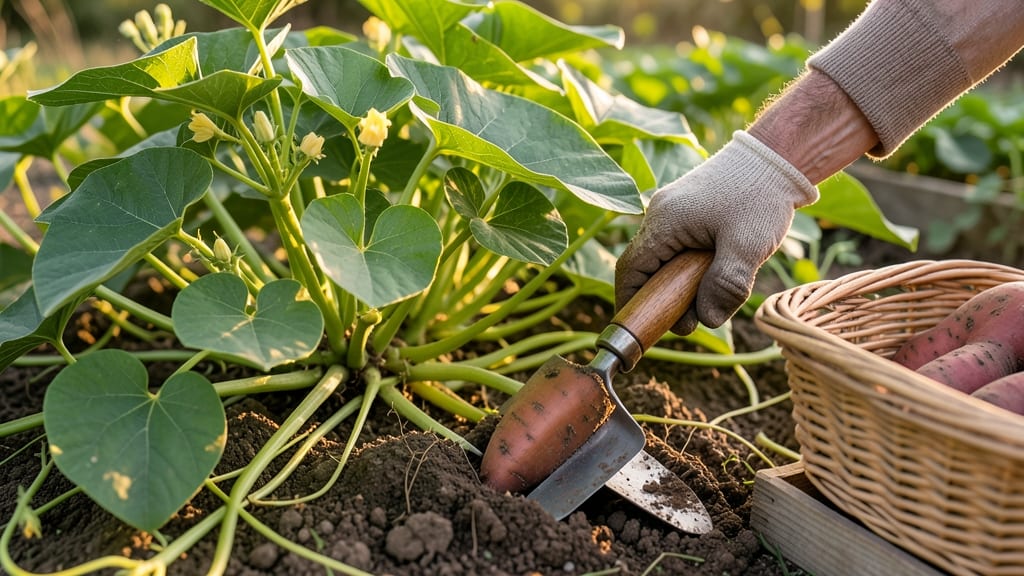
Telling when to harvest sweet potatoes is all about reading the plants—skin texture, leaf color, and even the moon’s phase—before a single frost hits.
Picture this: you’ve spent months nurturing your 🍠 plants, and now the vines are yellowing while the tubers resist your thumbnail. That’s the perfect moment—but wait too long, and you’ll end up with tough, stringy roots instead of the sweet, starchy gems you’re after.
In Zone 6a, where summer stretches into October, timing matters even more. A late harvest risks frost damage, while digging too early means underdeveloped tubers. Below, I’ll walk you through the skin slip test, leaf signals, and even lunar secrets to nail the harvest window every time.
You’ll leave here knowing exactly when to pull those sweet potatoes—plus how to cure and store them for maximum flavor and shelf life.
The skin slip test & 3 other visual cues to harvest sweet potatoes perfectly
Timing your sweet potato harvest is an art—get it wrong, and you’ll end up with tough, fibrous tubers instead of the sweet, creamy ones you crave. The key lies in combining the classic skin slip test with three other foolproof visual cues.
These methods work together to ensure you harvest at peak sweetness, just before the first frost threatens to damage your crop.
First, let’s tackle the skin slip test, the most reliable method for determining sweet potato maturity. This simple tactile check tells you whether the tubers have reached their ideal size and firmness.
Pair it with leaf yellowing, vine drying, and skin color changes for a multi-sensory approach that minimizes guesswork. I’ve used these techniques for years, and they’ve never failed me—even in unpredictable climates.
Here’s the breakdown of how these methods work together, along with a handy comparison table to visualize the differences between ready and not-ready tubers:
| Indicator | Not Ready (Green) | Ready (Yellow) | Over-Mature (Brown) |
|---|---|---|---|
| Vine Color | Bright green, active growth | Yellowing (50-70% leaves) | Fully brown, crispy |
| Skin Slip Test | Skin slips easily under thumbnail | Resists pressure (firm skin) | Skin cracks or is leathery |
| Tuber Size | Under 3 inches | 3-6 inches (ideal) | Over 6 inches (woody) |
| Skin Color | Light tan or greenish | Deep tan/brown (consistent) | Patchy or faded |
The skin slip test is your best friend when it comes to tactile confirmation. To perform it, gently press your thumbnail into the skin of a tuber. If it slips easily, the sweet potato isn’t ready—it’s still growing.
When the skin resists your thumbnail and feels firm, that’s your cue to harvest. This test works best when combined with the other visual cues, as environmental factors like drought or extreme heat can sometimes create false positives.
Next, watch for leaf yellowing, which signals the plant is redirecting energy to the tubers. Aim for about 50-70% of the leaves to turn yellow before harvesting. If you wait until all leaves are brown, you risk missing the window and ending up with over-mature, woody tubers.
In my experience, harvesting when leaves are just starting to yellow ensures the sweetest flavor and perfect texture.
Vine drying is another critical visual cue. As the plant prepares for dormancy, the vines will start to dry out and die back. This process usually begins 2-3 weeks before the first frost in most climates. If you’re in a region with early frosts, like Zone 5 or colder, you’ll need to harvest before the vines fully crisp up. Pro tip: Use a small garden fork to gently probe the soil around the base of the plant—this can help you locate tubers without damaging them.
Finally, pay attention to skin color changes. Ready-to-harvest sweet potatoes develop a deep, consistent tan or brown hue. If the skin is still light or patchy, the tubers need more time.
One common mistake is assuming all sweet potatoes should have the same color—varieties like Beauregard develop a reddish skin, while Georgia Jet stays tan. Always check your specific variety’s characteristics to avoid confusion.
Seasonal variations can throw off your timing, especially if you’re dealing with early or late frosts. In warmer climates, sweet potatoes may take longer to mature, while cooler regions might need to harvest earlier.
To account for this, I always keep an eye on the 10-day weather forecast and adjust my harvest window accordingly. If frost is predicted within 5-7 days, it’s time to dig—even if the tubers aren’t perfectly firm.
False positives can happen, particularly if your plants are under stress from drought or pests. For example, a drought-stressed plant might show premature leaf yellowing, but the tubers won’t be ready. In these cases, combine all four methods: slip test, leaf color, vine condition, and skin hue.
If three out of four indicators align, you’re likely safe to harvest. If not, give the plants another week or two.
Once you’ve confirmed your sweet potatoes are ready, it’s time to harvest carefully. Use a garden fork to loosen the soil around the base of the plant, then gently lift the tubers to avoid bruising.
Cure them in a warm, humid space for 5-10 days to develop their full sweetness and storage potential. With these methods, you’ll never again dig up a batch of underripe or over-mature sweet potatoes—just perfect, flavorful tubers ready for your table.
Moon phase harvesting secrets: when to dig for maximum sweetness & storage life
Did you know the moon's phases can transform your sweet potatoes from bland to breathtaking? Lunar gardening isn't just folklore—it's a science-backed way to boost sugar content and storage life.
When you align your harvest with the right celestial timing, you'll uncover tubers that are sweeter, firmer, and last longer in storage. The key lies in understanding how the moon's gravitational pull affects plant energy and nutrient absorption.
Sweet potatoes thrive when harvested during specific moon phases, particularly the waning gibbous and waning crescent. These phases occur after the full moon when the moon's energy shifts from growth to storage.
During these windows, your plants focus on storing nutrients in their roots rather than producing foliage. This natural process results in sweeter, more flavorful tubers that keep their quality for months in storage.
For maximum results, plan to harvest your sweet potatoes during the 5-day window following the full moon when the moon enters the waning gibbous phase. This is when the plant's energy naturally shifts from above-ground growth to below-ground storage.
You'll notice the vines begin to yellow and die back more rapidly during this time, signaling that the tubers are maturing and storing sugars efficiently.
Pro tip: Pair your moon-phase harvesting with the skin slip test. When the skin easily slips off the tuber (without peeling), it's a double confirmation that you're harvesting at peak sweetness. This tactile cue combined with lunar timing ensures you're getting the most flavorful and long-lasting sweet potatoes possible.
Store them in a cool, dark place with good airflow to preserve their quality for up to 6 months.
Even if you're new to lunar gardening, you can start small by simply harvesting during the waning phases next fall. Over time, you'll notice the difference in flavor and storage life compared to tubers harvested during other moon phases.
The moon's influence on sweet potatoes is just one of nature's many secrets waiting to be discovered in your garden.
🌕🍠