
How To
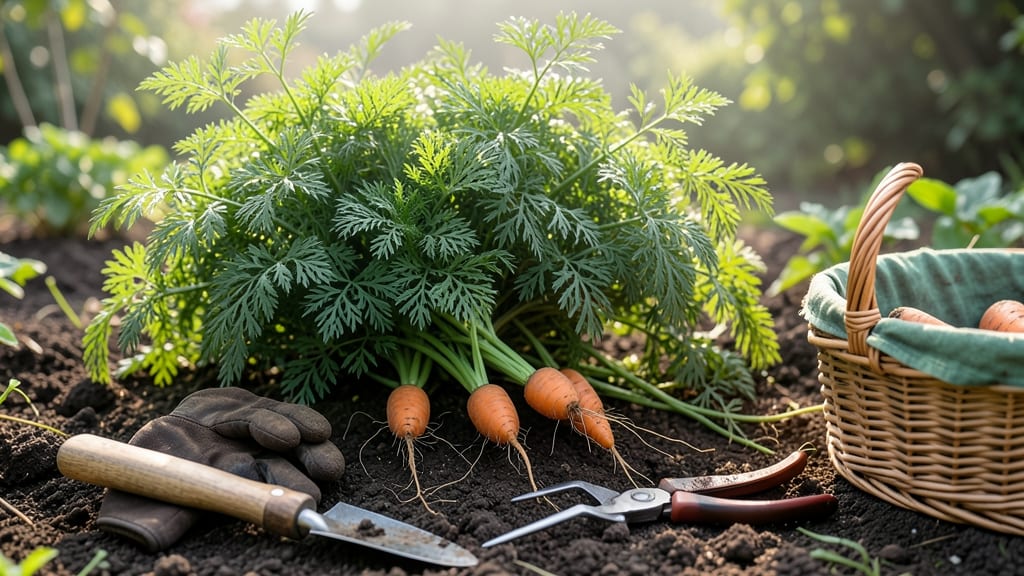
Telling when to harvest carrots 🥕 means catching them at the peak of flavor and texture—before they turn tough or split.
Harvesting too early leaves you with undersized roots, while waiting too long risks woody, bitter carrots that even a good recipe can’t save. The difference between a crisp, sweet bite and a disappointing crunch often comes down to timing.
In this guide, I’ll walk you through the three key visual cues that signal your carrots are ready—no guesswork required. We’ll cover size, color, and soil conditions, plus how to adjust for different varieties like baby carrots or storage types.
By the end, you’ll know exactly when to pull your carrots for the perfect harvest, whether you’re growing them in your backyard or a container garden.
3 Key visual cues to identify perfectly ripe carrots
Knowing when to harvest carrots can be tricky—especially when the roots are hidden underground. But with these 3 key visual cues, you’ll never miss the perfect moment to pull sweet, crisp carrots from your garden.
I’ve learned from years of trial (and a few too many woody disappointments) that timing is everything for flavor and texture.
The first clue is often overlooked: the leaf color and foliage growth. Healthy carrot tops should be about 3–4 inches tall with vibrant green leaves. If they’re stretching tall and leggy, your carrots might be overripe.
On the flip side, if the leaves are still small and sparse, the roots likely need more time to mature.
Here’s where most gardeners go wrong—they focus only on the days since planting instead of the actual root development. While most varieties take 60–80 days to mature, soil conditions and variety type can shift that window. That’s why visual cues matter more than a calendar.
Now, let’s get practical. Below are the 3 foolproof visual cues I use to determine when my carrots are ready. These tips will help you avoid the common mistakes of harvesting too early (tiny, bitter roots) or too late (hard, stringy messes).
-
1Leaf Color & Height
Look for 3–4 inch tall foliage with vibrant green leaves. Yellowing or wilting tops signal overripe roots. -
2Root Size & Soil Exposure
Gently brush away 1–2 inches of soil to check for 1–3 inch diameter roots. If the stem end is white and buried, it’s ready! -
3Firmness Test
Press the exposed root—it should feel firm but slightly yielding, like a ripe avocado. Soft spots mean it’s underripe; hard roots are overdone.
Let’s break down the leaf color cue first. The tops of your carrots are like a progress bar for root development. When the foliage reaches 3–4 inches tall and the leaves are a deep, rich green, the roots below are typically at their sweetest.
I always check this first because it’s the easiest way to spot overcrowded plants—which can stunt growth.
For root size and soil exposure, you’ll need to get your hands dirty. Use a small trowel or your fingers to gently brush away 1–2 inches of soil around the base of the plant.
If you see a 1–3 inch diameter root with a white stem end (not green), that’s your signal to harvest. Pro tip: Avoid exposing the entire root too early—this can cause green shoulders, which make the carrot bitter.
The firmness test is my favorite because it’s instant feedback. After exposing part of the root, press it gently with your thumb. A ripe carrot should feel firm but yield slightly, like pressing a ripe peach.
If it’s soft or mushy, it’s underripe. If it’s hard and resistant, it’s past its prime and likely woody. This test works for all varieties, from baby carrots to Danvers types.
One mistake I see often is harvesting based on days alone. While most carrots mature in 60–80 days, cooler soils or drought can slow growth. Always cross-reference the days since planting with these visual cues.
For example, Paris Market carrots (tiny, round types) might be ready in 50 days, while Chantenay varieties can take up to 90 days.
Here’s a pro tip: If you’re growing multiple varieties, mark your rows with stakes or labels. This way, you can track each type’s progress separately. I use colored twine tied to the row markers—red for early varieties, green for mid-season, and blue for late harvests.
It’s a simple system that saves time during busy harvest seasons.
Finally, don’t forget to harvest in the morning when the soil is moist but not soggy. This reduces stress on the plants and gives you the cleanest roots. After pulling, rinse off excess dirt and store them in the fridge for up to 3 weeks for maximum crispness and sweetness.
With these 3 visual cues, you’ll never second-guess your carrot harvest again. The key is to check regularly—especially in the last 2 weeks of the expected maturity window—and trust your eyes (and fingers!) over a calendar.
When to harvest carrots by variety: timing differences for short vs long roots
Not all carrots mature at the same time—some varieties are ready in as little as 50 days, while others take up to 90 days to reach harvest. The key difference lies in their root length and intended use.
Baby carrots, like 'Paris Market', are harvested early for tender, sweet roots, while storage varieties like 'Danvers' need more time to develop thick, long roots that store well.
Climate also plays a role: cooler temperatures slow growth, extending the harvest window by 10-15 days, while hot weather can speed up maturity. If you're growing in USDA Zone 6a or warmer, expect faster growth than in cooler regions.
Understanding these differences ensures you harvest at the perfect moment for each type.
🥕 Baby carrots (2-4 inches) are ready in 50-60 days, while standard varieties (6-12 inches) take 70-80 days. Storage carrots like 'Chantenay' may need up to 90 days to reach ideal size. The table below breaks down the exact timing for each category.
| Variety Type | Root Length | Days to Harvest | Best For | Climate Note |
|---|---|---|---|---|
| Baby Carrots | 2–4 inches | 50–60 days | Fresh eating, salads | Faster in heat |
| Heirloom (e.g., 'Purple Haze') | 4–6 inches | 60–70 days | Fresh use, color | Slower in cool climates |
| Storage (e.g., 'Danvers') | 6–12 inches | 70–90 days | Long-term storage | Longer in cold |
| Container (e.g., 'Little Finger') | 3–5 inches | 55–65 days | Small spaces | Dries faster |
For baby carrots, I recommend harvesting when the tops reach 3-4 inches tall—this ensures the roots are tender and sweet. Use a small trowel to loosen soil around the edges before gently pulling to avoid damaging nearby plants.
If you're growing storage varieties, wait until the roots are fully sized and the foliage starts yellowing slightly at the base.
In hot climates, carrots may mature 10-15 days earlier due to faster growth, while cooler regions could extend the timeline by the same amount. Always check the soil around the roots—if the shoulder (top of the root) is fully white and buried, it’s time to harvest.
Ignoring this cue can lead to woody, tough roots that lose their sweetness.
Pro tip: If you're unsure, dig up one test carrot from each variety. This gives you a clear idea of the remaining harvest window without risking over-maturity.
For example, if your 'Danvers' carrots are still small after 80 days, they may need richer soil or more sunlight to bulk up.