
How To
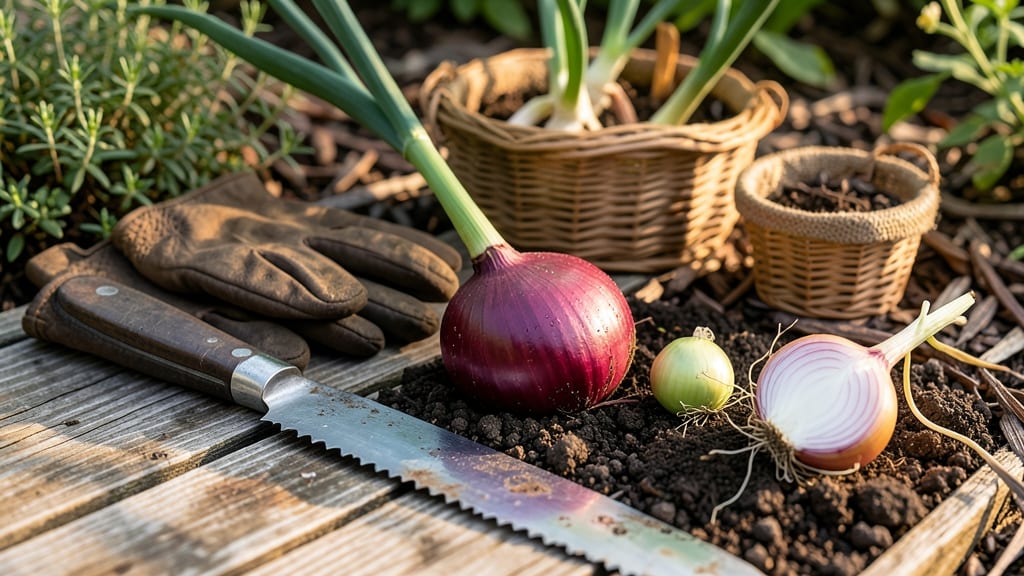
To know when to harvest red onions 🧅, watch for three key signs: paper-thin skins, a firm bulb, and yellowing tops.
Picking red onions at the wrong time can mean the difference between a sweet, flavorful harvest and a bitter, pungent disappointment—so how do you know when they're ready?
Most gardeners miss the window because they focus on size alone, but the real clues are hidden in the leaves and the skin. A bulb that feels soft or still has thick green tops won’t store well, and harvesting too early means wasted effort.
Below, I break down the exact visual cues you need, how to test for readiness, and what to do if you’ve already missed the mark—plus storage tips to keep your harvest fresh through the fall.


Signs your red onions are ready for harvest: visual and physical clues
Harvesting red onions at the perfect moment transforms them from mild and tender to full-flavored and storable. Unlike green onions, which you can snip anytime, mature red onions demand three key indicators before you pull them from the soil.
Miss these signs, and you risk either bitter, pungent bulbs or soft, spoiling onions that won't store well.
The most reliable way to judge readiness is by combining visual cues with physical tests. Start by examining the leaf tops—they should show distinct color changes. Then, check the bulb size and skin texture for confirmation.
If you harvest too early, the bulbs stay small and watery; too late, and they split or rot in storage.
| Indicator | What to Look For | Action |
|---|---|---|
| Leaf Color | Tops turn yellow-brown and flop over (not just wilted) | Check 2-3 outer leaves per bulb |
| Bulb Size | Bulbs reach 1-2 inches in diameter and feel firm when squeezed | Gently squeeze—soft bulbs need more time |
| Skin Texture | Papery, dry skin that peels back easily (no green neck remaining) | Peel back outer layer—should feel crisp, not moist |
| Green Onions | Harvest anytime when leaves reach 4-6 inches tall | Snip 1-2 inches above soil—regrowth continues |
First, focus on the leaf tops. When 50-70% of the tops turn from green to yellow-brown and begin to flop over, that’s your first green light. Healthy green tops mean the onion isn’t ready—it’s still growing.
If the tops are completely brown and crispy, you’ve waited too long, and the bulbs may have split or started rotting.
Next, test the bulb size. Dig up one onion and check its diameter—it should measure 1-2 inches across. If it’s smaller, leave it in the ground for 1-2 more weeks.
For firmness, gently squeeze the bulb: it should feel solid, like a baseball, not soft or mushy. A soft bulb won’t store well and may spoil quickly.
The skin texture is the final clue. Peel back the outer layer—it should be dry, papery, and crisp, not moist or green. If you see any green neck remaining at the base, the onion isn’t fully mature.
This papery skin protects the bulb during storage, so don’t skip this step!
For green onions (also called scallions), the rules are different. You can harvest them anytime when the leaves reach 4-6 inches tall. Simply snip the outer stalks with a pair of clean scissors, leaving the inner shoots to regrow.
This method lets you enjoy fresh green onions all season without waiting for bulbs to form.
Timing matters too—harvest red onions on a dry, sunny morning to prevent disease. Avoid harvesting after rain, as wet bulbs are prone to rot. Once pulled, let them cure in the sun for 1-2 hours before storing to toughen the skins and extend shelf life.
Regional differences affect harvest windows. In warmer climates (USDA Zones 8-10), onions mature earlier (June-July), while in cooler zones (Zones 3-6), they may not be ready until late August or September. Always adjust for your local frost dates—onions won’t tolerate freezing.
Pro tip: If you’re unsure, dig up one test onion and check its size and skin. If it’s ready, harvest the rest within 3-5 days to avoid over-maturity. Overripe onions lose flavor and storage potential, so act fast when you spot those yellowing tops!
Common harvest mistakes that ruin your red onions (and how to avoid them)
Harvesting red onions at the wrong time or mishandling them after the harvest can turn your hard work into a disappointing, bitter pile of waste.
The most common mistakes I see in gardens are harvesting too early, leaving onions in the ground too long, and improper storage techniques that lead to spoilage.
Even if your onions look big, size doesn’t equal readiness. Over-mature onions develop tough, pungent flavors and won’t store well, while underripe ones are soft and prone to rotting. Let’s fix these mistakes before they ruin your harvest.
Red onions are ready when tops yellow and fall over, bulbs are 1-2 inches wide, and skins are paper-thin. Harvesting too early means small, soft bulbs that won’t store. Leaving them too long turns skins tough and flavors bitter.
Test readiness by gently pulling a few onions—if the bulb slips free easily, it’s ready. If the top resists, wait 3-5 days.
Another critical error is improper curing after harvest. Many gardeners skip this step, leading to moldy onions. Cure them in a dry, shaded spot for 2-3 weeks before storing. This hardens the skins and extends shelf life.
Environmental factors like excessive rain before harvest can cause rot. If your soil stays soggy, onions absorb too much moisture, making them prone to spoilage. Always harvest during dry weather and avoid watering 2-3 days before picking.
Storage mistakes are just as damaging. Never refrigerate freshly harvested onions—they’ll sprout or rot. Instead, store them in a cool, dark, well-ventilated place (like a mesh bag) where temps stay between 50-60°F.
If your onions start sprouting or developing soft spots, they’ve gone bad. Discard them immediately to prevent spoilage from spreading to other produce. With these fixes, your red onions will stay fresh and flavorful through fall.