
How To
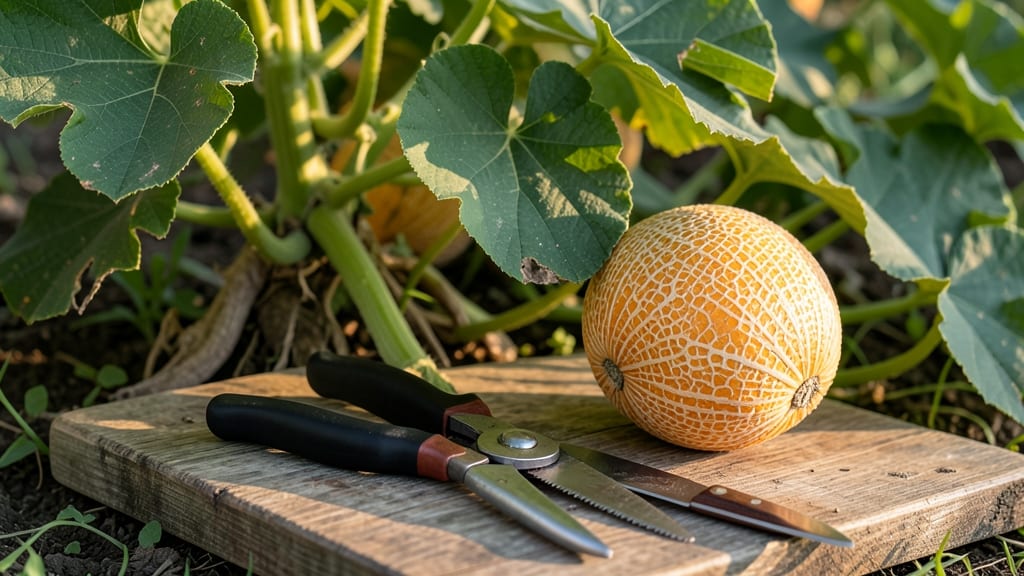
Knowing when to harvest cantaloupe means catching that perfect sweetness before the fruit overripens or the vine bolts.
Picture this: you’ve spent weeks nurturing your 🍈 plants, and now the melons are swelling—but how do you know when to pick them? One wrong move and you’re left with either a rock-hard rind or a mealy, flavorless mess.
The secret lies in three simple, hands-on tests that reveal ripeness without guessing.
First, check the stem: a ripe cantaloupe will slip right off the vine with a gentle twist. Next, look for a creamy-beige blossom end (the spot where the stem was) and a netting pattern that’s fully dry.
Finally, give it a sniff—if it smells sweetly musky, it’s ready. These cues matter because timing directly impacts flavor and yield, turning your garden labor into a juicy payoff.
Below, I’ll break down each test step by step, so you can confidently harvest melons at their peak—no more second-guessing, just sweet success.


3 Tactile tests to determine cantaloupe ripeness before harvesting
There's nothing worse than biting into a cantaloupe that's still hard or bland—yet picking too early can leave you with underripe fruit. The key to perfect cantaloupe lies in these three tactile tests that reveal when your melons are truly ready.
Unlike visual cues alone, these hands-on methods give you unmistakable signals that your cantaloupes have reached peak sweetness. I've used these same techniques in my garden for years, and they've never failed me.
Cantaloupes are ready to harvest when they pass all three tests: the slip test, the thump test, and the stem color check. Each test confirms a different aspect of ripeness, so combining them ensures you never pick too soon.
The best part? You don't need any special tools—just your hands and a little patience. Let's dive into each method so you can master the art of harvesting cantaloupes at their prime.
🌱 Pro Tip: Always harvest cantaloupes in the morning when temperatures are cooler. This preserves their natural sweetness and makes the tactile tests more accurate.
- 1
- 2
- 3
Gently twist the stem near the fruit. If it slips easily from the vine (like a ripe avocado), your cantaloupe is ready. Resistance means it needs more time.
Hold the cantaloupe in one hand and thump it lightly with the other. A ripe cantaloupe will sound hollow and deep, like knocking on a drum. A dull thud means it's not ready.
Look at the underside of the fruit near the stem. It should turn from white to cream or tan. If it's still mostly green, wait a few more days.
Let's start with the slip test, which is my go-to method because it's so reliable. When you gently twist the stem near the cantaloupe, you're checking the fruit's natural detachment point. A ripe cantaloupe will separate cleanly from the vine with minimal effort.
This happens because the fruit's abscission layer (a natural separation zone) fully develops as it ripens. If the stem resists and feels stubborn, your cantaloupe needs more time on the vine.
Next, try the thump test, which is a great way to assess the fruit's internal maturity. When you tap a ripe cantaloupe, you'll hear a deep, resonant sound—almost like a drum. This indicates that the flesh inside is fully developed and juicy.
An unripe cantaloupe, on the other hand, will produce a muffled or dull thud, signaling that the fruit is still firm and underdeveloped. I like to do this test in the morning when the fruit is coolest, as temperature can slightly alter the sound.
The stem color check is often overlooked but is just as important. Look closely at the underside of the cantaloupe, near where the stem connects. A ripe cantaloupe will show a cream or tan color in this area, often with a slight yellowing.
This is a clear sign that the fruit has fully matured and is ready to be picked. If this area is still mostly green, your cantaloupe isn't ready yet—give it a few more days.
One common mistake I see gardeners make is relying on just one test. For example, a cantaloupe might pass the slip test but fail the thump test, or vice versa. That's why I always recommend using all three methods together.
They work as a triple-check system to ensure you're harvesting at the perfect moment. If your cantaloupe passes two out of three tests, it's usually close to being ready—just give it one more day to see if it improves.
Another helpful trick is to smell the blossom end (the opposite end of the stem). A ripe cantaloupe will emit a sweet, musky aroma, almost like a mix of honey and fresh-cut grass. This scent is a natural byproduct of the sugars developing inside the fruit.
If you're unsure about the tactile tests, this scent check can be a great tiebreaker. Just be cautious—overripe cantaloupes can smell overly fermented, so trust your nose but don't rely on it alone.
Timing your harvest correctly isn't just about taste—it's also about yield and plant health. If you leave cantaloupes on the vine too long after they're ripe, they can become overripe, attract pests, or even split due to excessive weight.
On the flip side, picking too early means you'll miss out on that peak sweetness that cantaloupes are famous for. By mastering these tactile tests, you'll ensure every cantaloupe you harvest is a juicy, flavorful success.
Remember, cantaloupes are annual plants, so every season is a chance to perfect your harvesting skills. Keep a garden journal to track which tests work best for your specific growing conditions.
Over time, you'll develop an intuition for when your cantaloupes are ready, making the process even easier. Happy harvesting—and enjoy that sweet, summery reward! 🍈
Common mistakes that cause cantaloupe to bolt before ripening
Cantaloupes are finicky about timing, and when they bolt prematurely, your sweet, juicy rewards turn into bitter disappointments. The most common culprits are overwatering, nutrient imbalances, and temperature swings—all of which trick the plant into focusing on seed production instead of fruit ripening.
I’ve seen firsthand how a single misstep can turn a thriving vine into a sad, early-flowering shadow of its potential.
One of the biggest mistakes is overwatering during fruiting. While cantaloupes need consistent moisture, soggy soil signals the plant to bolt early—sending up flower stalks before the melons mature.
I once drowned my cantaloupe patch in June, and within days, the vines were throwing up flowers instead of swelling fruit. The lesson? Water deeply but infrequently, aiming for 1-2 inches per week and letting the top inch of soil dry between waterings.
Another silent killer is nitrogen-heavy fertilizer. Too much nitrogen pushes lush foliage at the expense of fruit development. I switched to a balanced 10-10-10 fertilizer mid-season last year, and my cantaloupes finally ripened properly.
The key is to reduce nitrogen as flowers appear and switch to a phosphorus-rich feed (like 5-10-10) to encourage fruiting over foliage.
Temperature fluctuations also play a sneaky role. Cantaloupes thrive in warm, stable conditions (70-90°F), but sudden cool snaps or nighttime temps below 55°F can trigger bolting.
I learned this the hard way when a late spring frost hit my garden—my vines bolted in a panic, and the few melons that formed were tiny and seedy. Now, I mulch heavily and use row covers if frost threatens.
🚨 CALLOUT WARNING 🚨
- 🌱 Flower stalks appear before melons reach 4 inches in diameter
- Leaves yellow along with rapid vine growth (a classic nutrient burn signal)
- Fruit stops swelling and feels hard instead of firm
Even poor soil drainage can cause bolting. If water pools around roots, the plant thinks it’s underwatered and bolts in desperation. I fixed this in my raised beds by adding perlite to heavy clay soil—now my cantaloupes stay grounded and sweet.
Always plant in well-amended, raised beds or slopes to prevent waterlogging.
Finally, crowded plants compete for resources and bolt early. I used to squeeze 6 plants into a 3-foot square, and they’d all bolt within weeks. Now, I space cantaloupes 2 feet apart in rows 5 feet apart to give them room to thrive.
Less competition means bigger melons and later bolting.
Avoid these pitfalls, and your cantaloupes will stay on track for that perfect creamy-beige blossom end and sweet aroma. Trust me—your taste buds (and your garden) will thank you! 🍈