
How To
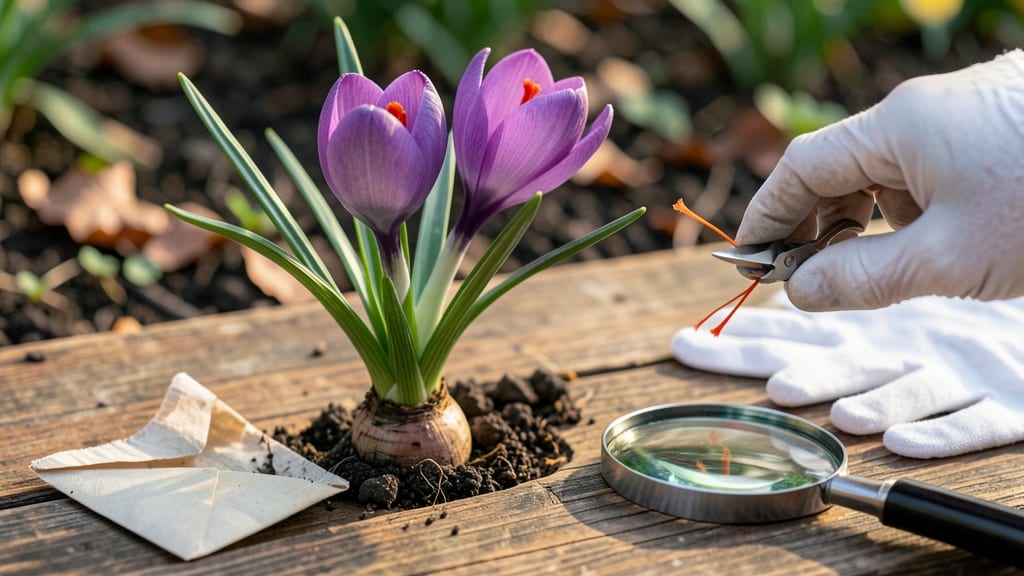
To harvest saffron from crocus, you’ll need to pluck the delicate orange-red stigmas at just the right moment 🌼 — too early or too late, and you’ll end up with low-quality threads or no harvest at all.
Imagine plucking golden saffron threads from your own backyard—each one worth more than its weight in gold. But harvesting saffron from crocus isn’t just about timing; it’s an art that demands precision, patience, and the right technique.
In USDA Zone 6a, the best time to harvest is late September through October, when the Saffron Crocus flowers first bloom in the morning. The key is catching them at peak freshness, before the stigmas dry out or lose their vibrant color.
Below, I’ll walk you through every step—from identifying the perfect flowers to drying and storing your saffron for maximum yield. You’ll learn how to avoid common mistakes and even troubleshoot if your harvest falls short.
When and how to identify perfectly ripe crocus flowers for saffron harvesting
Harvesting saffron from crocus is all about precision timing—just a few hours too early or late can ruin your yield. The best time to harvest is in the early morning, between 6 AM and 9 AM, when the flowers are fully open but still fresh.
This timing ensures the stigmas are moist and at peak flavor, which directly impacts their quality and value.
Weather conditions also play a critical role. Harvest on cool, dry mornings after a dew-free night to avoid damp stigmas that can mold. Avoid harvesting after rain or if humidity is high, as this can lead to spoilage.
I always check the forecast the night before to plan my harvest day—this small step saves hours of frustration later.
Now, let’s talk about the visual cues that signal a perfectly ripe crocus flower. Look for fully open purple blooms with bright orange-red stigmas that are slightly moist but not wet. The stigmas should extend 1-2 inches beyond the flower’s center, curling slightly at the tips.
If the stigmas are pale or the flower is wilting, it’s past its prime and will yield low-quality saffron.
Here’s what to avoid: tightly closed buds or flowers that are already wilting. These will produce pale, flavorless stigmas. Even a 10-minute delay in harvesting can turn a perfect bloom into a poor-quality one.
I’ve learned this the hard way—patience is key, but so is acting quickly once the flowers are ready.
| Harvest Stage | Visual Cues | Tools Needed | Best Time |
|---|---|---|---|
| Flower Opening | Purple petals fully unfurled | Gloves, tweezers | Early morning (6-9 AM) |
| Stigma Color | Bright orange-red, slightly moist | Small containers, scissors | Cool, dry mornings |
| Stigma Length | 1-2 inches, slightly curled | Paper bags for drying | Avoid rain/humidity |
| Flower Condition | Fresh, upright, no wilting | Labeling tags | Harvest within 2 hours of opening |
To harvest saffron successfully, you’ll need a few essential tools. First, wear lightweight gloves to protect your hands from the flower’s delicate structures. A pair of fine-tip tweezers is indispensable for gently removing the stigmas without damaging them.
I also recommend having small paper bags or containers on hand to collect the stigmas immediately after harvesting—this prevents them from drying out too quickly or getting contaminated.
Don’t forget to use sharp scissors or pruning shears to cut the flower stems just above the base. This encourages the plant to produce more blooms for future harvests. I’ve found that labeling each batch with the harvest date helps track quality and freshness later.
Pro tip: Use a small notebook to log the weather conditions and flower readiness—this data helps refine your technique year after year.
One of the biggest mistakes I see is harvesting at the wrong time of day. Late afternoon or evening harvests often result in dry, brittle stigmas that lack flavor. Another common error is pulling the stigmas too forcefully, which can break them or damage the flower.
Instead, gently twist the stigmas free using your fingers or tweezers—this preserves their integrity and maximizes your yield.
For optimal results, harvest only the freshest flowers each morning. I typically harvest no more than 20-30 flowers per session to maintain quality. Overharvesting can stress the plant and reduce future yields.
After harvesting, store the stigmas in a cool, dark place until you’re ready to dry them—this step is crucial for preserving their vibrant color and aromatic properties.
Remember, saffron is a high-value crop, and every detail matters. By mastering the art of identifying perfectly ripe crocus flowers, you’ll ensure your saffron is top-tier in color, aroma, and flavor.
With practice, you’ll develop an almost instinctive sense for the perfect harvest window—one that turns your backyard into a goldmine, stigma by stigma.
Step-by-step guide to hand-picking saffron stigmas without damaging the flower
Once your Saffron Crocus flowers bloom in late September or October, the real work begins—harvesting those delicate orange-red stigmas without breaking them. The difference between a high-yield harvest and a wasted effort often comes down to technique.
I’ve spent years perfecting this process, and I’ll share my exact method to maximize your yield while keeping the flowers intact for future blooms.
Timing is everything: harvest early morning when stigmas are moist and vibrant. Avoid midday heat, which can cause the threads to dry out too quickly. You’ll need just a few tools—a pair of clean tweezers, a small container, and a soft cloth for handling.
Let’s dive into the precise steps to pick every stigma without damaging the flower.
How to Harvest Saffron Stigmas
- Step 1 Gently grasp the flower with your thumb and forefinger, avoiding the stigmas. Hold it firmly but without squeezing to prevent damage.
- Step 2 Twist the stigma (not pluck!) using your tweezers or fingers. Apply gentle pressure at the base where the stigma meets the style. A slight popping sound means success.
- Step 3 Remove all 3 stigmas per flower—each one is a valuable thread. If any break, discard them immediately, as damaged stigmas won’t dry properly.
- Step 4 Place stigmas in a container lined with parchment paper or a soft cloth. Avoid touching them with bare hands—they’re highly absorbent and can transfer oils.
- Step 5 Label your container with the harvest date and location (e.g., "Garden Bed A, Oct 5"). This helps track freshness and quality later.
One of the biggest mistakes I see is plucking stigmas instead of twisting. Plucking risks tearing the threads or damaging the flower’s reproductive parts, which can reduce future blooms.
Always twist at the base—this ensures the stigma comes off cleanly while leaving the flower intact for 1-2 more harvests if cared for properly.
Pro tip: If you’re harvesting large quantities, wear nitrile gloves to avoid contaminating the stigmas with skin oils or lotions. Even small amounts of residue can ruin the flavor and aroma of your saffron. And never harvest in humid conditions—moisture speeds up spoilage and attracts mold.
With practice, you’ll harvest 10-15 stigmas per flower (though some may yield fewer). Each stigma is 1-1.5 inches long when fresh, so handle them like delicate gold threads—because that’s exactly what they are. 🌼