
How To
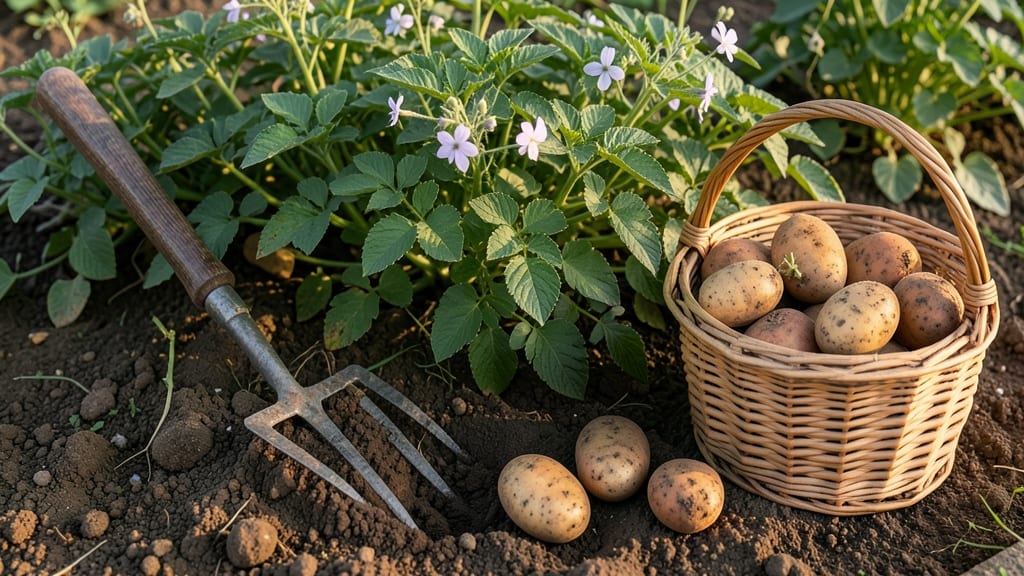
Knowing how long till harvest potatoes takes is critical—anywhere from 70 to 120 days after planting, depending on the variety and growing conditions—so timing it right is the key to crisp, flavorful spuds.
Picture this: you’ve spent weeks tending to your 🥔 plants, and now you’re staring at a patch of yellowing foliage, wondering if it’s finally time to dig. One wrong move, and you could end up with mealy potatoes or even miss the harvest window entirely.
Not all potatoes are created equal—early varieties like Red Pontiac mature in as little as 60 days, while late-season types like Russets need closer to 120 days. Soil temperature, rainfall, and even your last frost date play a role in when those tubers are ready to pull.
In this guide, I’ll break down the exact signs to watch for (like flower blooms and skin thickness), how to adjust your harvest timeline based on your climate, and even a few tricks to speed up the process naturally.
Potato harvest timeline: days to maturity by variety and growing conditions
Timing your potato harvest is all about understanding your variety and growing conditions. Early potatoes like Red Norland can be ready in just 70 days, while late varieties such as Russet Burbank need 120 days or more.
The difference comes down to tuber development speed, which is heavily influenced by soil temperature and daylight hours. In cooler climates, potatoes often mature slower, while warm regions can speed up the process—sometimes by 2-3 weeks.
Most gardeners plant potatoes 4-6 weeks before the last frost, but the real magic happens when soil temperatures hit 45°F (7°C). At this point, tubers begin forming rapidly.
If you’re in a short-season zone, prioritize early-maturing varieties like Yukon Gold (90 days) or Kennebec (85 days) to avoid frost-related losses. Late varieties, meanwhile, store better long-term but require more time and warmer conditions.
Climate matters more than you’d think. In cool, northern climates, potatoes may take 10-15 extra days to mature compared to southern regions. For example, a Red Pontiac in Zone 5 might need 100 days, while the same variety in Zone 8 could be ready in 85 days. Always check your last frost date and adjust planting accordingly—especially if you’re growing frost-sensitive varieties like Sweet Potatoes (though true potatoes handle light frost better).
| Variety | Days to Maturity | Best For | Soil Temp Threshold | Frost Sensitivity |
|---|---|---|---|---|
| Red Norland | 70-80 days | Early harvest, baking | 45°F (7°C) | Moderate |
| Yukon Gold | 90-100 days | Buttery texture, roasting | 50°F (10°C) | Low |
| Kennebec | 85-95 days | Storage, frying | 48°F (9°C) | Moderate |
| Russet Burbank | 110-120 days | Baking, long storage | 55°F (13°C) | High |
| Fingerling (e.g., Purple Peruvian) | 75-85 days | Fresh eating, containers | 45°F (7°C) | Low |
Here’s the key takeaway: New potatoes (harvested early, often 40-50 days after sprouting) are small but tender, while mature potatoes (fully grown tubers) need the full 70-120 days. If you’re growing for storage, aim for late varieties like Russet—they develop thicker skins and store better.
For immediate eating, early varieties like Red Norland let you harvest in two months or less.
Don’t overlook soil conditions. Sandy soils warm up faster, speeding up tuber formation, while clay-heavy soils can delay maturity by 1-2 weeks. Amend your soil with compost before planting to improve drainage and warmth retention.
I’ve found that adding a thin layer of straw mulch after sprouting helps maintain even soil temperatures, which can shave off 5-7 days from harvest time in inconsistent climates.
Watch out for frost risks if you’re growing late varieties. Potatoes can tolerate light frost, but hard freezes (below 28°F (-2°C)) will damage tubers. In Zone 4 or colder, opt for early-maturing varieties or use row covers to extend the season.
I once lost an entire crop of Russet Burbank because I underestimated a late frost—now I always check the 10-day forecast before planting late varieties.
For container growing, harvest times may be slightly shorter (often 5-10 days faster) because pots warm up quicker. However, containers dry out faster, so consistent watering is critical to avoid stunted tubers.
If you’re growing in black plastic mulch, you’ll see 10-15% faster maturation due to increased soil warmth. This trick is a game-changer for short-season gardens—I’ve harvested Yukon Golds 5 days early using this method.
Pro tip:
5 Signs your potatoes are ready to harvest (before checking the calendar)
Harvesting potatoes at the perfect moment transforms your garden into a treasure trove of crisp, flavorful spuds. But how do you know when they’re ready? Relying on a calendar alone can lead to digging too early (tiny tubers) or too late (shriveled skins).
Instead, focus on these 5 visual and tactile cues that tell you it’s time to grab your fork and dig.
I’ve learned the hard way—waiting too long means tough, stringy potatoes, while harvesting too soon leaves you with undersized, starchy disappointments. The key is watching your plants closely for these harvest readiness signals that nature provides for free.
🌱 Numbered Highlights: 5 Signs Your Potatoes Are Ready
- 🌼 1. Flowers Have Bloomed – Most potato varieties produce white or purple flowers about 2-3 weeks before harvest. Once flowers fade, tubers are rapidly developing.
- 🟡 2. Foliage Turns Yellow – 50-70% of leaves yellowing signals tuber maturity. Wait until most leaves die back, but don’t let them fully brown.
- 👍 3. Skin Resists Pressure – Gently press a thumbnail into a tuber. If the skin doesn’t puncture easily, it’s ready. Thin-skinned potatoes mean they’re still growing.
- 📏 4. Tubers Are Golf-Ball Sized – Aim for 2-3 inch diameter tubers. Smaller ones (<1 inch) are best for new potatoes; larger ones need more time.
- 🪴 5. Fork Test Confirms Depth – Gently probe the soil with a fork. If you find firm, round tubers 6-12 inches deep, your potatoes are harvest-ready.
If your potatoes still have green stems or thin skins when you dig, they’re not ready. Green stems contain solanine, a bitter toxin, so always cut them off before cooking. For new potatoes, harvest when tubers reach 1 inch—but these won’t store long.
Pro tip: Harvest on a dry, sunny day to let tubers cure before storage. Cure them in a cool, dark place (50-60°F) for 1-2 weeks to develop thicker skins and better flavor. This simple step keeps your harvest fresh for months.
Now you can confidently dig when your potatoes whisper, “I’m ready!” instead of guessing by the calendar. Happy harvesting—your taste buds will thank you.