
How To
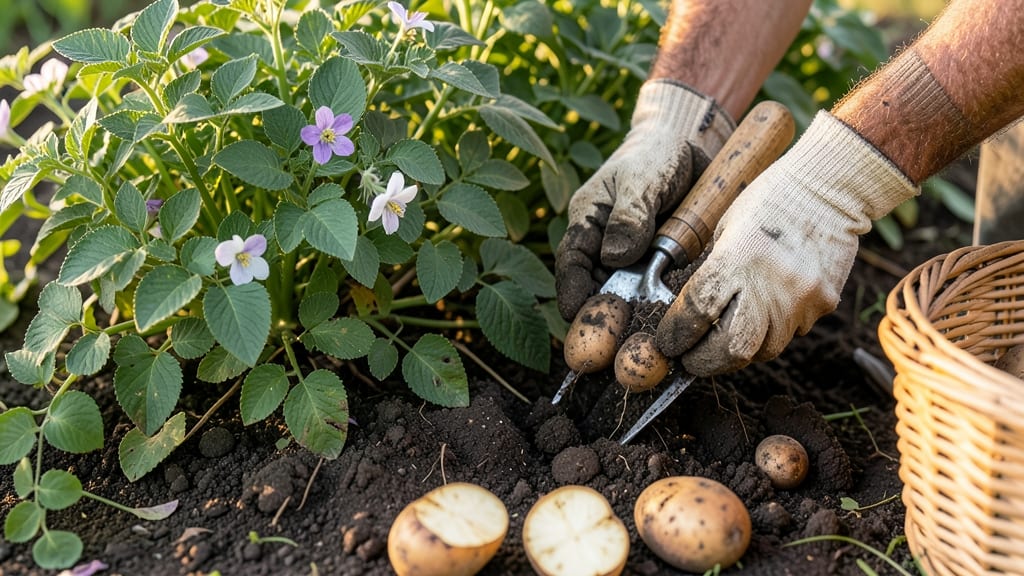
Harvesting potatoes takes 90 to 120 days after planting for peak flavor and texture, depending on the variety and growing conditions you’re working with.
Picture this: you’ve spent weeks tending to your 🥔 patch, and now you’re staring at yellowing foliage, wondering if it’s time to dig. Too soon, and you’ll pull underripe tubers; too late, and you risk shriveled, woody potatoes.
The key is knowing when those 90-120 days turn into actionable cues—like flower blooms or soil conditions—that tell you the moment is now.
Not all potatoes follow the same schedule. New varieties like Red Pontiac might be ready in as little as 70 days, while russets or fingerlings need the full 120-day window.
Cool, moist soil speeds things up, while heat and drought can stretch the timeline. Below, I’ll break down how to read your plants’ signals and adjust for your climate.
You’ll also learn how to harvest for immediate eating versus long-term storage, plus the one trick that keeps your spuds from turning green and bitter. Ready to dig in?
Potato harvest timeline: days to maturity by variety and growing conditions
Not all potatoes take the same time to reach harvest, and your local climate plays a huge role. New potatoes like 'Yukon Gold' can be ready in as few as 60-75 days, while russet varieties like 'Idaho Russet' need 90-120 days to fully mature.
Understanding these differences helps you plan your garden layout and avoid missing the perfect harvest window.
Cool-season climates (like USDA Zones 3-6) often produce faster-maturing potatoes because the soil stays cooler longer, slowing growth but improving flavor. In warmer zones (like Zones 7-10), potatoes grow more quickly but may need shade cloth to prevent greening and solanine buildup in the tubers.
If you're growing new potatoes, you can start harvesting as early as 50 days after planting by gently digging around the plant and checking for small, pea-sized tubers.
These are perfect for salads and light cooking but won’t store long-term. For storage potatoes, wait until the foliage yellows and dies back, usually around 90-120 days.
Warm climates can speed up growth, but they also increase the risk of tuber greening due to excess sunlight. If your potatoes are exposed to too much sun, cover them with 6-12 inches of soil or use mulch to protect them.
This is especially critical for russet varieties, which are prone to solanine buildup when exposed.
Another key factor is soil temperature. Potatoes grow best in 50-70°F soil. If your soil stays too warm (above 80°F), growth slows, and tubers may become small and misshapen. In these cases, consider planting early-maturing varieties or using drip irrigation to keep the soil cool.
For gardeners in short-season climates, choose early-maturing varieties like 'Red Norland' or 'Adirondack Red'. These can be harvested in as few as 60 days, giving you a second planting opportunity later in the season.
In longer growing seasons, you can even try a fall planting for a late harvest.
Pro tip: Plant a mix of early, mid, and late varieties to stagger your harvest. This way, you’ll have potatoes ready at different times throughout the season, ensuring a steady supply for cooking and storage. Just be sure to label your rows so you know which variety is which!
Finally, always harvest on a dry day to prevent soil from sticking to the tubers. Cure them in a dark, well-ventilated space for 1-2 weeks to develop a thick skin before storing. This simple step can extend their shelf life from weeks to months.
5 Visual and physical signs your potatoes are ready to harvest
Harvesting potatoes at the right time ensures flavorful, firm tubers instead of shriveled or green ones. The 90-120 day window is just a starting point—your plants will give you clear signals when they’re ready.
Ignoring these cues can lead to premature digging (tiny, underdeveloped potatoes) or overripe harvests (woody, cracked tubers). Let’s break down the five key signs to watch for.
First, pay attention to your potato foliage. When the leaves start turning yellow-brown and begin to die back—especially after flowering—it’s a strong indicator that the tubers below are maturing. This process, called senescence, happens naturally and is your first green light.
However, don’t wait until the plants are completely brown; that’s a sign you’ve missed the optimal window. Timing this right means you’ll harvest potatoes when they’re at their peak for eating or storage.
- 1. Foliage Yellows and Dies Back: Leaves turn yellow-brown and wilt, signaling tuber maturity. Wait until 50-70% of leaves are dead.
- 2. Tubers Reach 2-3 Inches in Diameter: For new potatoes, dig when small tubers form. For mature potatoes, wait until they’re golf-ball sized.
- 3. Skin Separates Easily from Flesh: Gently press a tuber—if the skin peels back slightly, it’s ready. A tight skin means it’s underripe.
- 4. Soil Around Tubers is Dry: Dig a small test hole—if the soil is dry 1-2 inches below the surface, it’s harvest time.
- 5. Stems and Flowers Wilt: After flowering, stems turn brown and collapse. This is your final cue for maincrop potatoes.
Next, use the dig-and-check method to confirm readiness. Gently dig around the base of one plant and check the tubers. If they’re 2-3 inches in diameter and the skin feels smooth but not tough, they’re perfect.
For new potatoes, you can harvest as soon as they reach 1-2 inches, but these won’t store well. Pro tip: Use a hand fork to avoid damaging tubers—never pull them by the stems.
Avoid the common mistake of harvesting based solely on days after planting. While the 90-120 day rule is a guideline, factors like soil temperature and rainfall can shift the timeline.
For example, cool, wet springs slow tuber development, while hot, dry summers can speed it up. Always cross-check with physical signs to avoid disappointment.
Finally, watch for overripe warnings. If you see green skin on tubers, they’ve been exposed to light and contain solanine, a toxic compound. This happens when tubers are left in the soil too long or hilled improperly.
Also, if the tubers feel shriveled or woody, you’ve waited too long. The key is to harvest when the foliage is partially dead but not completely gone.
Now that you know the signs, grab your fork and dig with confidence. Your reward? Perfectly sized, flavorful potatoes ready for your kitchen—or your storage bin. Happy harvesting! 🥔