
How To
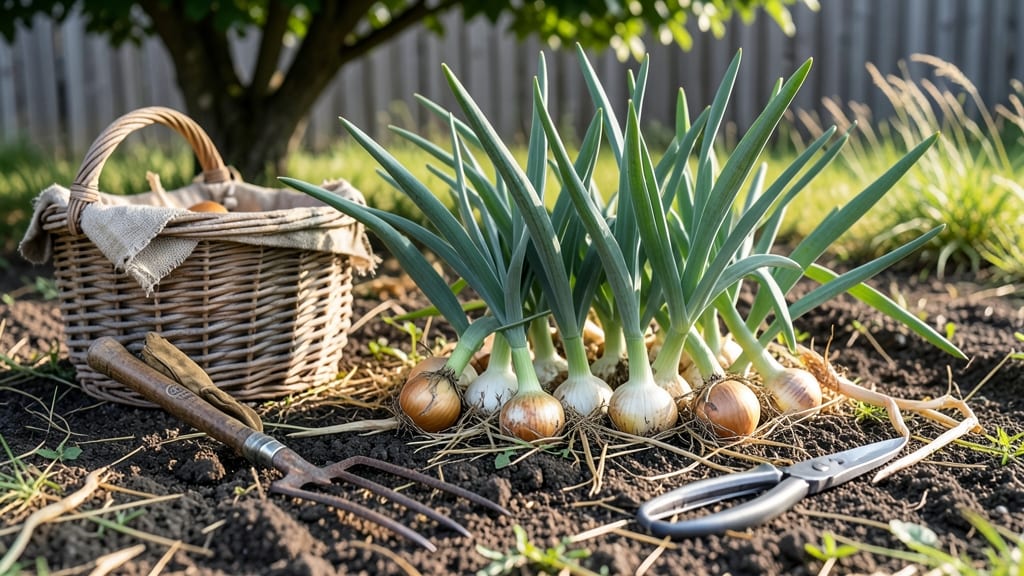
Deciding it's time to harvest onion bulbs means the difference between sweet, crisp onions and tough, pungent disappointment.
If you’ve ever pulled an onion too early—only to find it still hard and underdeveloped—or left it too late and ended up with a shriveled mess, you know how critical timing is. The key? Watching for the papery neck and yellowing tops, not just the calendar.
In Zone 6a, where spring planting kicks off in March, your onions should be ready by June or July—but climate and variety matter. A dry, sunny spell is your green light, while lingering rain can delay the process.
Below, I’ll walk you through the neck-down test, soil checks, and regional tweaks to nail your harvest.
You’ll leave here knowing exactly when to pull those 🧅, how to cure them for storage, and what to do if Mother Nature throws a curveball. Let’s get those bulbs out of the ground at peak flavor!

How to perform the neck-down test for perfect onion harvest timing
The neck-down test is my favorite trick for knowing when to harvest onion bulbs—it’s foolproof if you know what to look for. This simple method focuses on the stem neck where the bulb meets the leaves. When this area dries out and turns papery, your onions are ready to pull.
Ignoring this signal often leads to overmature bulbs that split or develop bitter flavors, so let’s dive into how to spot the perfect moment.
First, understand that onion maturity isn’t just about bulb size—it’s about the neck drying process. The neck is the thin stem connecting the bulb to the green tops. When this area starts to shrink and harden, it’s your cue to harvest.
If you wait too long, the neck will rot or split, ruining your harvest. Conversely, pulling too early means small, pungent bulbs that won’t store well.
Here’s the golden rule: harvest when 50-70% of the onion tops are yellowing and falling over. This usually coincides with the neck drying out. But don’t rely solely on the tops—always check the neck.
For example, I’ve seen onions with yellow tops but still green necks, which means they’re not fully mature. The neck is the true indicator of readiness.
Step-by-Step: Decide It’s Time to Harvest Onion Bulbs
- 1 Check the tops: Look for yellowing leaves that flop over. Aim for 50-70% yellow—this shows the bulb is maturing.
- 2 Inspect the neck: Gently peel back the outer leaves near the bulb. The neck should feel dry and papery, not green or moist.
- 3 Test bulb size: Dig up one onion to check if the bulb is 2-3 inches in diameter. If it’s smaller, wait a week and recheck the neck.
- 4 Avoid green tops: If the tops are still green and upright, the bulb isn’t mature. Wait another 7-10 days before retesting.
- 5 Harvest on a dry day: Pull onions when the soil is dry to prevent rot or disease. Use a fork to loosen the soil around the bulb.
One common mistake I see is harvesting based on bulb size alone. Sure, a bulb that’s 2-3 inches wide is a good sign, but without a dry neck, it might not be fully mature.
For example, I once harvested a batch of onions with perfectly sized bulbs but green necks, and they stored poorly. Always cross-check the neck condition with the tops and bulb size.
Regional differences also play a role. In hot, dry climates, onion necks dry out faster, so you might harvest earlier. In cooler, wetter regions, necks take longer to dry, and you may need to wait until 80% of tops are yellow.
For instance, in Zone 5, I often harvest in late July, while in Zone 8, the timing might shift to early June. Pay attention to your local microclimate.
Pro tip: Harvest a test onion a week before you think they’re ready. Cut it in half to check the neck and bulb development. If the neck is still green, wait a few more days.
This small step saves you from harvesting too early or too late. I’ve used this method for years, and it’s saved me from bitter, shriveled onions more times than I can count.
If you’re growing green onions (scallions), the neck-down test doesn’t apply. Instead, harvest when the green shoots are 6-8 inches tall and the bulbs are pencil-sized. But for storage onions, the neck is your best friend. Once you master this test, you’ll never second-guess harvest time again.
Finally, remember that weather conditions can delay or speed up maturity. If you’re facing late-season rain, the neck might stay moist longer. In this case, harvest as soon as the neck shows signs of drying, even if the tops aren’t fully yellow.
The goal is to beat the rain and avoid rot.
With practice, you’ll develop an eye for the perfect harvest moment. Start with the neck-down test, and soon you’ll be pulling onions at their peak—plump, flavorful, and ready for storage. Happy harvesting! 🌾
Soil and bulb size indicators: when your onions are truly ready
Onions don’t follow a strict calendar—they signal their readiness through physical cues in both the bulb size and soil conditions. A mature onion bulb should measure 2-3 inches in diameter, with a dry, papery neck.
This isn’t just about size, though; the soil must also be loose and dry at the top to make digging easier and prevent rot.
If you’re growing bulb onions (like Yellow Sweet Spanish or Red Baron), focus on these two key indicators: bulb diameter and neck dryness. For green onions (scallions), you’ll harvest when the greens reach 6-8 inches tall, regardless of bulb development.
The soil test is equally critical—packed, wet soil can delay maturity or cause disease.
Here’s a quick reference to decide it’s time to harvest onion bulbs:
| Indicator | Ready Condition | Action |
|---|---|---|
| Bulb Size | 2-3 inches in diameter | Gently dig around edges to check |
| Neck Appearance | Dry, papery, and brown | Pull when 50% of tops yellow |
| Soil Top Layer | Loose, dry, and crumbly | Harvest on dry, sunny days |
| Green Onions | 6-8 inches tall | Snip at base or pull entire plant |
| Leaf Color | Bottom leaves yellow and crisp | Harvest before tops flop completely |
For bulb onions, the neck-down test is your best friend. If the neck (the stem connecting the bulb to the leaves) feels dry and papery when you gently squeeze it, your onion is ready.
Pro tip: Harvest in the morning after dew has dried—this reduces soil sticking to the bulbs and speeds up curing.
In Zone 6a, where summers can be hot and dry, watch for soil moisture stress. If the top inch of soil feels dry, your onions may mature faster. Conversely, excessive rain can delay neck drying, so adjust your timeline accordingly.
For green onions, you can harvest multiple times by cutting just above the bulb, but bulb onions should be pulled all at once for optimal storage.
Once you’ve confirmed readiness, handle bulbs gently to avoid bruising. Brush off excess soil, then cure them in a dry, shaded area for 1-2 weeks. This step is non-negotiable—it prevents rot and extends shelf life.
Store cured onions in a cool, dark place with good airflow, like a mesh bag or ventilated box.
Don’t wait until the tops are completely brown and floppy—this can lead to bitter, pungent flavors and shriveled bulbs. Trust your eyes and fingers: 2-3 inch bulbs with dry necks in loose, dry soil are your green light to harvest. Now go enjoy that fresh onion harvest! 🧅