
Vegetables
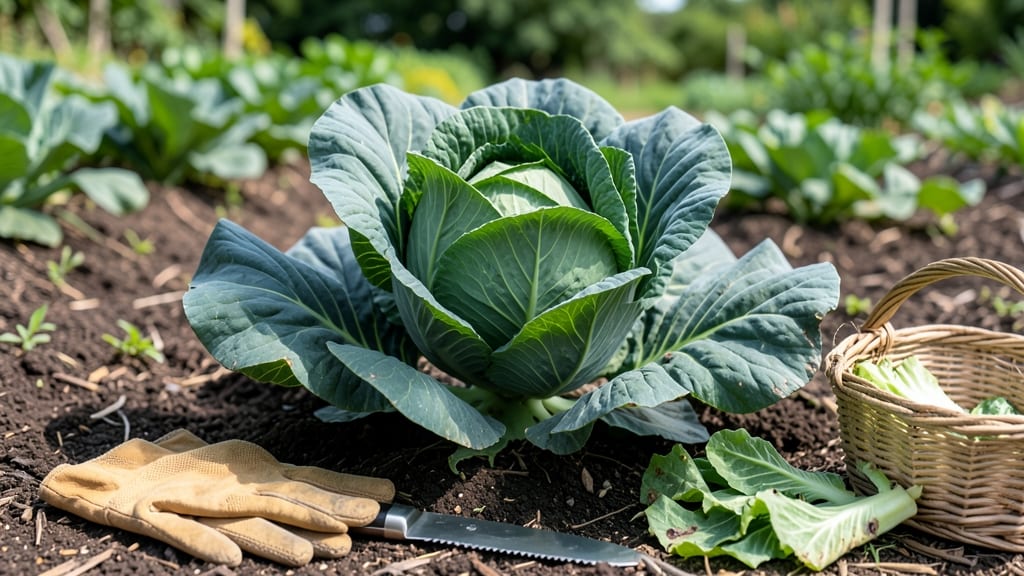
Timing your cabbage harvest right means the difference between sweet, crisp 🥬 leaves that peel apart cleanly and bitter, loose heads that ruin every dish.
Here’s the secret: most gardeners miss the window by a week or two, either pulling too early for bland flavor or too late for tough cores. Knowing the exact moment—when the head is firm, tightly wrapped, and just the right size—is the key to unlocking the best taste and texture.
Whether you’re growing green cabbage in spring or Savoy in fall, the harvest time shifts with variety and climate. In Zone 6a, that means June–July for spring plantings and October–November for fall, but heatwaves or cool snaps can throw off the schedule.
Below, I’ll show you how to test for readiness (including the foolproof peel trick), adjust for your region, and even salvage a harvest if you’re a few days late.

How to tell when cabbage is ready for harvest (peel test included)
There’s nothing worse than biting into a cabbage that’s either woody and tough or loose and bitter—both signs you missed the perfect harvest window. The key to that crisp, sweet cabbage you crave lies in knowing exactly when to pull it.
Most gardeners rely on days-to-maturity charts, but even those can be misleading without visual and tactile cues. That’s where the peel test comes in—a foolproof trick to confirm ripeness without guessing.
Start by checking the outer leaves. Ready-to-harvest cabbage will have tightly wrapped leaves with no gaps between them. If you can easily slip your fingers between the leaves, the head isn’t fully developed yet.
The head’s diameter should also be around 6–8 inches—any smaller, and it’s underripe; any larger, and it risks splitting or becoming tough. Pay attention to the color consistency too; vibrant, even hues mean sweetness, while uneven or pale patches signal stress or immaturity.
Gently squeeze the head. It should feel solid and heavy for its size, not spongy or light. Press a leaf—it should spring back instead of staying dented.
Lift the outermost leaf and try to peel it away from the head. If it separates cleanly with minimal resistance, the cabbage is ready. Resistance means it’s still maturing; no resistance means it’s overripe.
Twist the stem gently near the base. If it snaps cleanly (not pulls out), the roots have matured enough for harvest. A stubborn stem means wait a few more days.
Measure the widest part of the head. Ideal harvest size is 6–8 inches in diameter. Heads smaller than 5 inches lack flavor, while those over 10 inches often split or develop a tough core.
Pick cabbage on a mild, cloudy morning to preserve texture. Avoid harvesting after heavy rain or in extreme heat, which can stress the plant and reduce shelf life.
One of the biggest mistakes gardeners make is waiting too long because they assume bigger equals better. But once a cabbage head starts splitting or the core turns hollow, it’s past its prime. Overripe cabbage also develops a bitter, pungent flavor and loose leaves that fall apart when peeled.
On the flip side, harvesting too early—before the head reaches half its mature size—results in bland, watery cabbage with underdeveloped leaves.
For Savoy cabbage, which has crinkled leaves, focus on the leaf firmness and color depth rather than head size.
Savoy varieties often mature 10–15 days later than green cabbage, so don’t rush the harvest. Napa cabbage, on the other hand, is ready when the head is firm and the leaves are bright green, typically in 50–60 days.
Always adjust your timing based on your local climate—cool seasons slow growth, while hot weather can speed it up.
If you’re unsure whether your cabbage is ready, harvest one head as a test. Cut it open to check the core’s density—it should be tight and white, not loose or yellowing. Save the rest for another week and retest.
This trial-and-error method helps you calibrate your timing for future harvests. Once you master the peel test and visual cues, you’ll never second-guess cabbage harvest time again.
Pro tip: Use a sharp knife or pruning shears to harvest, cutting the stem 1–2 inches above the base. Leave the outer leaves intact if you want a second, smaller head to form from the center—just be sure to water consistently afterward to support regrowth.
This trick extends your harvest by 2–3 weeks and reduces waste.
Best cabbage harvest time by variety (head, Savoy, Napa, Bok Choy)
Not all cabbages mature at the same pace—green cabbage can be ready in as few as 70 days, while Savoy cabbage might take 100+ days to reach peak flavor. The key difference? Growth rate and climate tolerance.
In Zone 6a, heatwaves can speed up maturity, while cool springs delay it. I’ll break down the exact harvest windows for each variety, plus how to adjust for your local weather.
Your harvest timing depends on three factors: days to maturity, head size, and seasonal cues. For example, Napa cabbage is often harvested smaller and younger than green cabbage, while Bok Choy can be picked in just 30–45 days.
Overlooking these details means missing the sweet spot between crisp texture and bitter overgrowth.
Here’s how to match your variety to the right harvest window, plus a quick reference for climate adjustments. Use this table to plan ahead and avoid the common mistake of harvesting too late—when cabbage heads split open or leaves turn yellow.
For green cabbage, aim for 70–120 days after transplanting, but watch for head tightness—the leaves should wrap snugly without gaps.
In hot climates, maturity speeds up, so check plants weekly starting at 60 days. Savoy cabbage, with its wrinkled leaves, takes longer but rewards you with a sweeter, more complex flavor when harvested at 100+ days.
If you’re growing Napa or Bok Choy, focus on leaf tenderness over head size. These varieties are often harvested young, before the core toughens. For Bok Choy, you can even pick outer leaves to encourage regrowth, extending your harvest by 2–3 weeks.
Just be sure to leave the inner leaves to keep the plant producing.
Pro tip: In Zone 6a, fall plantings often mature faster than spring ones because cooler nights slow down bolting (the process where cabbage flowers prematurely). If your cabbage starts to loosen at the core or split open, it’s past its prime—harvest immediately to salvage what you can.
🌱