
Vegetables
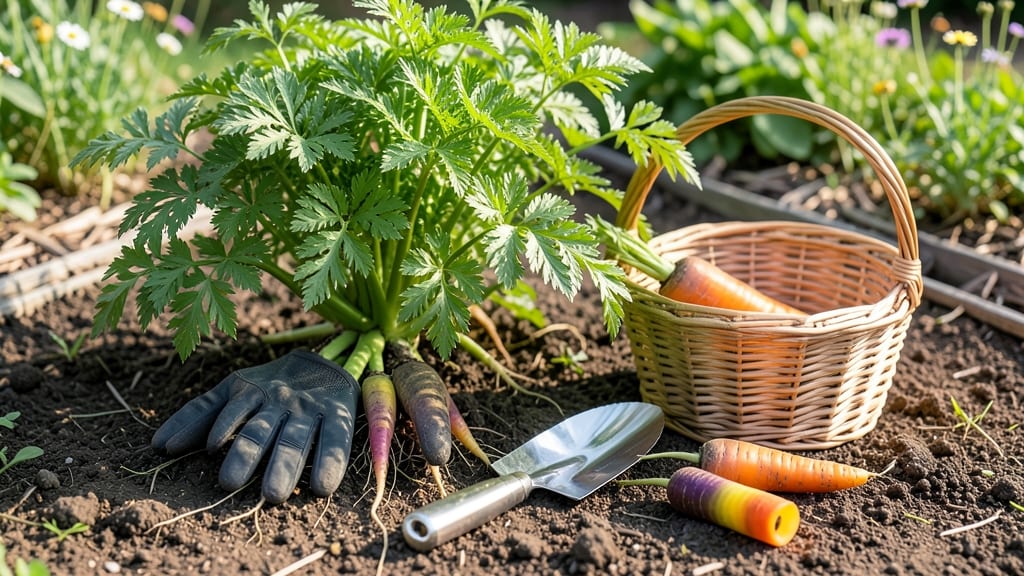
Harvesting rainbow carrots at the right time means pulling vibrant, sweet roots that taste like sunshine 🌞 — and the window between 50 and 85 days after planting is where the magic happens.
Picture this: you’ve spent weeks tending to your 🥕 patch, and now the tops are a lush 3-4 inches tall, but the roots could be anywhere from pencil-thin to dinner-plate size.
The real secret? Checking the soil—not just the carrot’s size—tells you when to pull for that perfect crunch and flavor.
In Zone 6a, spring-planted rainbow carrots typically reach harvest by mid-June, while fall crops are ready by late October. But frost sensitivity means timing is everything—wait too long, and your sweet, colorful roots turn woody or split.
Below, I’ll show you the three soil checks that guarantee you harvest at peak sweetness.
You’ll learn how to read soil resistance, spot the ideal root visibility, and avoid common mistakes that ruin your harvest. By the end, you’ll know exactly when to grab those rainbow beauties for the freshest, most flavorful carrots your garden has ever grown.
3 Soil checks to determine rainbow carrot harvest readiness
Harvesting rainbow carrots at the perfect moment transforms their flavor from ordinary to extraordinary. While most gardeners focus on leaf size or days since planting, the soil holds the real clues about when your carrots are ready.
Unlike their standard orange cousins, rainbow varieties develop vibrant colors and peak sweetness when specific soil conditions are met. These three simple soil checks will help you pull your carrots at their prime.
First, let's address the elephant in the garden: size isn't everything. Some purple heirlooms reach harvest perfection at just 6 inches while others need 12 inches for full flavor development. The soil tells you when to stop waiting and start harvesting, regardless of what your ruler says.
These methods work for all rainbow varieties—from deep purples to sunny yellows—so you can apply them to your entire crop.
-
1. Finger-Poke Test
Gently press your finger 1 inch deep into the soil. If the carrot resists slightly (like firm tofu) but gives way, it's ready. Soft soil means it's too early; rock-hard soil means you waited too long. -
2. Root Visibility Check
Part the soil with your fingers to spot the top 1-2 inches of the carrot. Look for vibrant color extending down the shaft and a smooth, tapered shape. Uneven coloring means more growing time is needed. -
3. Soil Resistance Test
Try pulling a carrot gently. If it comes out cleanly with minimal resistance, it's harvest-ready. If it snaps or leaves soil clinging to the roots, wait another 3-5 days for better development.
The finger-poke test is my go-to method because it works even when you can't see the roots. I press gently near the base of the foliage, about 2 inches from the stem.
When the carrot meets my finger with just enough resistance to feel substantial but not rock-hard, I know it's time. This test helps avoid two common mistakes: harvesting too early (when roots are still small and watery) or too late (when they become woody and tough).
For the root visibility check, I like to work on cloudy days when the light is softer. The color intensity is your best indicator—deep purples should look like eggplant skins, yellows like sunflowers, and oranges like ripe apricots.
I also check for smoothness: any bumps or ridges mean the carrot needs more time in the soil to straighten out. This is especially important for heirloom varieties that fork easily.
Don't overlook the soil resistance test—it's the most reliable way to check harvest readiness without damaging your crop. I grab a few carrots at a time and give them a gentle tug. If they come out cleanly with just a little resistance (like pulling a well-cooked noodle), they're perfect.
If they snap off or leave behind a trail of soil, they need more time. This test also helps you avoid the common mistake of harvesting when the soil is too dry, which can damage delicate rainbow varieties.
Timing matters more than you might think. Harvesting rainbow carrots too early means watery texture and mild flavor, while waiting too long leads to bitter, woody roots.
The soil checks help you find that sweet spot where the flavor is intense and complex, with the perfect balance of sweetness and earthiness.
For example, my purple striped carrots always reach peak flavor when they're about 8 inches long, but the soil tests confirm this more accurately than measuring.
One question I get often is whether these methods work for container-grown rainbow carrots. The answer is yes! The same principles apply, but you'll need to check more frequently since container soil dries out faster. I use the same finger-poke test but adjust for the looser soil in pots.
Container carrots often mature slightly faster too, so I might check the soil every 2-3 days during their final growth phase compared to every 3-4 days in garden beds.
Remember that soil temperature affects harvest timing too. In cooler climates (USDA zones 3-5), rainbow carrots develop more slowly and may need 10-14 extra days to reach harvest readiness compared to warmer zones.
I always check the soil thermometer alongside my finger tests—ideal harvest temps are between 60-75°F. If your soil runs cooler, extend your harvest window by a week or two.
After using these soil checks for three growing seasons, I've harvested rainbow carrots that consistently deliver sweeter, crunchier roots than when I relied on days-to-maturity charts alone. The key is consistency—check your soil every 3-4 days during the final 2 weeks of growth.
This frequent monitoring pays off with carrots that are vibrant, tender, and packed with flavor, ready to brighten up your garden-fresh dishes.
When you master these soil-based harvesting techniques, you'll develop an almost instinctive sense for when your rainbow carrots are ready. Start with these three checks, and soon you'll be harvesting like a pro—pulling carrots at their peak sweetness and texture, every single time.
The secret really is in the soil! 🥕
Rainbow carrot varieties: harvest timelines by color and type
Not all rainbow carrots mature at the same pace—purple varieties often reach harvest 10-14 days sooner than their orange or white cousins. Understanding these timelines helps you prioritize pulling for peak flavor and texture.
For example, my Purple Haze carrots typically hit their sweet spot at 55-60 days, while Cosmic Purple takes closer to 70 days.
Yellow carrots like Yellowstone tend to mature slightly faster than orange varieties, often ready in 60-65 days. Meanwhile, white carrots such as White Satin can take up to 80 days to reach their full milky sweetness.
These differences mean you might need to stagger plantings or monitor each variety closely.
Here’s the key: Harvest timing isn’t just about days—it’s about color vibrancy, root firmness, and soil resistance. For instance, if your orange carrots like Rainbow haven’t developed their signature deep hue by 70 days, they may need a few more weeks in the ground.
| Variety | Color | Days to Harvest | Harvest Cue |
|---|---|---|---|
| Purple Haze | Purple | 55-60 | Deep purple, firm skin |
| Cosmic Purple | Purple | 70-75 | Uniform color, 8+ inches |
| Yellowstone | Yellow | 60-65 | Bright yellow, crisp texture |
| Rainbow | Orange | 70-75 | Deep orange, 6-12 inches |
| White Satin | White | 75-80 | Milky white, sweet flavor |
If you’re growing a mix of varieties, prioritize harvesting purple and yellow carrots first—they often mature earlier and can become woody or bitter if left too long.
For example, I always pull my Purple Haze batch first, around mid-June in Zone 6a, while saving the White Satin for late October.
Pro tip: Check soil resistance by gently tugging on the carrot tops. If the root resists slightly but pulls out cleanly, it’s ready. If it slides out easily, it’s underripe; if it snaps, it’s overripe. This method works for all rainbow varieties and ensures you harvest at their peak.
For storage, purple and orange carrots keep best in the fridge for 3-4 weeks, while white varieties like White Satin can last up to 5 weeks if stored properly. Always trim the tops and store in a moist paper towel to maintain crispness.