
Container Gardens
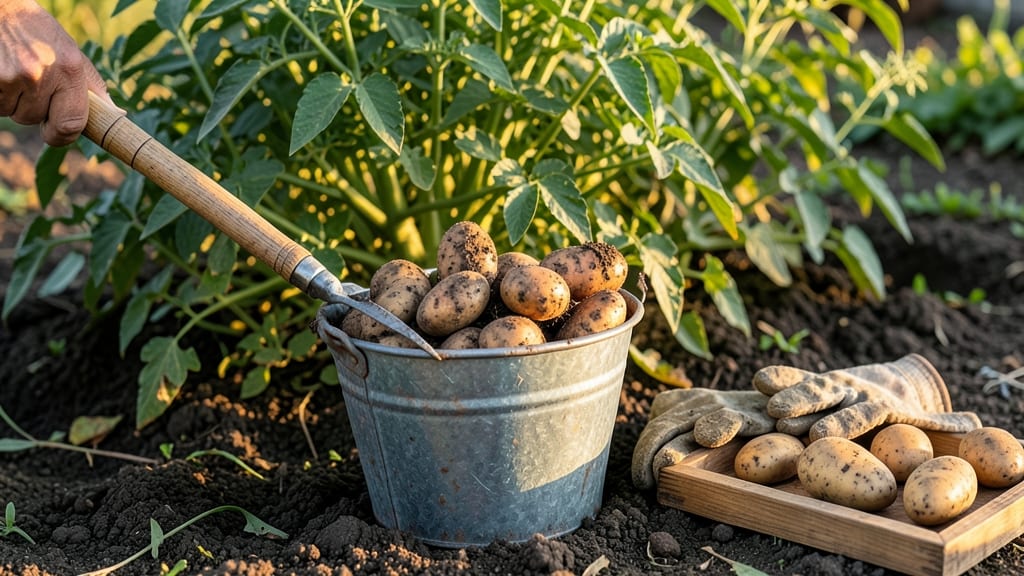
Harvesting potatoes in a bucket at the right time means the difference between perfect flavor and tough, underdeveloped spuds 🥔 — and container growers have to work with tighter margins than garden beds.
Picture this: you’ve spent weeks tending your bucket, watching the greens flourish, only to pull a harvest that’s either too small or already sprouting. The key? Knowing when those tubers hit peak readiness without guessing.
Container potatoes mature faster than in-ground ones, but the classic "flower fade" rule doesn’t always apply. Instead, we’re talking tactile tests — like the "finger squeeze" method — and visual cues that tell you exactly when to dig.
Below, I’ll walk you through the three foolproof signs your bucket potatoes are ready, plus how to handle them post-harvest so they stay fresh for weeks (or even months) in storage.
Signs your bucket-grown potatoes are ready: visual and tactile tests
Harvesting potatoes at the right time is everything—especially in buckets where space limits growth. Unlike in-ground potatoes, container-grown tubers mature faster but need precise timing to avoid woody texture or underdeveloped flavor.
I’ve learned the hard way that waiting too long can mean shrunken spuds, while harvesting too early leaves you with peanut-sized potatoes and wasted effort.
Start by checking the flower cues. Most potato varieties produce white or purple blooms about 4-6 weeks before harvest. When these flowers fade and the stems begin to yellow and die back, it’s a clear signal that tubers are nearing maturity.
For new potato varieties like 'Red Pontiac', you can harvest as early as 50-60 days when flowers appear, but for storage types like 'Russet', wait until the foliage fully collapses.
Next, perform the finger squeeze test—my go-to method for container potatoes. Gently squeeze a tuber through the soil. If it feels firm but yields slightly (like a ripe avocado), it’s ready. If it’s rock-hard, it needs more time; if it’s mushy, you’ve waited too long.
This tactile check works best when tubers are 2-3 inches in diameter, the ideal size for bucket-grown potatoes.
Don’t overlook the soil level check. In buckets, tubers grow downward, so if you see bare stems (where soil has receded), it’s time to harvest. This happens when the plant redirects energy to tuber growth.
For a 5-gallon bucket, expect harvest-ready potatoes when the soil surface reaches 2-3 inches above the original planting level.
For early harvests (like 'Yukon Gold' or 'Kennebec'), you can dig a few tubers when they reach 1-2 inches in diameter—these are called new potatoes and have a tender, buttery texture.
But beware: harvesting too early reduces yield. In my 5-gallon buckets, I’ve found that new potatoes appear around 60 days, while full-size tubers take 90-120 days.
One mistake I’ve made is ignoring the plant’s decline signals. If the foliage turns brown and crispy (not just yellow), it’s a sign of blight or disease, not maturity.
In this case, harvest immediately to salvage what you can. Healthy plants, however, will wilt gradually over 1-2 weeks before dying back completely—this is your final cue to dig.
Pro tip: Always harvest on a dry, sunny day. Wet soil sticks to tubers, making them prone to rot during storage. Use a fork to gently loosen the soil, then shake off excess dirt.
Avoid washing potatoes until you’re ready to eat them—moisture speeds up spoilage. Store them in a cool, dark place (like a basement) with good airflow to prevent green skin (which contains toxic solanine).
Remember, bucket potatoes mature faster than in-ground varieties, so stay vigilant. The earlier you harvest, the more tender and flavorful they’ll be—but don’t rush it either. With practice, you’ll develop an instinct for the perfect moment when those spuds are just right. 🥔
Bucket-specific harvesting mistakes and how to avoid them
One of the biggest mistakes bucket growers make is ignoring container-specific growth limits. Unlike garden beds, potatoes in buckets have restricted soil volume, which means they mature faster but also run out of space sooner.
If you wait too long, your tubers will compete for nutrients, leading to small, misshapen potatoes or even rot.
Another common error is planting too many seed potatoes in a single bucket. Overcrowding forces tubers to grow unevenly, with some staying tiny while others overdevelop.
A 5-gallon bucket should hold just 2-3 seed potatoes, while a 10-gallon bucket can handle 4-5. Stick to these numbers to avoid stunted growth.
Improper soil depth is another silent harvest killer. If your bucket has less than 12 inches of soil, tubers won’t have room to grow properly. Use a deep bucket (14+ inches) or add extra soil mix as the plants grow.
Without enough depth, you’ll end up with shallow, underdeveloped potatoes that lack flavor.
⚠️ CALLOUT WARNING ⚠️
⚠️ Harvesting Too Late in Buckets = Lost Potatoes ⚠️
Problem: Waiting for foliage to fully die back (like in-ground potatoes) is a bucket-growing mistake. By then, tubers may have exhausted soil nutrients or even sprouted from lack of space. Solution: Harvest when 50% of leaves yellow (not full brown) and tubers are 2–3 inches wide. For new potatoes, dig when tubers are 1-inch wide—they’ll be tender and ready to eat!
Poor drainage is another hidden issue. If your bucket lacks drainage holes, waterlogged soil causes tubers to rot before you can harvest. Always use a bucket with multiple drainage holes and elevate it slightly off the ground. If you’re repurposing a container, drill holes yourself—no exceptions.
Premature flowering is another red flag. While some varieties flower early, excessive blooms in a bucket mean the plant is diverting energy away from tuber growth. Pinch off flowers if they appear before 6 weeks of growth, or you’ll sacrifice yield.
This is especially critical for fast-maturing varieties like 'Red Pontiac' or 'Yukon Gold'.
Finally, skipping the "finger test" leads to missed harvests. Gently press your finger into the soil near the plant’s base. If you feel resistance from a tuber (about 2–3 inches down), it’s ready.
If the soil feels loose, wait another 5–7 days. This simple test beats guessing based on days since planting.