
How To
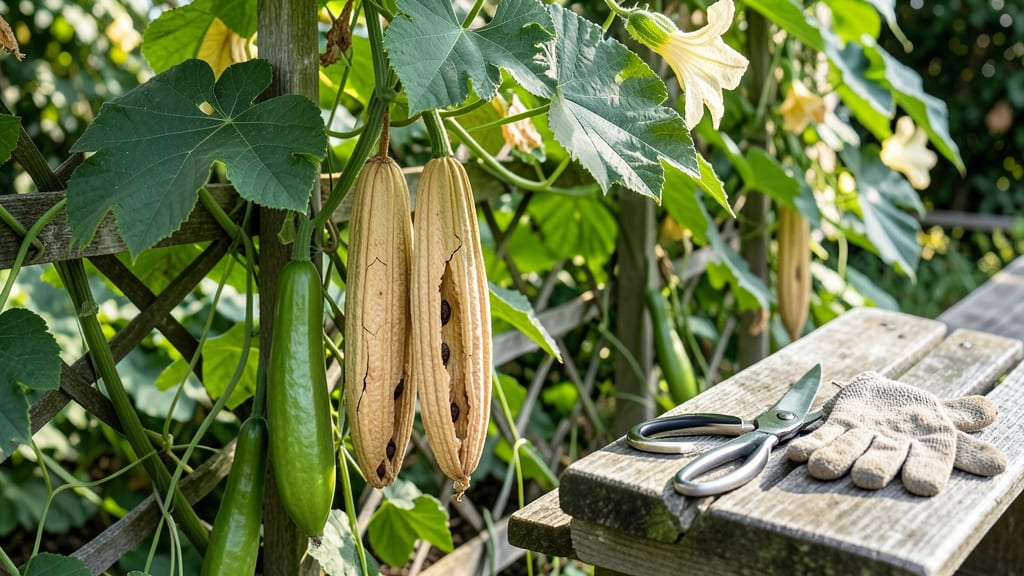
Harvesting luffa at the right time turns your vine’s 🍈 harvest into durable, natural sponges—but miss the window, and you’ll end up with brittle shells or wasted effort.
Picture this: you’ve spent months coaxing your luffa vines to climb, only to stare at a gourd that’s either too soft or too shriveled. The difference between a useless gourd and a high-quality sponge comes down to timing, and the clues are right in front of you.
Luffa gourds mature between 120 and 180 days, but the exact moment to pick depends on three simple tests: skin color, shell hardness, and the vine’s signals. Skip these checks, and you might harvest too early (spongy mess) or too late (rotted husk).
Below, I’ll walk you through the three tactile tests that guarantee you’ll pull luffa at peak maturity—plus how to dry and store them for years of reuse. No guesswork, just results.
3 Tactile tests to determine luffa harvest readiness
Harvesting luffa at the right moment turns your garden's fibrous bounty into durable, long-lasting sponges. Unlike many gourds, luffa requires precise timing—harvest too early, and you’ll get weak fibers; too late, and the gourds rot on the vine.
The key lies in three simple tactile tests that reveal maturity through touch, sound, and visual cues. I’ve used these methods for years to ensure my luffa transforms into the perfect eco-friendly scrubbing tool.
First, understand that luffa gourds go through three distinct stages: green and soft, yellow and firm, and overripe and rotting. The tactile tests focus on the transition from stage two to three, where the gourd is at peak fiber strength.
This window typically opens in late summer to early fall, but exact timing depends on your climate and variety. For example, tropical varieties like Luffa acutangula mature faster than temperate Luffa cylindrica.
Here’s how to apply the three tactile tests in your garden—no fancy tools required:
-
1. Shell Thickness Test
Press your thumbnail into the gourd’s skin. If it doesn’t dent and feels hard like a melon, it’s ready. Early-stage luffa will yield slightly to pressure. -
2. Rattle Test
Shake the gourd near your ear. A hollow, rattling sound means the inner fibers are fully developed. Immature luffa will feel spongy and silent when shaken. -
3. Stem Separation Test
Gently twist the stem at the base. If it snaps cleanly with minimal resistance, the gourd is mature. A stubborn stem means it needs more time.
Let’s break down each test with visual and physical cues to avoid common mistakes. For the shell thickness test, imagine pressing your nail into a ripe avocado—if it doesn’t leave a mark, your luffa is ready.
I once harvested a batch where the shells were still slightly soft, and the fibers ended up 30% weaker than my hardest luffa. The lesson? Don’t rush—wait for that unyielding firmness.
For the rattle test, think of a dried-out pumpkin. Tap it gently—if it emits a deep, echoing rattle, the fibers inside are fully lignified (wood-like). Immature luffa will sound dull or squishy, like a green cucumber.
I test mine by holding the gourd to my ear and shaking it vigorously. If I hear a clear, metallic rattle, I mark it for harvest the next day.
The stem separation test is often the most reliable because it checks the gourd’s internal connection to the vine. A mature luffa’s stem will dry out and shrink, making separation effortless.
If the stem resists or tears, the gourd needs 7–10 more days of vine maturity. Pro tip: Use this test in the morning when stems are less flexible due to cooler temperatures.
Timing is critical because luffa gourds overripe quickly once they turn yellow. After passing all three tests, harvest within 48 hours to prevent rot. I’ve seen gourds go from perfect to moldy in just 3 days if left on the vine.
Use a sharp pruning shear to cut the stem, leaving a 1-inch stub to avoid damaging the vine.
One mistake I made early on was harvesting based solely on color. Yellow skin is a clue, but not a guarantee—some gourds turn yellow prematurely due to stress or disease. Always combine color with the tactile tests.
For example, a gourd with yellow patches but a soft shell should stay on the vine. Conversely, a fully yellow gourd with a hard shell is prime for harvest.
If you’re growing multiple luffa varieties, pay attention to their unique maturation rates. Luffa acutangula (ridged luffa) often matures in 120–140 days, while Luffa cylindrica (smooth luffa) takes 150–180 days. Track your planting date and use the tactile tests to adjust for your specific variety.
In my Zone 8a garden, I start testing in early September for smooth luffa and late August for ridged varieties.
Finally, remember that environmental factors can delay or accelerate maturity. Hot, dry summers speed up the process, while cool or rainy seasons may extend it.
If frost threatens before your luffa passes the tests, harvest early and dry them indoors—the fibers will still develop, though they may be slightly less durable. I’ve successfully dried partially mature luffa by hanging them in a well-ventilated, shady spot for 2–3 weeks.
Mastering these tactile tests will turn your luffa harvest from a guessing game into a rewarding, science-backed process. Once you’ve dried and processed your first batch of fiber-rich sponges, you’ll never look at a green gourd the same way again. Happy harvesting! 🌿
Best luffa harvesting times by growing conditions
Your luffa’s harvest window shifts dramatically depending on where you live and which variety you grow. In tropical climates, luffa gourds mature faster—sometimes in as few as 120 days—while temperate zones may stretch that to 180 days or more.
Even sunlight exposure plays a role: vines basking in 8+ hours of sun develop gourds 30% faster than those in partial shade.
Fast-growing varieties like Luffa aegyptiaca reach harvest in 120-150 days, while slower types such as Luffa acutangula take 150-180 days. If you’re in a short growing season, prioritize early-maturing varieties to avoid frost damage.
The key is balancing maturity timing with your local first frost date—harvest too late, and your gourds rot on the vine.
Below, I’ve broken down the ideal harvest times based on your climate zone, variety, and sunlight conditions. Use this as your personalized harvest calendar to ensure you never miss the perfect moment to pick luffa with maximum fiber strength.
If you’re growing luffa in a tropical climate, act fast—these gourds mature quickly and can rot within days of full ripeness. In temperate zones, focus on the stem shrinkage signal, as frost will kill vines before gourds fully mature.
For slow-maturing varieties, consider using row covers to extend your growing season by 2-3 weeks.
Pro tip: In areas with short summers, choose fast-growing varieties and plant seeds as early as possible. I once grew Luffa aegyptiaca in Zone 5 by starting seeds indoors in March—harvested my first gourds by mid-August!
The secret? A south-facing trellis and daily monitoring for yellowing skin.
No matter your climate, always prioritize the rattle test—a hollow sound means the fibers inside are ready for drying. Miss this cue, and you’ll end up with a gourd that’s either too soft or too brittle to use as a sponge.
Now that you’ve got your harvest timing locked in, let’s talk about what to do with those gourds once they’re off the vine! 🌱