
Vegetables
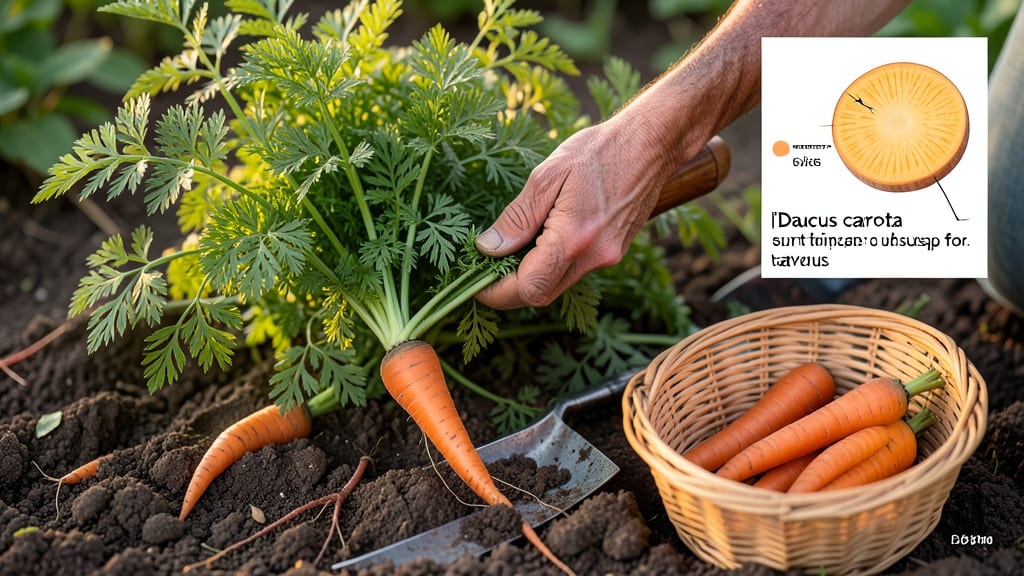
Harvesting carrots at the right time means the difference between sweet, tender roots and tough, bitter vegetables—here’s how to master the art of perfect timing.
Picture this: you’ve spent weeks tending to your 🥕 patch, and now the question looms—when are those carrots actually ready? Pull one too soon, and you’ll get woody, underdeveloped roots.
Wait too long, and they’ll split or turn fibrous. The key is knowing when to act, and it’s simpler than you think.
Most gardeners rely on two foolproof methods: the tug test (gently pulling a carrot—if it resists, it’s ready) and the shoulder-height rule (when tops reach about 3-4 inches).
But timing also depends on your climate—spring crops in Zone 6a typically hit peak flavor by June or July, while fall-planted carrots shine in October or November.
Below, I’ll break down the exact signs to watch for, seasonal adjustments, and even how to store your harvest so those crisp, sweet carrots last all winter. No more guesswork—just perfect timing every time.
How to test carrot maturity: tug test and shoulder-height rule explained
Harvesting carrots at the perfect moment transforms your garden into a treasure trove of sweet, tender roots. The key lies in two simple but powerful methods: the tug test and the shoulder-height rule.
These techniques help you determine when your carrots have reached peak flavor and texture without waiting too long and risking tough, woody roots.
Many gardeners overlook these indicators and end up harvesting too early or too late. Underripe carrots taste bland and lack the rich sweetness we all love, while overripe carrots become fibrous and bitter.
By mastering these two tests, you'll ensure every carrot you pull from the soil is a culinary delight. Let's dive into how to use them like a pro.
The shoulder-height rule is a visual cue that works especially well for standard carrot varieties. When the carrot's foliage reaches about shoulder height (around 12-18 inches tall), it's often a good indicator that the roots below are mature.
This rule is particularly useful for gardeners who prefer a quick, non-invasive way to check readiness without digging.
However, not all carrots follow this rule perfectly—especially short varieties like 'Paris Market' or 'Little Finger'. For these, you'll need to combine the shoulder-height rule with other indicators. Always remember that carrot maturity varies by variety, so check your seed packet for specific guidance when in doubt.
The tug test is my favorite method because it gives you instant feedback without damaging the plant. Start by selecting a few carrots from different parts of your garden bed.
Grasp the leafy tops firmly and give a gentle but firm tug. If the carrot stays in the soil and resists your pull, it's likely mature and ready to harvest.
If the carrot pulls out too easily, it's not fully developed yet. Wait another 1-2 weeks and test again. On the other hand, if the carrot feels loose or the tops snap off while the root stays in the ground, it's past its prime.
Overripe carrots can split or develop a tough, fibrous texture, making them less enjoyable to eat.
For gardeners growing multiple carrot varieties, it's essential to test each type individually. Some varieties, like 'Danvers' or 'Chantenay', mature faster and may be ready to harvest before others.
Always keep a small notebook nearby to jot down which varieties are ready when. This helps you stay organized and ensures you don't miss the perfect harvest window.
One common mistake is relying solely on the shoulder-height rule without confirming with the tug test. While the foliage height is a great starting point, it doesn't account for variations in soil quality, watering consistency, or sunlight exposure.
For example, carrots grown in rich, loose soil may mature faster than those in compacted or rocky soil. Always combine both methods for the most accurate results.
Pro tip: Harvest carrots on a cool, cloudy day to reduce stress on the plant. The roots will be firmer and less likely to bruise.
After harvesting, store them in a cool, dark place (like a root cellar or refrigerator) to maintain their sweetness and crispness for up to 3-4 weeks. If you notice any carrots with green shoulders, cut them off before storing—they can turn bitter.
Mastering these two tests will turn you into a carrot-harvesting expert. Soon, you'll be pulling perfectly sweet, tender roots straight from your garden bed, ready to enjoy in soups, salads, or roasted dishes. Happy harvesting!
Best time of year to harvest carrots for maximum sweetness
Carrots reach their peak sweetness when harvested at the right seasonal window, typically when soil temperatures hover between 55°F and 75°F. In Zone 6a, this usually lands in late spring (June-July) for spring-planted crops and fall (October-November) for late-season varieties.
The cooler temperatures of fall actually enhance carrot flavor by converting starches into sugars—a natural response to frost preparation.
Soil conditions play a huge role in flavor too. Sandy, well-draining soil produces sweeter, straighter carrots, while heavy clay can lead to bitter, forked roots. If your soil is compacted, consider raising beds or amending with compost to improve texture.
The key is loose, fertile soil that allows roots to grow freely without resistance.
| Season | Ideal Harvest Months | Soil Temp (°F) | Flavor Profile |
|---|---|---|---|
| Spring | June - July | 55°F - 70°F | Mild, slightly earthy |
| Fall | October - November | 50°F - 65°F | Sweet, concentrated |
| Extended Season | April (spring) or December (fall) | 45°F - 55°F | Milder, less sweet |
To extend your harvest season, try successive planting. Sow seeds every 2-3 weeks from spring to early summer for a continuous supply. For fall crops, plant in late summer (August-September) to ensure roots mature before the first frost.
In cooler climates, use row covers to protect tender greens while allowing roots to develop.
Watch for frost warnings—carrots can survive light frosts, but heavy freezes will damage roots. If frost is imminent, harvest before temperatures drop below 25°F.
Store them in a cool, dark place (like a root cellar) to preserve sweetness for months. Pro tip: Don’t wash carrots before storing—moisture speeds up spoilage.
For baby carrots, harvest when tops reach 3-4 inches—they’ll be tender and sweet. Mature carrots should measure 1-3 inches in diameter (depending on variety) with deep color. If left too long, they’ll become woody and pithy, losing their signature crunch and sweetness.
Timing your harvest isn’t just about the calendar—it’s about listening to your carrots. Pay attention to leaf color, root firmness, and soil conditions. When everything aligns, you’ll know it’s time to pull those sweet, perfect roots from the earth. 🥕