
Picking
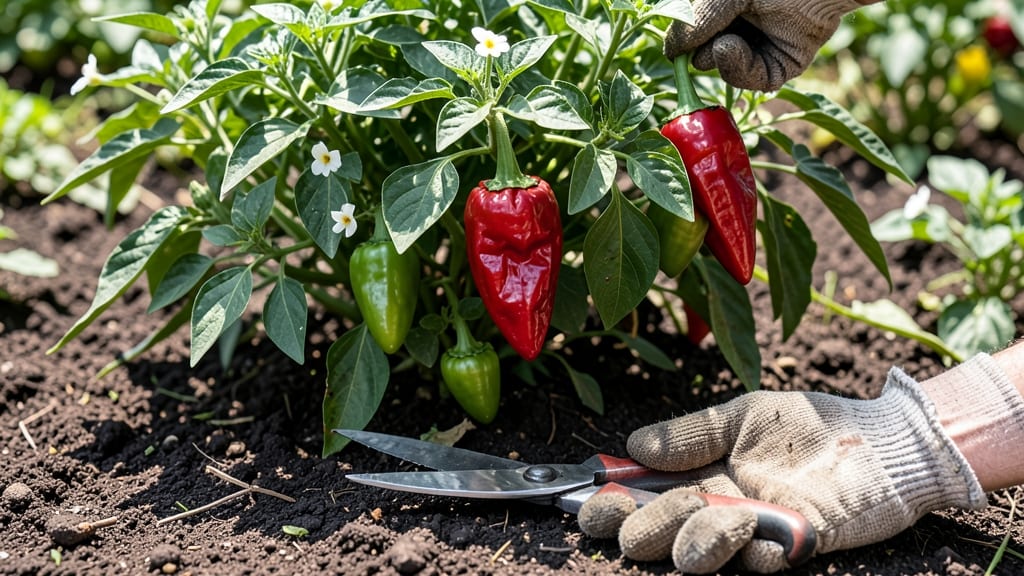
Harvest ghost peppers when they turn deep red, white, or yellow and reach 3-5 inches in length, typically 90-150 days after planting.
Ghost peppers aren’t just for the brave—they’re a gardener’s prize, but timing your harvest wrong can mean losing that signature fiery kick. One wrong move, and you’re left with peppers that are either too mild or bitter, ruining every dish you planned to spice up.
Look for firm, glossy skin and a stem that separates easily from the plant—these are your best clues. The color shift from green to deep red or white signals peak heat, but wait too long, and the flavor turns sharp instead of sweet.
Below, I’ll walk you through the exact color stages, texture tricks, and common mistakes to avoid. By the end, you’ll know precisely when to pluck your 🌶️ ghost peppers for maximum heat and flavor, every time.
Ghost pepper harvesting by color: the exact stages for maximum heat
Harvesting ghost peppers at the right color stage determines whether you get a fiery kick or a bland, bitter disappointment. Unlike milder peppers, ghost peppers (Bhut Jolokia) reach their peak heat (855,000 Scoville units) only when fully mature.
The color shift from green to red isn’t just visual—it’s a flavor and potency transformation you can’t afford to miss.
Most gardeners assume red means ready, but ghost peppers have three critical stages—green, orange, and red—each with distinct heat profiles. Harvesting too early locks in mild, grassy notes, while waiting too long risks wrinkled, shriveled peppers with compromised spice.
Let’s break down the exact color cues and heat development to nail your harvest timing.
⚠️ Pro Tip: Use a sharp pruning shear to avoid crushing peppers, which releases capsaicin and can irritate your skin. Always wear gloves when handling mature ghost peppers.
| Stage | Color | Size | Heat Level | Flavor Profile | Harvest Time |
|---|---|---|---|---|---|
| Green | 🟢 Bright green | 2–3 inches | Low (50,000–100,000 SHU) | Grassy, mild, unripe | Avoid—underdeveloped |
| Orange | 🟠 Deep orange-red | 3–4 inches | Medium (250,000–500,000 SHU) | Sweet, fruity, building heat | Optional—some prefer this stage |
| Red | 🔴 Deep crimson | 3.5–5 inches | Peak (855,000+ SHU) | Fruity, smoky, intense heat | Ideal—maximum potency |
| Overripe | 🟤 Brownish, wrinkled | Shrunken | Drops (bitter, bland) | Harsh, fermented notes | Avoid—ruins flavor |
The green stage is where most gardeners go wrong. These peppers are unripe and taste more like raw bell peppers with minimal heat. If you harvest at this stage, you’ll miss the signature ghost pepper experience entirely.
Think of green peppers as the training wheels—they’re edible but lack the complexity and heat you’re growing them for.
When ghost peppers transition to orange, they’re signaling readiness—but this is where personal preference comes into play. Some chefs swear by orange ghost peppers for their sweet, fruity undertones, which pair beautifully in homemade hot sauces.
At this stage, heat levels jump to 250,000–500,000 SHU, making them 3x hotter than green peppers. If you’re experimenting with fermented chili pastes, this is a great time to harvest.
For maximum heat, wait for the deep red stage. This is when ghost peppers hit their peak Scoville rating of 855,000+ SHU, rivaling even habaneros. The flavor shifts from sweet to smoky and intense, with a lingering burn that defines ghost peppers.
The skin also becomes glossy and firm, almost leathery to the touch—a key visual cue.
Here’s the critical test for red-stage peppers: Gently press the pepper near the stem. If it springs back and feels dense, it’s ready. If it dents easily or feels soft, it’s overripe.
Overripe ghost peppers develop wrinkled skin and a brownish tint, signaling the start of bitterness and flavor degradation. At this point, the heat fades, and the pepper loses its potency.
One common mistake is assuming all ghost peppers turn red. Some varieties, like the white ghost pepper, mature to a pale yellow or white hue. These are just as potent as red ones—don’t let the color fool you!
The key is maturity, not pigment. Always check for size, firmness, and stem separation alongside color.
To extend your harvest window, consider pruning ghost pepper plants regularly. Removing side shoots encourages the plant to focus energy on fewer, larger peppers, which mature more uniformly. This is especially useful if
Texture and size tricks to harvest ghost peppers at peak flavor
Ghost peppers reach their peak flavor and heat when they’re the right size and texture. A perfect pepper should measure between 3 to 5 inches in length—any smaller, and it’s underripe; any larger, and the heat may fade.
Pay close attention to the calyx (the leafy base), which should separate cleanly from the stem when gently twisted.
Run your thumb over the pepper’s skin—it should feel firm and glossy, almost waxy to the touch. If it gives slightly or feels soft, it’s not ready.
Overripe peppers lose their bright color and develop a dull, wrinkled texture, signaling a drop in heat potency. This is a common mistake that turns spicy dishes bland.
🌱
Harvesting Too Late = Bitter Peppers
Ghost peppers turn bitter and tough if left on the vine past their prime. The calyx separation test is your best tool—if it doesn’t twist off easily, the pepper is overripe. Harvest within 2-3 days of full color change to lock in maximum heat and flavor.
Check the stem attachment next—it should snap off cleanly with a slight twist. If it resists or tears, the pepper isn’t ready. This trick works for all Capsicum varieties, including habaneros and jalapeños.
The stem’s ease of removal is a foolproof sign of ripeness, often more reliable than color alone.
Size matters too: 3-inch peppers are ideal for fresh use, while 4-5 inch varieties pack more heat but may need drying or fermenting. Use a ruler or your fingers to gauge—most mature ghost peppers fit comfortably between your thumb and index finger when pinched gently.
Ignoring size leads to uneven heat levels in your harvest.
Finally, avoid harvesting in direct sunlight or during hot afternoons—peppers soften under heat, making them prone to bruising. Pick early in the morning for the freshest texture and best flavor retention.
Store harvested peppers in a cool, dark place (like a paper bag) to preserve their spicy kick for up to a week.
✂️