
Picking
Knowing the exact passionfruit harvest time transforms bitter, seedy disappointment into sweet, juicy perfection—because timing is everything with these tropical vines 🍈.
Picking too early means a meal of tough skin and mealy flesh, while waiting too long risks fruit splitting or falling to the ground.
The difference between a perfectly ripe passionfruit and one that’s past its prime comes down to three key visual cues: seed color, skin texture, and how easily it detaches from the vine.
Whether you’re growing in General (Tropical/Subtropical Regions) or pushing the limits in Zone 9, the right harvest moment ensures flavor that’s rich, aromatic, and free of that unpleasant aftertaste. Below, I’ll walk you through the three unmistakable signs your passionfruit is ready—and how to test ripeness without damaging the fruit.
You’ll also discover how variety matters (purple vs. yellow vs. giant granadilla), the best techniques for harvesting without bruising, and what to do if your fruit isn’t cooperating. Let’s get started.

3 Unmistakable signs your passionfruit is ready for harvest
There's nothing quite like the moment you realize your passionfruit vine has produced fruit ready for picking. But how do you know when passionfruit are truly ripe? Harvesting too early means bitter, seedy disappointment, while waiting too long risks overripe fruit that falls apart.
The key lies in three unmistakable signs that reveal when your passionfruit is at its peak flavor and texture.
First, let's address the most common mistake: assuming passionfruit ripen like tomatoes. Unlike tomatoes, passionfruit don't soften dramatically as they ripen. Instead, they develop subtle but crucial visual and tactile cues.
Mastering these signs ensures you'll enjoy sweet, juicy perfection every harvest season, whether you're growing purple passionfruit, yellow passionfruit, or the rare giant granadilla.
🌱 Your Passionfruit Harvest Checklist
- 1. Seed Color Transformation: Look inside! Mature seeds turn from white to deep brown when ripe.
- 2. Skin Texture Change: Press gently - ripe skin yields slightly but doesn't dent deeply.
- 3. Fruit Size & Weight: Fruit reaches 3-5 inches in diameter and feels heavy for its size.
💡 PRO TIP: The stem end will dry and darken when fully ripe!
Let's start with the most reliable indicator: seed color transformation. This is the only truly foolproof way to determine ripeness without damaging the fruit. When passionfruit are ready to harvest, the seeds inside will have transformed from pale white to deep brown.
You can check this by gently pressing on the fruit where it meets the vine - if it separates easily, you can peek inside without causing damage.
For purple passionfruit, the exterior color changes from green to deep purple when ripe, while yellow passionfruit develop a vibrant golden hue. However, don't rely solely on skin color as some fruits may stay greenish even when ripe.
The seed color remains your most accurate gauge. I've found that checking seeds through the skin (using a flashlight if needed) works best for early morning harvests when fruits are cooler.
The second key sign is skin texture. Ripe passionfruit skin will resist gentle pressure but yield slightly, almost like pressing your thumb into a ripe avocado. Be careful not to press too hard - you don't want to bruise the fruit.
I recommend using your fingernail to test the skin's firmness. When ripe, the skin should feel slightly waxy rather than hard or leathery.
Size matters too! While passionfruit don't grow much larger than their mature size, they should reach 3-5 inches in diameter when ripe. Look for fruits that feel heavy for their size - this indicates they're packed with juice.
I've noticed that passionfruit grown in full sun tend to reach optimal size faster than those in partial shade, so location affects both ripening time and fruit quality.
Here's a common mistake many gardeners make: harvesting passionfruit when they fall to the ground. While fallen fruit may be ripe, they're often bruised and more prone to spoilage. Instead, wait until the fruit detaches easily with a slight twist.
The stem should separate cleanly from the vine, leaving a small scar. If you need to force the fruit, it's not ready yet.
Seasonal variations affect harvest timing significantly. In tropical climates, passionfruit may ripen year-round, while in subtropical zones, you'll get two main harvest periods: spring and fall.
I've found that passionfruit grown in USDA Zone 10 and warmer typically ripen about 6-8 months after flowering, while cooler subtropical areas may extend this to 8-10 months.
For those growing giant granadilla, the largest passionfruit variety, expect even longer maturation times of 9-12 months. These fruits can grow up to 6 inches in diameter and require more patience.
The same ripening signs apply, but their larger size makes them more vulnerable to cracking if overripe, so monitor them closely during their final growth stages.
One final tip: harvest passionfruit in the early morning when temperatures are cooler. This helps preserve their quality during transport and storage.
I like to place freshly harvested passionfruit in a paper bag with a few bananas to speed up ripening if needed, though most passionfruit are ready to eat immediately when properly ripened on the vine.
Best harvesting techniques to preserve passionfruit quality
Once you’ve identified your passionfruit’s perfect ripeness, the next step is harvesting with care to preserve that sweet, tangy flavor. The way you pick and handle these delicate fruits can make all the difference between a juicy, vibrant passionfruit and one that’s bruised or flavorless.
I’ve learned the hard way—dropping even one fruit can turn a perfect harvest into a mushy mess in minutes.
Using the right tools and techniques isn’t just about ease; it’s about maximizing shelf life and ensuring every fruit tastes its best. A simple twist can separate the fruit from the vine without damaging it, but timing and gentle handling are everything.
Even the thickness of your gloves matters if you’re dealing with thorny vines, which many passionfruit varieties have.
Here’s where most gardeners go wrong: they assume passionfruit can be stored like apples or oranges. But these tropical fruits are far more delicate. One wrong move—like storing them in the fridge too soon or exposing them to temperature fluctuations—can turn your harvest into a mealy disappointment.
Let me show you the exact steps to keep your passionfruit fresh and flavorful for weeks.
Harvest Time Mistake: Overlooking the Stem
Never harvest passionfruit by pulling or cutting the stem—this accelerates spoilage. Always use a gentle twist to detach the fruit cleanly from the vine. The stem acts as a natural seal; removing it too soon exposes the fruit to airborne bacteria and speeds up decay. If you must cut, leave a 1-inch stem stub attached.
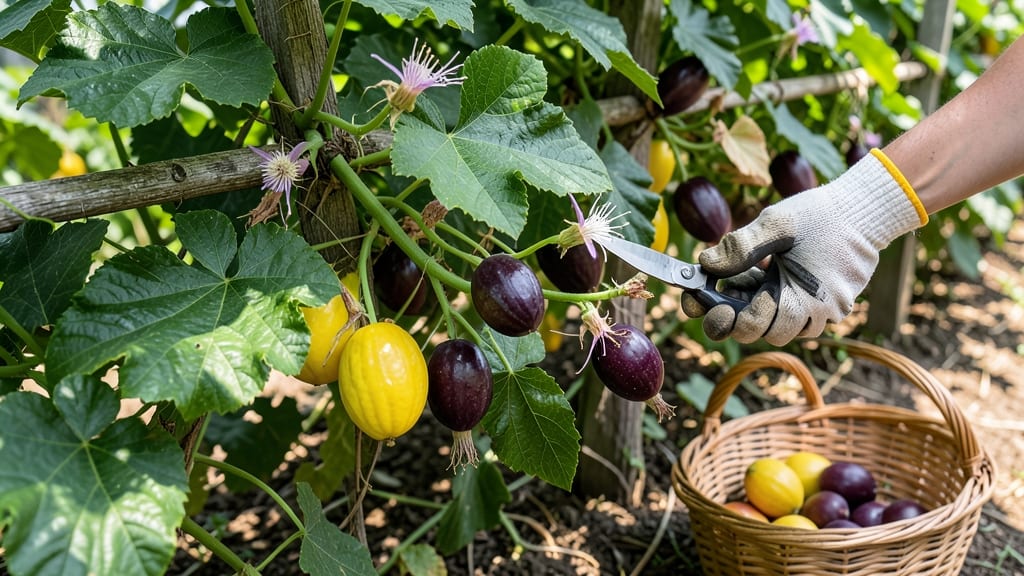
Start by gathering your tools: a pair of pruning shears (for stubborn fruits), a small basket lined with cloth (to cushion the fruit), and—if your vine is thorny—a thick gardening glove. Always harvest in the morning hours when temperatures are cooler.
This reduces stress on the fruit and minimizes bruising. I like to work when the dew has dried but before the midday heat sets in.
Grasp the passionfruit gently near the base, where it meets the vine. Apply a slow, twisting motion—think of unscrewing a jar lid—until the fruit releases with a slight popping sound. If it doesn’t come free easily, don’t force it; wait another 24 hours and try again.
For fruits that resist, use your pruning shears to cut 1 inch above the fruit’s base, leaving the stem stub intact.
After harvesting, inspect each fruit for soft spots or cracks. These are early signs of spoilage and should be used immediately.
Place your harvest in a single layer inside a ventilated container or paper bag—never stack them—and store them at room temperature (60-70°F) for up to 5 days. Refrigeration is a common mistake; cold temperatures turn passionfruit mealy and flavorless.
For longer storage, wrap individual fruits in paper towels and keep them in the fridge, but use them within 10 days.
If you’re not ready to eat your harvest right away, consider freezing passionfruit pulp for smoothies or desserts. Scoop out the seeds and pulp, spread it on a tray to freeze solid, then transfer to a freezer bag.
This method preserves the bright flavor and vibrant color for up to 6 months. Just remember: frozen passionfruit works best in cooked applications, not fresh eating.