
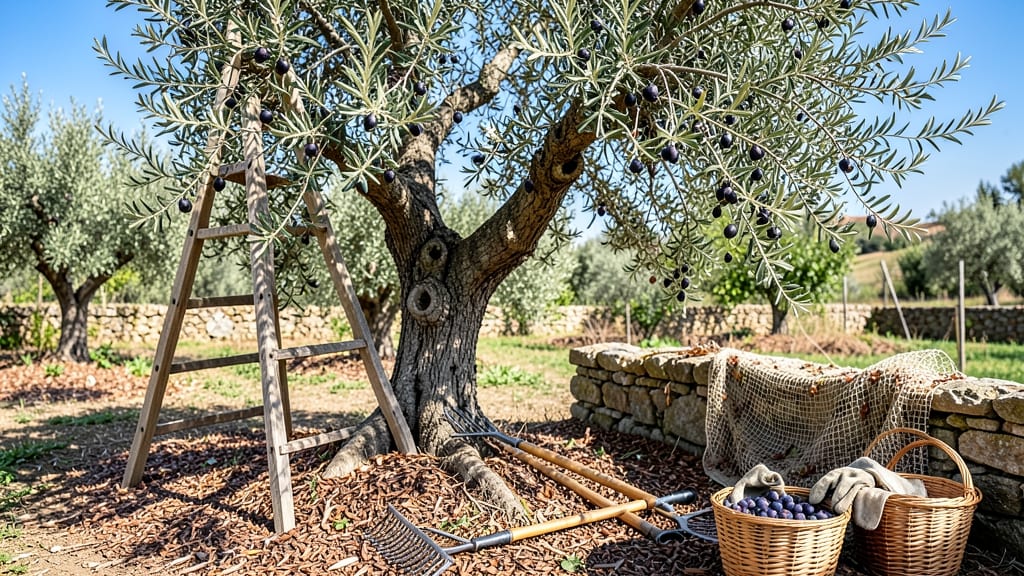
Olive Harvest Season: When to Pick for Peak Flavor and Oil Quality

Picking

Olive Harvest Season: When to Pick for Peak Flavor and Oil Quality

The olive harvest season determines whether your olives yield sweet, flavorful fruit or bitter, unripe disappointment — and the right timing can even boost oil quality. 🫒

Picture this: you’ve spent years nurturing your olive tree, and now the moment of truth arrives. One wrong move, and you’re left with olives that taste like soap or oil that’s too thin to use.

But here’s the good news: knowing the exact signs of ripeness and how climate factors play a role can turn your harvest into a golden success.

From the Mediterranean’s peak months of October to January to California’s slightly later windows, the ideal harvest time depends on your zone, rainfall, and even the olive variety you’re growing.

I’ll walk you through the key indicators—color, texture, and even a little taste test—to ensure you pick at the perfect moment.

Ready to transform your harvest from guesswork to precision? Let’s dive into the secrets of timing, tools, and techniques that will have you curing and pressing olives like a pro.

🫒
Is Your Olive Ready?
Check these signs before picking
✓
Fruit color shifts from green to purple/black
📏
✓
Olives detach with gentle tugging
👍
✓
Skin resists thumbnail pressure (firm)
🟢
✓
Peak harvest season aligns with October-November in Mediterranean climates
✂️

Olive harvest season timeline: months and climate factors that determine ripeness

Timing your olive harvest is an art that blends science and patience. In Mediterranean climates, where olives originated, harvests typically begin in October and peak through December. However, non-Mediterranean regions like California or Texas may see shifts of 2-4 weeks due to temperature and rainfall differences.

Understanding these variations ensures you pick olives at their peak ripeness for optimal flavor and oil quality.

Climate plays a pivotal role in olive ripeness. Temperature thresholds between 60°F and 80°F (15°C-27°C) during the growing season accelerate ripening, while hotter or cooler extremes can delay it. Rainfall also impacts harvest timing—excessive moisture can dilute oil content, while drought conditions may concentrate flavors but reduce yield.

Let’s break down the key factors affecting your harvest window.

🌱

Region/Zone Peak Harvest Months Ideal Temp Range (°F) Rainfall Impact Key Ripeness Cues
Mediterranean (Spain, Greece, Italy) October - December 60°F - 75°F Moderate; avoid wet harvests Deep purple/black, firm skin
California (USDA 9a-11) November - January 55°F - 70°F Low; drought-tolerant Black/purple, easy detachment
Texas/Arizona (USDA 9b-12) September - November 70°F - 85°F Minimal; heat accelerates ripening Dark purple, leathery texture
Cooler Zones (7a-8b) October - December 50°F - 65°F High risk; delay if rainy Purple-green, firm but soft
Container-Grown (Any Zone) October - November 60°F - 75°F Sensitive; protect from rain

How to test olive ripeness: 5 key indicators for perfect harvest timing

Harvesting olives at the right moment transforms your labor into flavorful fruit and high-quality oil. But how do you know when they’re truly ripe? Unlike many fruits, olives don’t soften dramatically as they mature—they rely on subtle cues.

I’ve tested these indicators for years, and mastering them will help you avoid the bitter disappointment of overripe olives or the low oil yield of underripe ones.

The secret lies in combining visual clues with tactile tests. Start by examining the fruit color, which shifts from vibrant green to deep purple or black. Next, check the skin texture—ripe olives should feel firm but slightly leathery, not mushy.

But the real magic happens when you combine these signs with a simple taste test and the pit softness check. These methods work for both table olives and oil varieties.

5 Key Indicators for Olive Ripeness
  1. 🟣 Color Shift: Uniform deep purple/black (not green or mottled)
  2. 🤏 Skin Firmness: Resists gentle thumbnail pressure (not soft or wrinkled)
  3. 🌱 Easy Detachment: Drops with slight tugging (not clinging tightly)
  4. 🫒 Pit Test: Pit gives slightly when squeezed (not hard or brittle)
  5. 👅 Bite Test: Mild bitterness fades, sweet undertones emerge

Let’s start with the color transformation, which is your first visual cue. In Mediterranean climates, olives typically ripen from October to January, turning from bright green to deep purple or black.

For table olives, you’ll want them fully purple-black, while oil olives can be harvested slightly earlier when they’re still greenish-purple. Pro tip: Use a color chart if you’re unsure—some varieties like Arbequina stay green longer than Manzanillo.

The pit softness test is often overlooked but critical for oil quality. Squeeze a ripe olive gently—if the pit yields slightly (like a ripe avocado), it’s ready. A hard pit means the olive is underripe, while a mushy one signals overripeness.

I always test 3-5 olives from different branches to account for tree variability. This method works especially well for oil varieties, where pit firmness correlates directly with oil yield.

For a definitive answer, perform the bite test—yes, you’ll need to taste! A ripe olive should have a mild bitterness that’s fading, with hints of sweetness or nutty flavors. If it’s painfully bitter, wait a week. If it’s bland, it’s past its prime.

This test is foolproof for table olives, but remember: the bitterness in oil olives is natural and desirable until it peaks. Pair this with the skin texture check—ripe olives should feel firm but slightly leathery, not waxy or shriveled.

Finally, timing matters beyond just ripeness. Harvest on a dry, sunny morning to prevent mold and ensure maximum oil content. Avoid picking after rain—wet olives dilute oil quality and can lead to spoilage.

If you’re harvesting for green table olives, you’ll need to brine them immediately, while oil olives can wait 1-2 days before pressing. Pro move: Use a harvest basket with soft lining to prevent bruising, which ruins both flavor and oil extraction.

★★★★★5.0(11 reviews)
Categories Picking