
How To
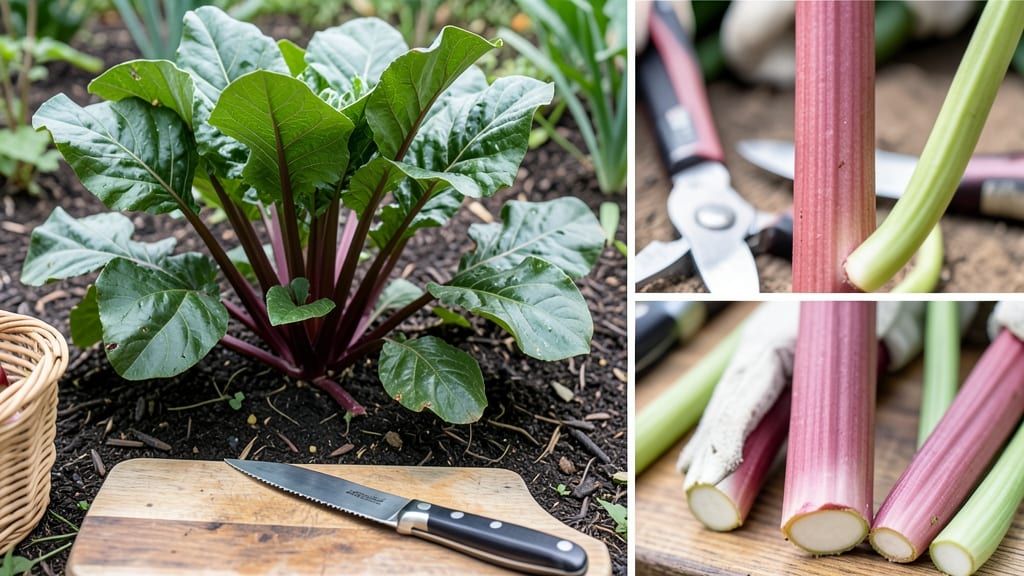
Harvesting rhubarb at the right time and with the right technique ensures peak tartness and keeps your plant thriving for years.
If you’ve ever wondered why your rhubarb tastes bland or stringy, timing your harvest could be the missing link—knowing the exact stem color, size, and season ensures maximum tartness and tenderness.
In Zone 6, the best window opens in April, when stalks reach 10 inches long and ½ inch thick, boasting vibrant red or deep green hues. But wait too long, and you’ll miss the sweet spot before the stalks turn woody.
Below, I’ll walk you through the step-by-step method for harvesting without harming your plant, plus how to extend your harvest season and avoid common mistakes that ruin flavor.
When to harvest rhubarb by stem color and size: the perfect tartness window
Timing your rhubarb harvest is everything—cut too early, and you’ll get bland, stringy stalks. Harvest too late, and the tartness fades into woody bitterness. The key lies in stem color, size, and seasonal cues.
For red or pink varieties, vibrant color signals peak flavor, while green varieties need firmness and length. Let’s break down the exact window for perfect tartness.
Most gardeners harvest rhubarb in late spring to early summer, but the ideal timing varies by variety and climate. In Zone 6, rhubarb typically matures by April–June, but cooler regions may extend harvest into July.
The first harvest should occur after the last frost when stalks reach 10+ inches long and ½-inch diameter. This ensures tender, flavorful stalks without stressing the plant.
Here’s your quick-reference guide to harvesting rhubarb at its peak:
| Stem Color | Stem Size | Season | Harvest Time | Flavor Result |
|---|---|---|---|---|
| Bright red/pink | 10"+ length, ½" diameter | Late spring (April–May) | Morning after frost | Perfect tartness |
| Deep green | 12"+ length, ⅝" diameter | Early summer (May–June) | After leaves unfurl | Mild, tender flavor |
| Pale green/yellow | <6" length, <¼" diameter | Early spring (March) | Avoid harvest | Bland, woody taste |
| Dull, streaky | Any size (overripe) | Late summer (July+) | Stop harvesting | Bitter, fibrous |
Red and pink varieties like ‘Victoria’ or ‘Strawberry’ are best harvested when stalks are vibrant in color and firm to the touch. These varieties develop their signature hue when fully mature, signaling peak tartness. For green varieties such as ‘Green Mountain’ or ‘Holstein’, focus on length and thickness—stalks should be at least 12 inches long and ⅝-inch thick for the best texture.
Seasonal timing matters just as much as stem characteristics. In spring, harvest after the last frost when soil warms to 50°F+. This prevents shock to the plant and ensures tender growth.
If you’re in a cooler climate, wait until May or June—early harvests can stunt the plant. Conversely, in hot climates, harvest in early morning to avoid wilting under midday sun.
Avoid harvesting green, thin stalks—these are underdeveloped and will taste bland or stringy. Similarly, overripe stalks (dull color, woody texture) lose their tartness and become tough. The sweet spot is when stalks are firm but slightly pliable, with leaves fully unfurled but still green.
This balance guarantees the best flavor and encourages the plant to produce more stalks next season.
Pro tip: Harvest every 2–3 weeks during peak season to prolong the harvest window. Cut stalks at a 45-degree angle, leaving the crown intact. This prevents damage and encourages regrowth.
If you miss the window, fall harvests are possible in mild climates, but flavor declines as the plant prepares for dormancy.
Pay attention to your rhubarb’s growth patterns—some varieties like ‘Timperley Early’ mature faster than others. Adjust your harvest schedule based on local climate and plant health. Over time, you’ll develop a keen eye for the perfect tartness window, ensuring your rhubarb is always at its best.
Now that you know the ideal timing, your next challenge is harvesting without damaging the plant. Stay tuned for our next section on step-by-step harvesting techniques to keep your rhubarb thriving for years.
Step-by-step harvesting technique: how to cut rhubarb without damaging the plant
Harvesting rhubarb correctly is an art that balances flavor and plant health. A sharp cut at the right angle preserves the crown while maximizing yield. I’ve learned that over-harvesting or using dull tools can stress the plant, leading to fewer stalks next season.
Let’s dive into the precise method I use to keep my rhubarb thriving for decades.
Timing is everything—harvest in spring when stalks reach 10 inches long and ½ inch thick, but never cut more than ⅓ of the stalks at once.
This ensures the plant has energy to regrow. Below, I’ll share my foolproof step-by-step technique, including tool recommendations and post-harvest care to extend your harvest season.
How to Harvest Rhubarb Properly
- 1 Choose the right stalks: Select stalks that are 10+ inches long and ½ inch thick, with vibrant red or green color. Avoid thin or woody stalks.
- 2 Use clean, sharp tools: Grab a pruning shear or knife (never your hands!) to make a clean cut. Dull tools crush stalks, inviting disease.
- 3 Cut at a 45-degree angle: Angle your cut 1 inch above the ground to prevent soil-borne diseases from creeping up the stalk. This also makes future harvests easier.
- 4 Limit harvests to ⅓ of stalks: Never take more than ⅓ of the stalks at once. This preserves the plant’s energy for regrowth and next year’s harvest.
- 5 Store stalks properly: Keep harvested rhubarb in the fridge for up to 2 weeks, wrapped in a damp paper towel. For long-term storage, freeze stalks after washing and drying.
- 6 Fertilize after harvest: Apply a balanced fertilizer (10-10-10) after harvesting to replenish nutrients. This ensures robust growth for next season’s stalks.
After harvesting, I always remove any yellow or diseased leaves to prevent pests. The plant’s leaves are crucial—they photosynthesize energy for next year’s stalks. If you notice wilting or brown tips, it’s a sign to reduce watering or check for pests like aphids.
Pro tip: In Zone 6, you can extend your harvest into early summer by spacing out cuts. Just avoid harvesting after mid-June, as the plant enters dormancy. Over-harvesting in late summer weakens the crown and reduces next year’s yield.
With this method, my rhubarb plants have thrived for over 10 years, producing bigger, tastier stalks each spring. The key is patience—let the plant recover, and it will reward you with decades of harvests.