
Picking
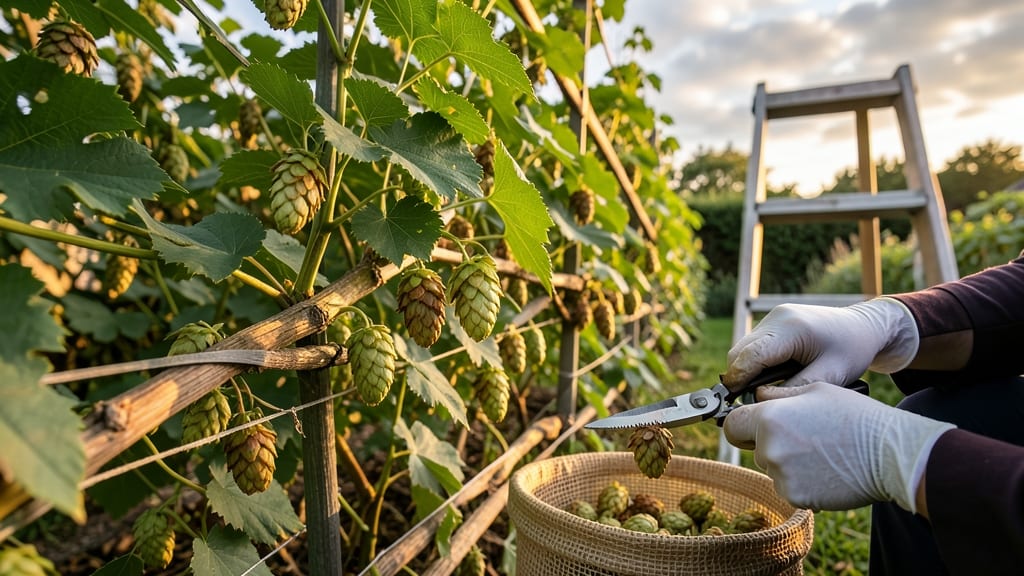
Harvesting hops at the right time ensures the best flavor and aroma in your homebrew—when cones turn golden-brown and snap easily, you’ve hit the sweet spot.
Picture this: you’ve nurtured your 🌿 hops all season, watching them climb and flourish, only to wonder, "Am I picking them too early?" Missing this window means bitter, underdeveloped cones that won’t deliver the crisp, aromatic punch you’re after.
Timing depends on your variety, climate, and even the weather forecast. Too soon, and the cones lack potency; too late, and they shatter like dry leaves. The key is balancing visual cues—like that golden hue—and physical tests, like the classic "snap" that signals peak ripeness.
In this guide, I’ll walk you through the exact signs to watch for, how different hop varieties play by their own rules, and the best practices to preserve quality once you’ve made the cut. Let’s make sure your harvest is as rewarding as the first sip of your homebrew.

How to identify the perfect hops harvest time by visual & physical cues
Harvesting hops at the right moment ensures maximum alpha acids and aroma retention, which directly impacts your beer's flavor profile. Miss this window, and you risk bitter disappointment or wasted effort.
The key lies in observing visual cues and performing simple physical tests that reveal when your hops are ready to pick.
Timing your harvest correctly means paying close attention to the cone color, stem condition, and even the weather forecast. Unlike many crops, hops don't ripen uniformly across the plant—different cones mature at different rates, so you'll need to check multiple areas.
This guide will walk you through the golden-brown snap test and other foolproof methods to determine peak harvest time.
| Harvest Indicator | Description | Action |
|---|---|---|
| Cone Color | Golden-brown or bronze hue (varies by variety) | Check 20-30% of cones daily |
| Stem Snap Test | Stems snap cleanly when bent (not woody) | Test 3-5 stems per plant |
| Aroma Test | Strong, sweet, or citrusy scent when crushed | Crush 2-3 cones between fingers |
| Cone Plumpness | Firm and slightly resilient to touch | Gently squeeze cones |
| Leaf Color | Lower leaves yellowing while upper leaves stay green | Observe 3-4 leaves per bine |
The most reliable visual cue is the cone color change from green to golden-brown or bronze, depending on your hop variety. For example, Cascade hops typically develop a golden hue, while Fuggle hops may turn more bronze.
This color shift indicates that the alpha acids have peaked, giving you the best bittering potential.
Perform the stem snap test by bending a small stem near the base of a cone cluster. If it snaps cleanly (like a dry twig) rather than bending or tearing, your hops are ready.
This test confirms the plant is redirecting energy from growth to cone maturation, which is your green light to harvest.
Don't overlook the aroma test, which is often the most subjective but critical indicator. Crush a few cones between your fingers—ready-to-harvest hops will release a strong, sweet, or citrusy scent.
If the aroma is faint or grassy, wait another 2-3 days before checking again. This test helps you gauge aroma retention, which is essential for crafting flavorful brews.
Weather plays a crucial role in determining the perfect harvest day. Aim to pick hops on a dry, sunny morning when humidity is low. Wet conditions can cause mold growth on freshly harvested cones, while afternoon harvesting may lead to overripe cones that lose potency.
Always check the 5-day forecast before planning your harvest.
Harvesting too early results in underdeveloped cones with low alpha acids, while waiting too long leads to overripe, brittle cones that crumble easily. The ideal harvest window is when 70-80% of cones show the golden-brown color and pass the snap test.
This ensures you get a balanced yield with optimal flavor and bitterness.
Once you've confirmed harvest readiness, use clean, sharp pruning shears to cut the cone clusters from the bine. Avoid pulling cones directly, as this can damage the plant.
After harvesting, dry the cones immediately in a well-ventilated, shaded area to prevent mold. Proper drying preserves aroma and alpha acid content for up to a year.
Remember that harvest timing varies by variety—some hops like Centennial mature faster than others like Fuggle. Keep a harvest journal to track cone development in your specific climate. Over time, you'll develop an intuitive sense for the perfect golden-brown snap that signals it's time to harvest.
Hops harvest time variations: when to pick by variety & climate conditions
Not all hops mature on the same schedule—your Cascade variety might be ready weeks before your Fuggle plants, and your local climate can shift that window by 2-3 weeks. Understanding these variations ensures you don't miss peak flavor or end up with underdeveloped cones.
For example, Centennial hops typically mature faster than Fuggle, while Cascade falls somewhere in between. Even within the same variety, cooler climates delay maturation by 10-14 days compared to warmer regions.
Temperature plays a critical role in hop development. In USDA Zone 5, where frosts linger longer, hops often need an extra 2-3 weeks to mature compared to Zone 8 climates. High humidity can also slow down cone development, while dry, sunny conditions accelerate it.
If you're in a region with unpredictable weather, like the Pacific Northwest, plan to harvest earlier than the general guidelines to avoid sudden rain or frost.
| Variety | Ideal Harvest Window | Cone Color | Climate Adjustments |
|---|---|---|---|
| Cascade | Late August - Early September | Golden-yellow | Harvest 1-2 weeks earlier in cooler climates |
| Centennial | Mid-August - Late August | Golden-brown | Matures fastest; monitor closely in heat |
| Fuggle | Early September - Mid-September | Bronze-brown | Needs longer growing season; delay harvest in cold regions |
If you're growing multiple hop varieties, start checking cones for readiness 2 weeks before the earliest expected harvest date for your climate. For instance, in Zone 6, I begin monitoring Centennial hops in early August, while Fuggle cones aren't ready until mid-September.
Use a harvest journal to track cone development—note when cones first change color and when they pass the snap test for each variety.
Humidity levels can dramatically affect harvest timing. In high-humidity regions like the Southeast, cones may develop mold risks if left on the vine too long, so harvest slightly earlier than recommended.
Conversely, in arid climates like the Southwest, cones dry out faster, so you might need to harvest a few days later to ensure full maturation. Always aim for a dry, sunny morning to pick hops to minimize moisture-related issues.
Regional growing zones also influence when to harvest. In Zone 9, where summers are long and hot, hops often mature 3-4 weeks earlier than in Zone 5.
If you're new to hop growing, consider starting with early-maturing varieties like Centennial to build experience before tackling slower varieties like Fuggle. Pay attention to your local first frost date—you'll want to harvest at least 2-3 weeks before the first expected frost to avoid damaged cones.
Pro tip: If you're unsure about timing, harvest a small batch of cones as a test. Dry and store them, then brew a small batch of beer using these test hops. Compare the flavor to commercially available hops—this hands-on approach will help you fine-tune your future harvest schedules.
Over time, you'll develop an intuitive sense for when your specific climate and varieties are ready to pick.
Remember, the goal is to harvest when 70-80% of cones show the ideal color and pass the snap test. This balance ensures you get the best yield while maintaining quality. With practice, you'll learn to read your plants like a pro and never miss the perfect golden-brown snap again. 🌿