
Picking
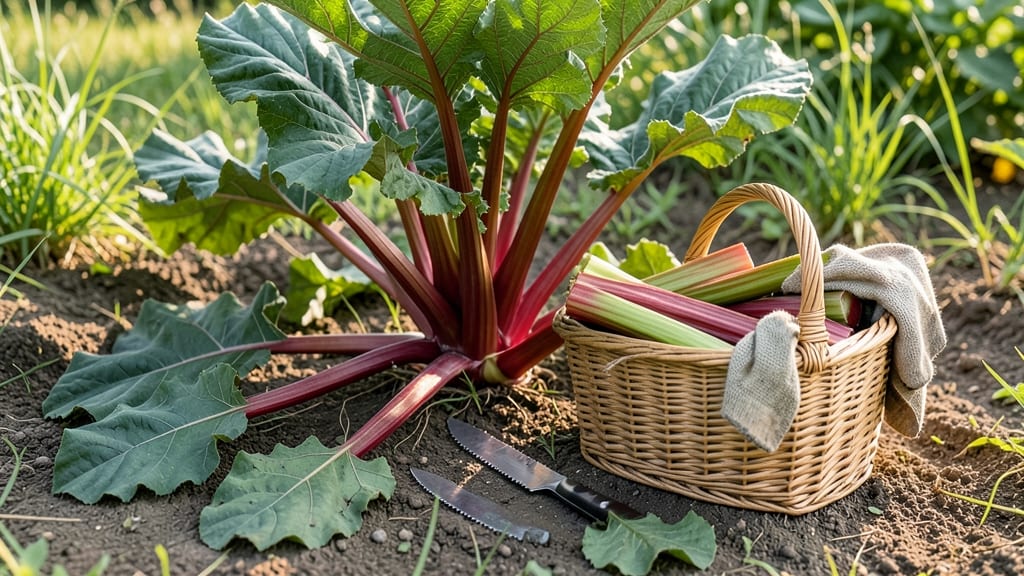
The time to harvest rhubarb 🍃 is when its stalks turn a deep red or pink and reach 10-12 inches—a sure sign they’re sweetest and crispest.
If you’ve ever wondered when to pick rhubarb for the sweetest, crispest harvest, the answer lies in its vibrant stem color—a natural indicator that your plants are ready to enjoy.
Most gardeners wait until their rhubarb is at least two years old, as younger plants need time to establish strong roots before producing quality stalks.
Below, I’ll break down exactly how to spot the perfect harvest window, how often to pick without harming the plant, and simple storage tips to keep your rhubarb fresh for weeks.

When to harvest rhubarb: stem color changes that signal readiness
Harvesting rhubarb at the perfect time ensures the sweetest flavor and crispest texture. The most reliable indicator isn't age or season—it's the color of the stems. Young rhubarb stalks start as pale green, but as they mature, they develop vibrant hues that signal peak harvest readiness.
For most varieties, the ideal harvest color ranges from bright pink to deep red. This color shift occurs when the stalks have absorbed enough sunlight and nutrients to develop their signature tart-sweet flavor. The deeper the red, the more intense the taste, making it perfect for pies and compotes.
Don't rely solely on color, though. Combine it with stem thickness and length for the best results. Mature stalks should be at least 10-12 inches long and 1/2 to 3/4 inch thick. Thin stalks under 1/4 inch are still too young and woody.
Timing matters just as much as color. In USDA Zone 6a, the prime harvest window typically opens in late April and continues through early June. However, if you're in a cooler climate, wait until after the last frost date—usually around April 15 in many regions.
Watch for bolting, where the plant sends up flower stalks. If you see flower buds, harvest immediately, as bolting signals the end of the season and reduces next year's yield. Remove any flower stalks you find to redirect the plant's energy back into stem production.
For the first year after planting, avoid harvesting entirely. Let the plant focus on establishing a strong root system. In year two, you can begin light harvesting, but never take more than 1/3 of the stalks at once to avoid stressing the plant.
Pro tip: Harvest in the morning when stalks are crisp and hydrated. Use clean, sharp pruning shears to cut stalks at the base, leaving about 1 inch of stem attached to the crown. This method prevents disease and encourages new growth.
Overharvesting in a single season can weaken your rhubarb plant. Space out harvests every 2-3 weeks to maintain productivity. If you notice the stalks becoming thin or leggy, it's a sign you're harvesting too aggressively.
Remember, rhubarb leaves are toxic and should never be consumed. Always remove and discard leaves after harvesting. This protects both your family and local wildlife from accidental ingestion.
Best practices for harvesting rhubarb without damaging the plant
Harvesting rhubarb correctly ensures your plant thrives for years—not just months. The key is patience and precision. Never pull stalks from the ground, as this can damage the crown and weaken future harvests.
Instead, use clean, sharp pruning shears or a knife to cut stalks at the base. This method preserves the plant’s energy and encourages more growth. Always leave at least 2-3 inches of stalk attached to the crown.
Timing matters too. Harvest in the morning when stalks are crispest. Avoid harvesting after heavy rain, as wet stalks are more prone to disease and rot.
⚠️ Critical Harvest Warning
Never harvest more than 1/3 of the stalks at once. Over-harvesting stresses the plant and can lead to bolting (flowering) or even death. If your plant is young (1 year old), limit harvests to 1-2 stalks per season.
Also, avoid harvesting in the first year—let young plants focus on root development. Forcing early harvests reduces future productivity.
Seasonal timing is crucial. In Zone 6a, the prime harvest window runs from late April to early June. After early summer, rhubarb often bolts, turning woody and less flavorful.
To extend your harvest, mulch around the base with straw or compost to retain moisture and cool roots. This helps delay bolting by 2-3 weeks, giving you more time to enjoy fresh stalks.
After harvesting, rinse stalks gently under cool water and store them in the crispest drawer of your fridge for up to 1 week. For longer storage, freeze stalks after blanching for 3-4 months of flavor.
With these techniques, your rhubarb plant will reward you with abundant harvests for decades—no damage required. Happy harvesting! 🌱