
Picking
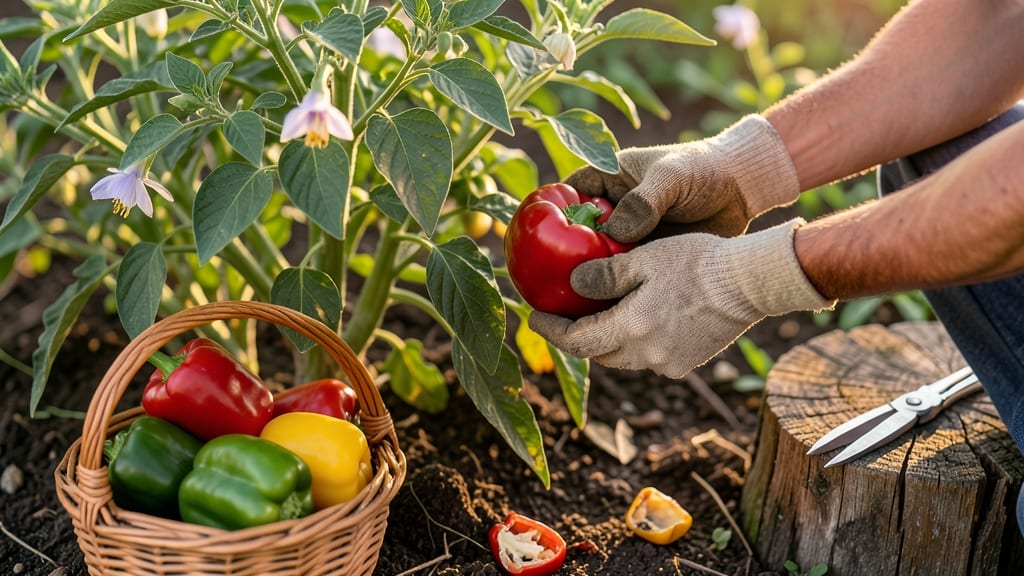
Harvesting your 🌶️ bell peppers at the right time means the difference between sweet, crisp bites and tough, bland disappointment.
There’s nothing worse than biting into a bell pepper that’s still tough, bland, or mealy—only to realize you picked it too early. Mastering the exact bell pepper harvest time ensures sweet, crisp, and vibrant peppers every time, whether you’re growing sweet bananas or fiery jalapeños.
But how do you know when those peppers are truly ready? It’s not just about color—firmness, size, and even the way they feel when you touch them play a role.
In this guide, I’ll walk you through three tactile tests to determine peak ripeness, so you never miss the window again.
You’ll also learn how climate, variety, and even your local growing zone can shift that perfect harvest time. By the end, you’ll confidently pick your peppers at their sweetest, avoiding the common mistakes that leave gardeners frustrated every season.


3 Tactile tests to determine perfect bell pepper harvest time
Picking bell peppers at the right moment transforms a bland, tough vegetable into a sweet, crisp treasure. The secret? Using your hands to test for three key ripeness indicators—color, firmness, and stem separation.
These tactile methods work for every bell pepper variety, from classic green to fiery red or golden yellow. I’ve relied on these same tests for years in my garden, and they’ve never let me down.
Why trust your hands over your eyes? Visual cues like color can be misleading—especially in cloudy weather or with certain varieties. But your fingers detect internal ripeness that no color chart can.
For example, a red pepper might look ripe but still feel soft inside. Let’s dive into the three foolproof tests that’ll have you harvesting peppers at peak perfection every time.
Check for uniform color with no green at the stem. Green peppers should be deep, even green; reds should be bright crimson with no yellow patches.
Gently squeeze the pepper—it should feel firm but slightly yielding, like a ripe avocado. If it’s rock-hard, it’s underripe; if it’s mushy, it’s overripe.
Grasp the stem and twist gently. A ripe pepper’s stem should separate cleanly with minimal force. If it resists, wait a few days.
For green bell peppers, focus on size (3–4 inches) and a smooth, glossy skin. These often stay green even when ripe, so the firmness and stem tests become even more critical.
My ‘Sweet Banana’ peppers usually pass all three tests around 70–75 days after transplanting, but heatwaves can speed this up.
Hot varieties like jalapeños or habaneros require extra caution—they ripen faster and turn softer when overripe. I always harvest these slightly earlier than the color suggests, using the firmness test as my guide. For example, a jalapeño might look red but still feel firm enough to wait another day.
Pro tip: Harvest in the morning when peppers are cool and firmest. Avoid picking after rain or extreme heat, as this can distort your tactile tests. I’ve learned this the hard way—once, I harvested a batch of yellow peppers after a hot afternoon and ended up with mealy, waterlogged peppers.
Always prioritize cool, dry conditions for the most accurate readings.
What if your pepper fails one test but passes others? For instance, it’s firm and the stem separates easily, but the color isn’t uniform? This often happens with partial shade exposure.
In this case, I recommend harvesting it anyway—uneven color rarely affects flavor, but waiting too long risks overripeness. Trust your hands more than your eyes when in doubt.
One common mistake I see is relying solely on color for yellow or orange peppers. These varieties can look ripe but still taste bland if harvested too early. The firmness test becomes your best friend here—always give them a gentle squeeze before deciding.
I’ve found that yellow peppers often need an extra 5–7 days beyond their typical maturity date to reach peak sweetness.
For container gardeners, tactile tests are even more valuable since peppers in pots can ripen 1–2 weeks faster than in-ground plants. I’ve noticed my ‘California Wonder’ peppers in 5-gallon pots pass the stem test about a week earlier than their in-ground counterparts.
Adjust your expectations based on your growing setup—pots dry out faster, which can accelerate ripening.
Finally, remember that harvesting regularly encourages more production. Once a pepper passes all three tests, snip it off with clean shears or twist it gently at the stem. This small act signals the plant to produce 2–3 more peppers in its place.
I’ve seen my pepper plants go from 5 peppers to over 30 by mid-summer simply by staying on top of these tactile checks.
Now that you’ve mastered these tests, you’ll never second-guess your bell pepper harvest time again. Your garden will thank you with sweeter, crisper, and more abundant peppers all season long. Happy harvesting! 🌶️
How long does it take to harvest bell peppers after planting?
If you’ve ever wondered, "When can I finally pick these bell peppers?" the answer depends on the variety and growing conditions. On average, most sweet bell peppers like California Wonder or Jupiter take 60–90 days from transplanting to harvest.
Hot varieties like jalapeños or serranos often need 70–120 days, since they focus energy on spice development rather than size.
But here’s the catch: those timeframes are just a starting point. Your local climate, soil quality, and sunlight exposure can push your harvest earlier—or delay it by weeks.
For example, peppers in USDA Zone 10 with year-round warmth may mature faster than those in Zone 5, where cooler summers slow growth.
🌶️ Variety also plays a huge role. Green bell peppers (like Sweet Banana) are often harvested earlier—sometimes as early as 55 days—while red, yellow, or orange varieties take longer because they ripen fully on the plant. Even within the same variety, container-grown peppers might mature 5–10 days slower than in-ground plants due to limited root space.
| Variety | Days to Harvest | Key Ripeness Cues | Climate Notes |
|---|---|---|---|
| Sweet Bell Peppers (e.g., California Wonder) | 60–90 days | 3–4" long, firm, glossy skin | Faster in warm zones (Zone 8+) |
| Hot Peppers (e.g., Jalapeño, Serrano) | 70–120 days | 1–3" long, firm, deep color | Slower in cool zones (Zone 5–7) |
| Colored Peppers (Red, Yellow, Orange) | 75–100 days | Full color, no green stem | Need consistent warmth |
| Container-Grown Peppers | 65–100 days | Smaller size, firm texture | Use large pots (5+ gallons) |
To speed up your harvest, focus on three critical factors: sunlight, soil nutrients, and watering consistency. Bell peppers thrive with 6–8 hours of direct sun daily, so place them in the sunniest spot in your garden.
Amend your soil with compost or balanced fertilizer (like 10-10-10) at planting and again when flowers appear. Over-fertilizing with nitrogen can delay fruiting, so avoid heavy doses once peppers start forming.
On the flip side, cool temperatures (below 60°F) or inconsistent watering (letting soil dry out completely) can stunt growth and push back harvest time. If your peppers start flowering but drop buds, it’s often a sign of temperature stress or poor pollination.
Gently shake plants or use a small brush to transfer pollen if you’re growing in a greenhouse or shady spot.
Pro tip: Start checking peppers for harvest readiness about 10 days before their expected maturity date. Look for firm skin, deep color, and a snap when twisted at the stem.
If you wait too long, peppers may become mealy or overly soft, losing their crisp texture. For the best flavor, harvest in the morning when sugars are highest.