
Picking
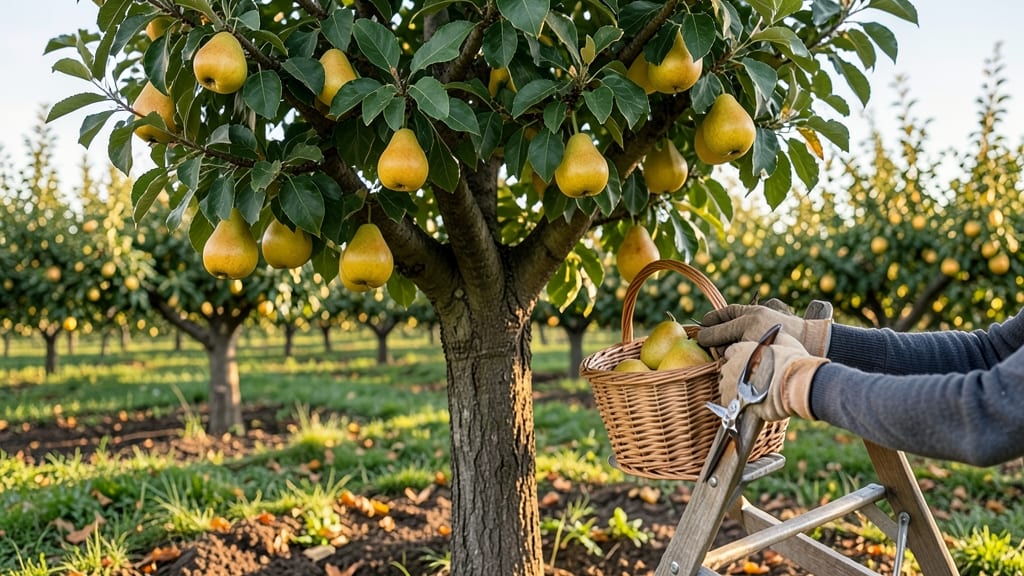
The Bartlett pear harvest time comes when skin turns golden and the scent fills the air 🍐—but miss these cues, and you’ll end up with mealy fruit or wasted effort.
Picture this: you’ve waited all season, and now your Bartlett pears are hanging heavy on the branches. But if you pick too soon, they’ll stay hard and bland. Too late, and they’ll split or rot.
The difference between a perfect harvest and a disappointment often comes down to three key signals—and knowing exactly when to act.
Whether you’re in USDA Zone 6a or further south, the right timing ensures sweet, juicy pears. I’ll walk you through the exact signs to watch for—color shifts, stem tests, and even how climate affects your harvest window—so you never guess again.
From post-harvest care to storage tricks, you’ll learn how to turn your labor into a bounty of ripe, flavorful Bartlett pears every year.

3 Exact signs Bartlett pears are ready for harvest (don’t miss these)
Harvesting Bartlett pears at the perfect moment transforms your labor into sweet, juicy rewards—or turns them into mealy disappointments. Unlike some fruits, Bartletts won’t ripen further after picking, so timing is everything.
I’ve learned the hard way that even a single day too early means bland flavor, while waiting too long risks fruit dropping or spoiling on the tree. Let’s cut through the guesswork with the three foolproof signs I now watch for every harvest season.
First, I always check the fruit’s color shift from deep green to a yellowish-green hue. This isn’t about bright yellow—think of a soft buttercream shade rather than neon. Bartletts mature gradually, and this color change signals the fruit’s internal sugars have peaked.
I’ve seen gardeners mistake sunburned spots for ripeness, so I gently rub my thumb over the skin to confirm the color change isn’t just surface-level. This visual cue alone saves me from picking premature fruit.
Visual Tip: Hold the pear up to a white background (like a sheet) to spot the subtle color shift. Artificial lighting can trick your eyes—natural daylight is your best judge.
📌 3 Critical Harvest Cues for Bartlett Pears
- 🍐 1. Skin Softens – Gently press the pear; it should yield slightly (not feel rock-hard or mushy)
- 🌬️ 2. Sweet Aroma – Hold near your nose; ripe Bartletts smell intensely sweet (like pear candy)
- ✂️ 3. Stem Snaps Cleanly – Twist gently; the stem should break away without tearing fruit skin
⚠️ Pro Tip: Test 2-3 pears from different branches—ripening varies!
Next, I perform the firmness test that separates pros from novices. A ripe Bartlett should feel firm but yield slightly when pressed with gentle thumb pressure—like squeezing a ripe avocado. If it’s hard as a baseball, it’s underripe.
If it feels mushy or dented, it’s overripe and past its prime. I’ve lost count of the pears I’ve tossed because I ignored this step. Pro move: Use your fingertip pressure, not your palm, to avoid bruising the fruit.
Here’s where climate comes into play: In hotter zones (8-10), Bartletts may ripen faster and soften more quickly, so I check firmness every 3-4 days during peak heat. In cooler zones (4-6), the fruit often hangs longer, and I might wait 7-10 days between checks.
The key is consistency—once you find your zone’s rhythm, you’ll nail it.
The third sign is the stem separation test, my favorite because it’s instant feedback. Grab the pear’s stem between your thumb and forefinger and twist gently. A ripe Bartlett’s stem should snap cleanly from the branch, leaving a tiny stem cap on the fruit.
If the stem tears the fruit skin, it’s not ready. If it won’t budge, it’s too early. This test alone has saved me from harvesting hundreds of pounds of unripe fruit over the years.
Watch out for these common traps: Rain-soaked fruit may appear ripe but is often waterlogged inside. Similarly, sun-exposed pears might look golden but taste bland. I always harvest on dry mornings to avoid these pitfalls.
And if you’re in a humid climate, check for rot or mold on the tree—overripe fruit can spoil before it detaches.
Seasonal timing matters too. In USDA Zone 7 (where I garden), Bartletts typically ripen in late September to early October, but a late frost warning might push me to harvest 2 weeks early.
I’ve learned to monitor local weather forecasts and adjust. For example, if temperatures drop below 32°F, I’ll pick ripe fruit immediately, even if the stems aren’t fully detached, to avoid frost damage.
Finally, I always taste-test one pear before committing to a full harvest. If it’s sweet with a hint of tang, I know the rest are ready. If it’s mealy or bland, I wait another day.
This final check has become my harvest insurance policy, ensuring I never waste a season’s work on subpar fruit. The first year I skipped this, I ended up with dozens of pears that tasted like cardboard—never again!
Mastering these three signs will turn your Bartlett harvest from hit-or-miss to consistently perfect. Once you’ve practiced, you’ll recognize ripe fruit instantly, and your kitchen (or farmers’ market) will thank you. Now grab your harvest basket—those pears aren’t going to pick themselves! 🍐
Bartlett pear harvest calendar: when to pick by USDA Zone (with adjustments for weather)
Timing your Bartlett pear harvest depends heavily on your USDA zone and local weather patterns. While most gardeners in Zone 6-8 can expect harvests between late September and October, colder or warmer climates shift this window significantly.
Heatwaves can speed up ripening, while late frosts or droughts may delay it—sometimes by weeks.
Use this calendar as your guide, but always double-check the three ripeness cues (color, firmness, and stem separation) before harvesting. Even within the same zone, microclimates—like a sunny slope or sheltered valley—can create 1-2 week variations in your harvest timeline.
If your Bartlett pears aren’t ripening on schedule, don’t panic. Heatwaves can force fruit to mature 2-3 weeks early, while prolonged drought may delay ripening until late fall.
In Zone 6-7, a late frost in September can damage unripe fruit—so monitor your trees closely and harvest slightly underripe pears if frost is forecasted. These can be stored in a cool, dark place to finish ripening.
To accelerate ripening in hotter zones (like Zone 8-10), reduce watering slightly 4-6 weeks before the expected harvest. This stress signal tricks the tree into focusing on fruit maturation. Alternatively, thin fruit clusters to reduce competition for resources—this often results in larger, sweeter pears that ripen faster.
Pro tip: Keep a harvest journal for at least 3 years to track your tree’s unique ripening patterns. Note the first year’s harvest date, then adjust future years based on weather anomalies.
For example, if your Zone 7 Bartletts ripened in early October one year but late September the next due to an early heatwave, you’ll know to watch for ripeness cues earlier in subsequent seasons.
Once you’ve mastered the timing, enjoy the reward: homegrown Bartlett pears at their peak—juicy, sweet, and bursting with flavor. Just remember, the best harvests come from patience and attention to your tree’s unique signals over the years. 🍐